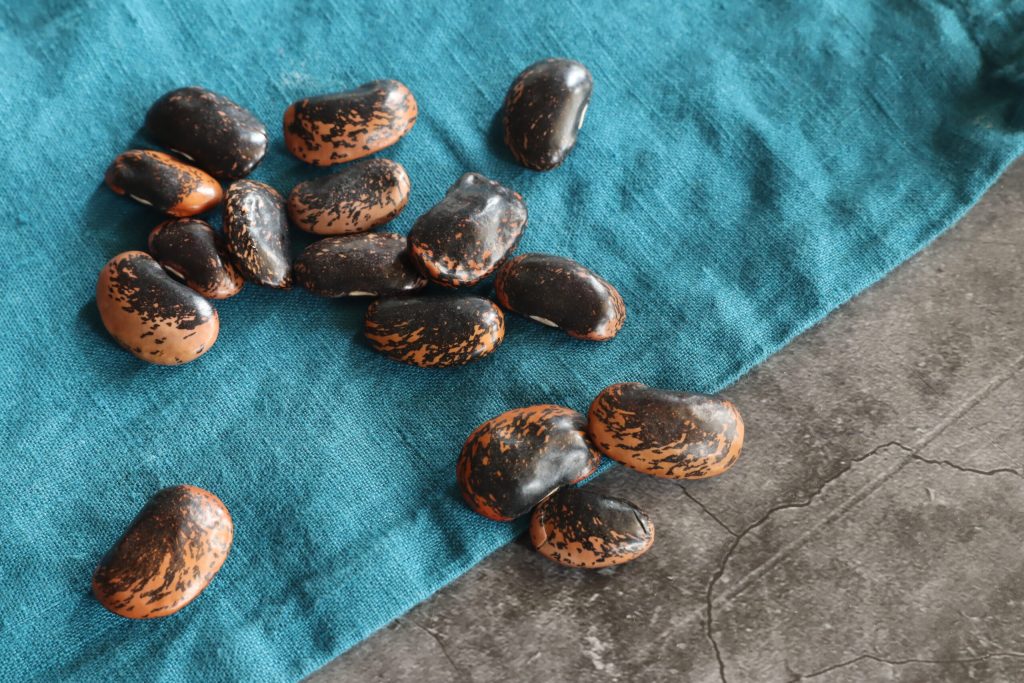
Pavone Beans with ribollita and not ‘Purgatory’ beans, the small ones I always use, but I wanted to change to the large, actually giant, Pavone. This dish, in autumn or winter, is a real tonic and a hearty first course, but I assure you that even cold, for example in spring, it is quite pleasant. In my opinion, vegetables or soups have no season; only the temperature changes whether to eat them cold or hot.
- Difficulty: Easy
- Cost: Moderate
- Preparation time: 40 Minutes
- Cooking time: 1 Hour 30 Minutes
- Portions: 8
- Cooking methods: Boiling, Stovetop
- Cuisine: Italian
- Seasonality: Autumn, Winter
- Energy 235.85 (Kcal)
- Carbohydrates 17.55 (g) of which sugars 4.00 (g)
- Proteins 5.15 (g)
- Fat 16.82 (g) of which saturated 2.44 (g)of which unsaturated 0.17 (g)
- Fibers 5.24 (g)
- Sodium 527.58 (mg)
Indicative values for a portion of 290 g processed in an automated way starting from the nutritional information available on the CREA* and FoodData Central** databases. It is not food and / or nutritional advice.
* CREATES Food and Nutrition Research Center: https://www.crea.gov.it/alimenti-e-nutrizione https://www.alimentinutrizione.it ** U.S. Department of Agriculture, Agricultural Research Service. FoodData Central, 2019. https://fdc.nal.usda.gov
Ingredients
- 2/3 cup celery
- 1/3 cup carrot (chopped)
- 1.8 oz shallot (about 1 small)
- 1/2 cup Pavone beans (Pavone)
- 6 1/3 cups water
- 4 1/2 cups black kale
- 2 tbsp tomato paste
- 3 3/4 cups curly endive (curly escarole)
- 9 oz potatoes (about 1 medium potato)
- 10 tbsp extra virgin olive oil
- 1 3/4 tsp salt
- 1 tsp pepper
Tools
- Pot
- Skillet
- Cutting Board
- Knife
- Bowl
Steps
I soaked the Pavone beans in a glass bowl in water for 24 hours.
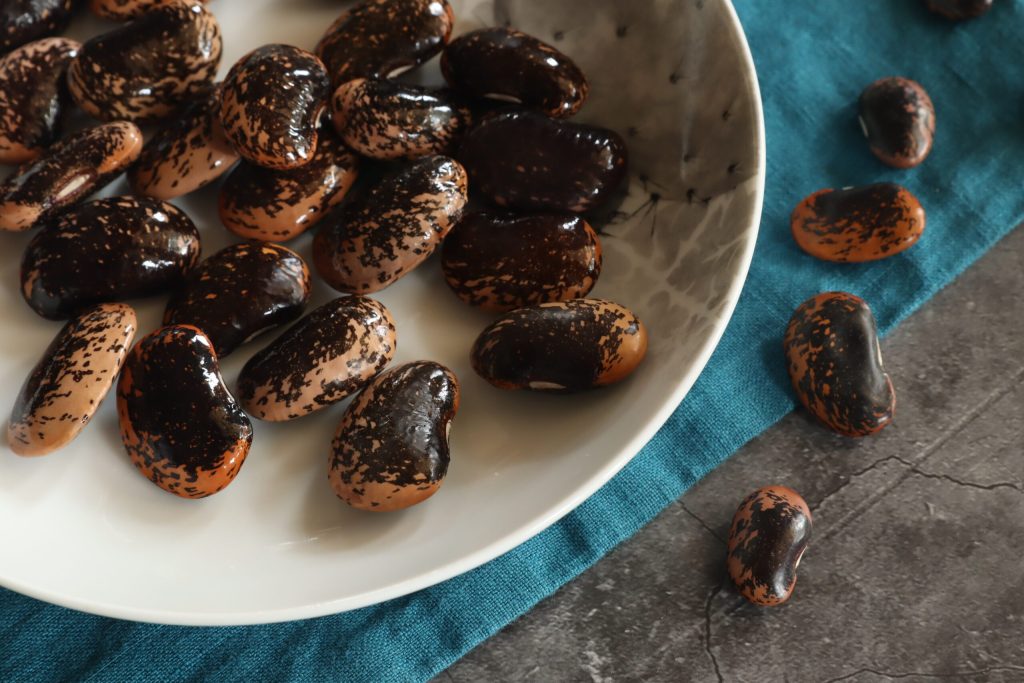
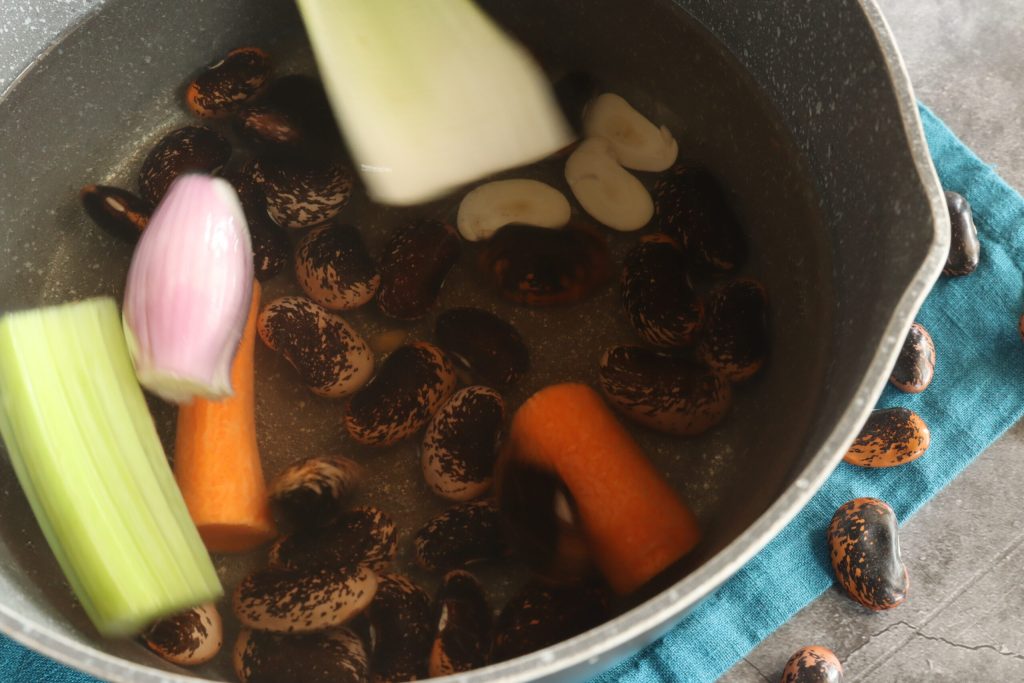
The next morning, in the pot I added half of the celery, carrot and shallot to the water, the beans, and simmered them covered over low heat for 1 hour and 30 minutes.
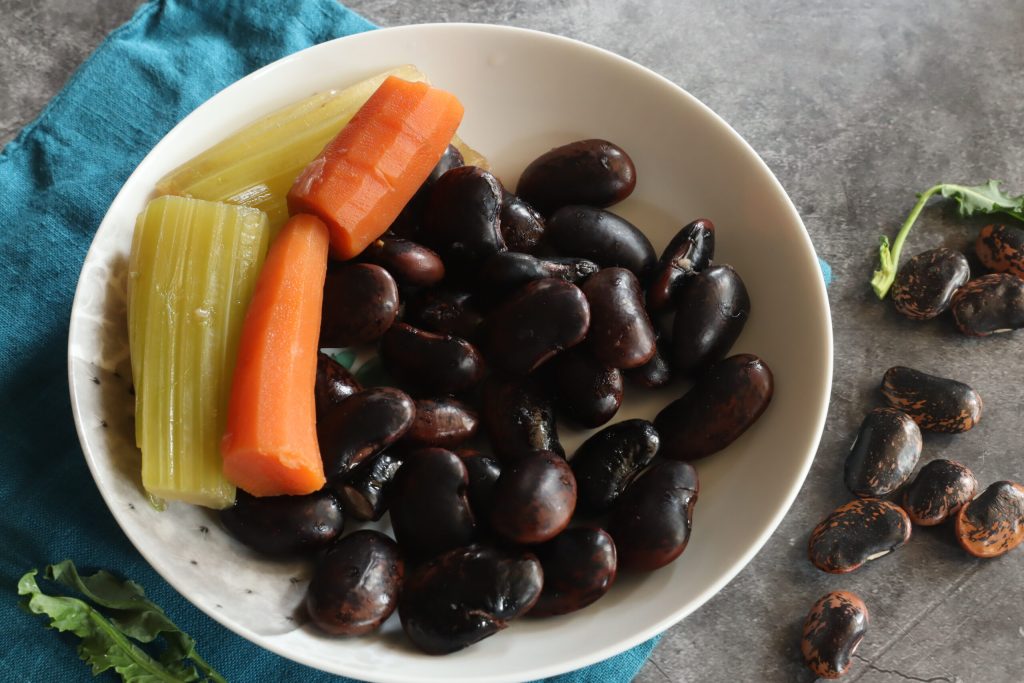
At the end of cooking I separate the legumes from the broth, which I set aside to use later. I blended the boiled carrots and celery and added them at the end to the Pavone bean ribollita soup.
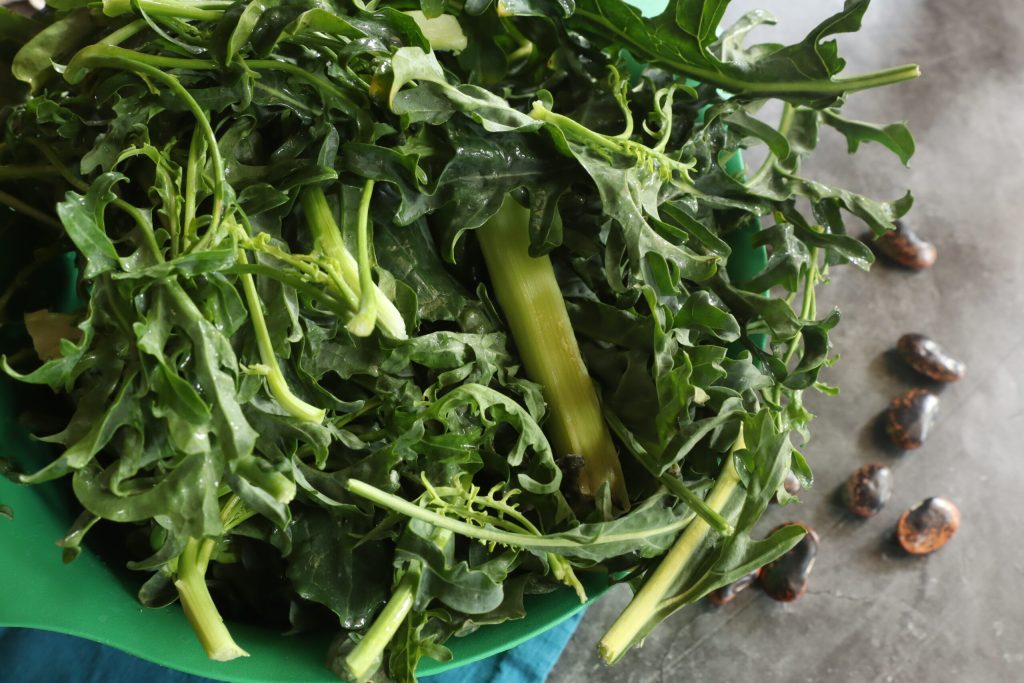
I cleaned all the vegetables and washed them thoroughly.
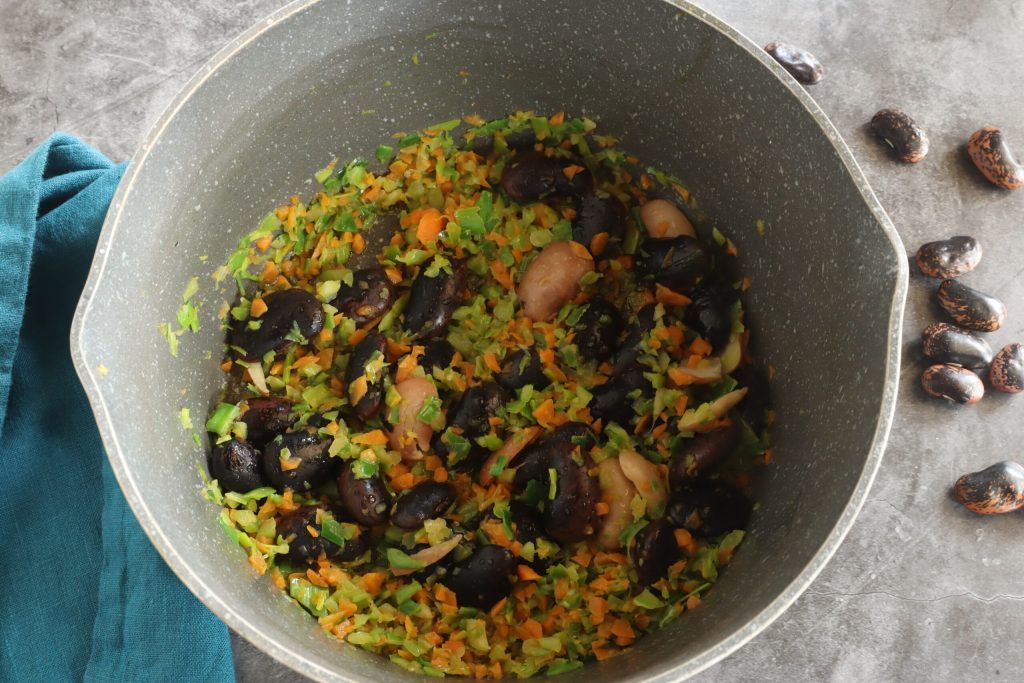
In the pan I add, together with the extra virgin olive oil, the other half of finely chopped carrots, celery and shallot. As soon as they are golden, I add the Pavone beans as well.
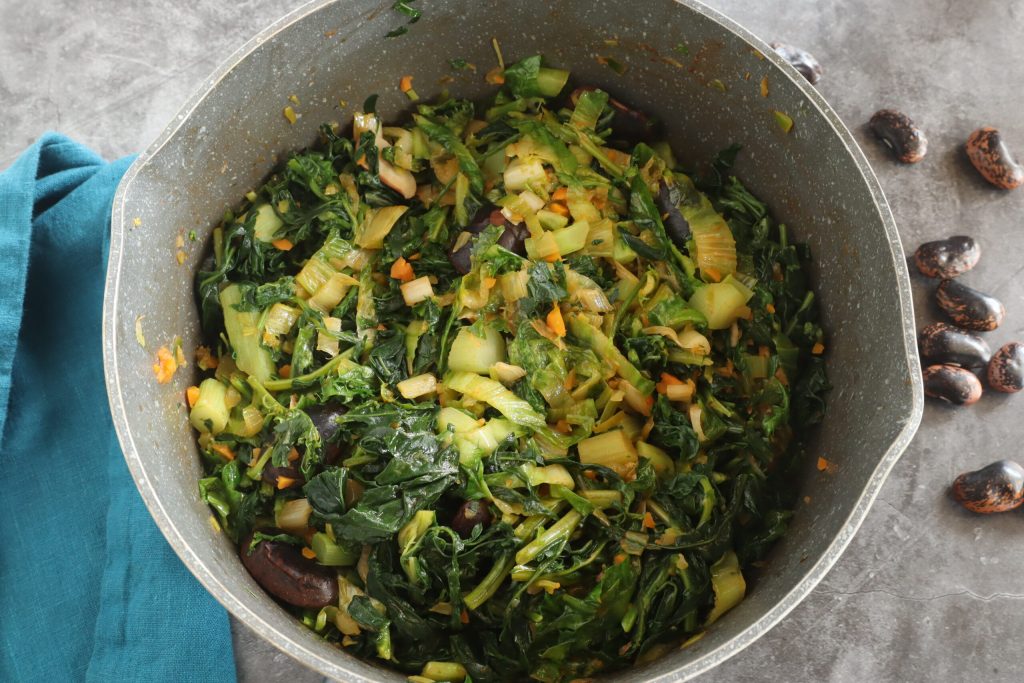
I finely chop the kale and curly endive and add them to the pan.
At this point I also add the bean broth, and season with salt and pepper.
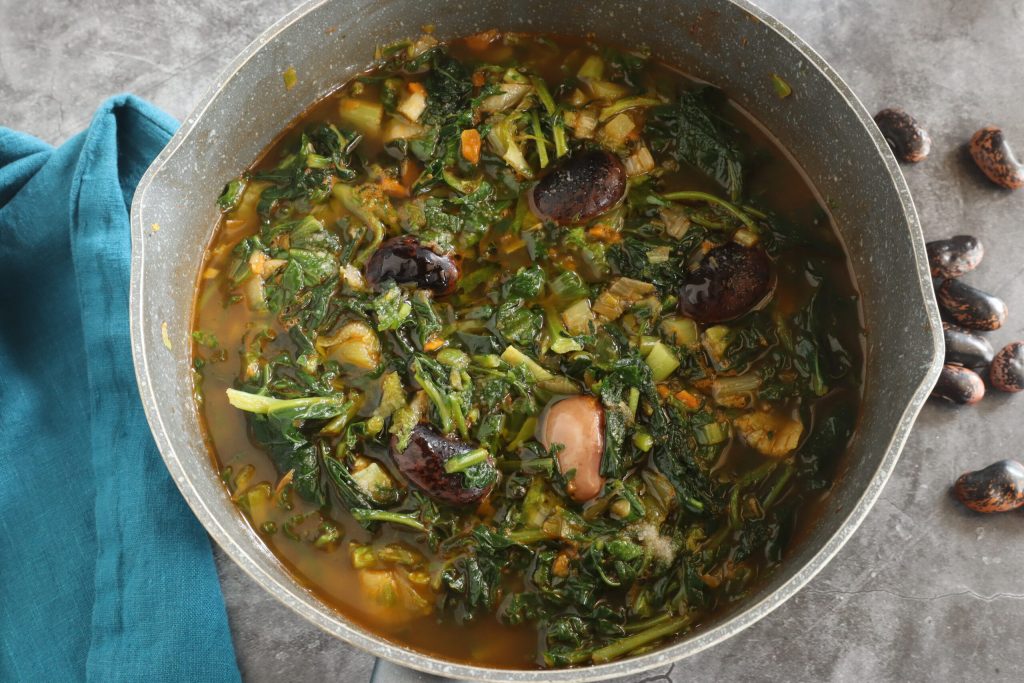
I also add potatoes cut into chunks. I let it cook for 40 minutes.
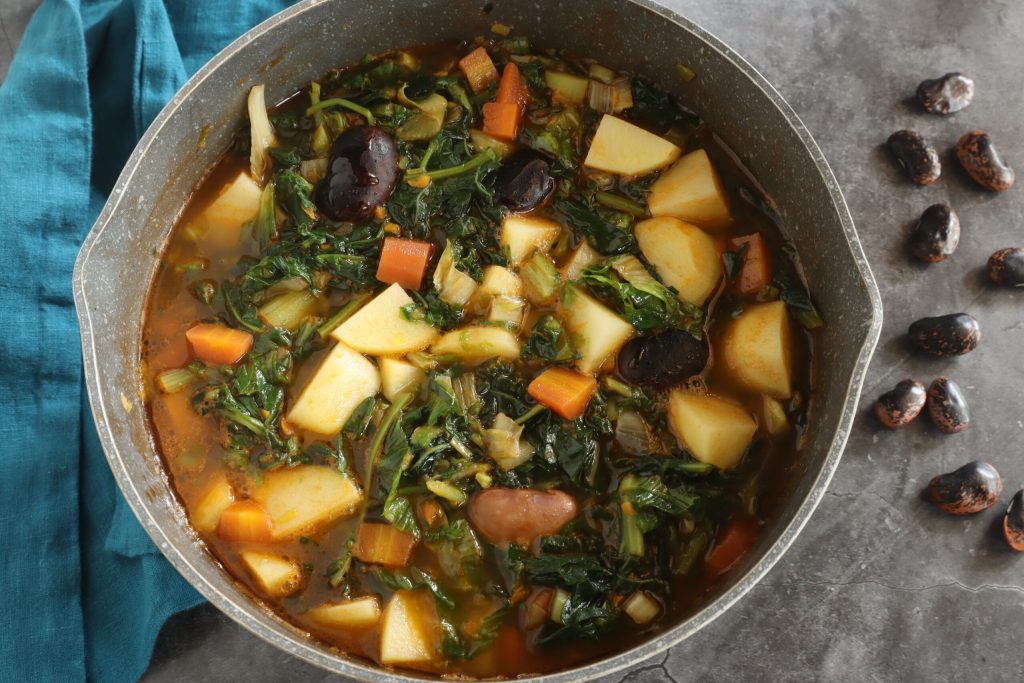
Here are the Pavone beans with ribollita; I added bread croutons, but for a gluten-free dish it is better not to add them.
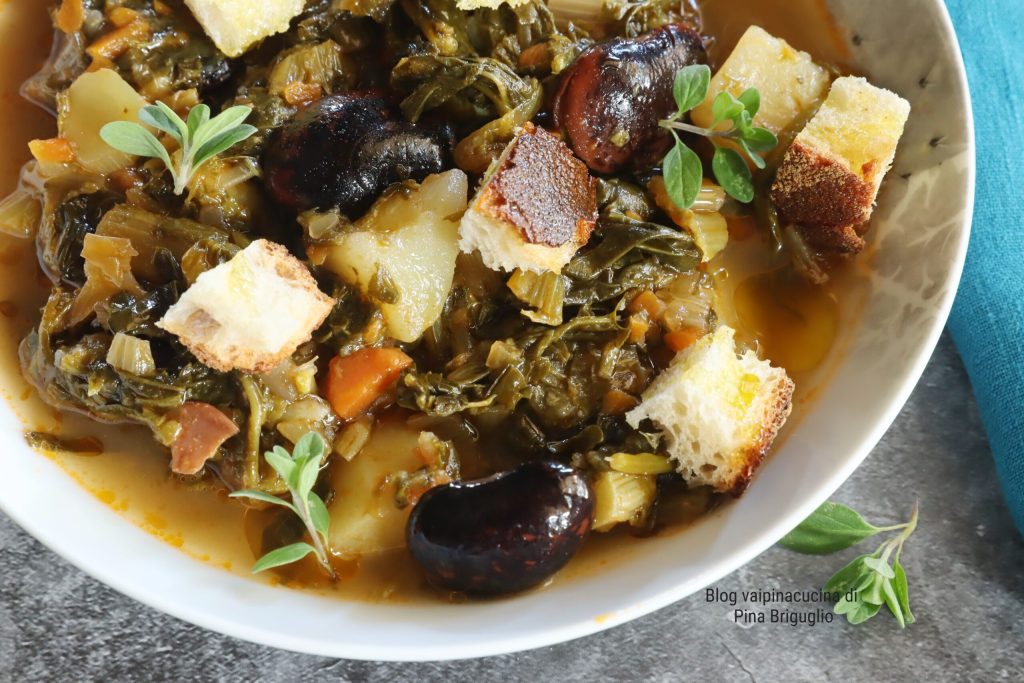
I also prepare croutons from stale bread.
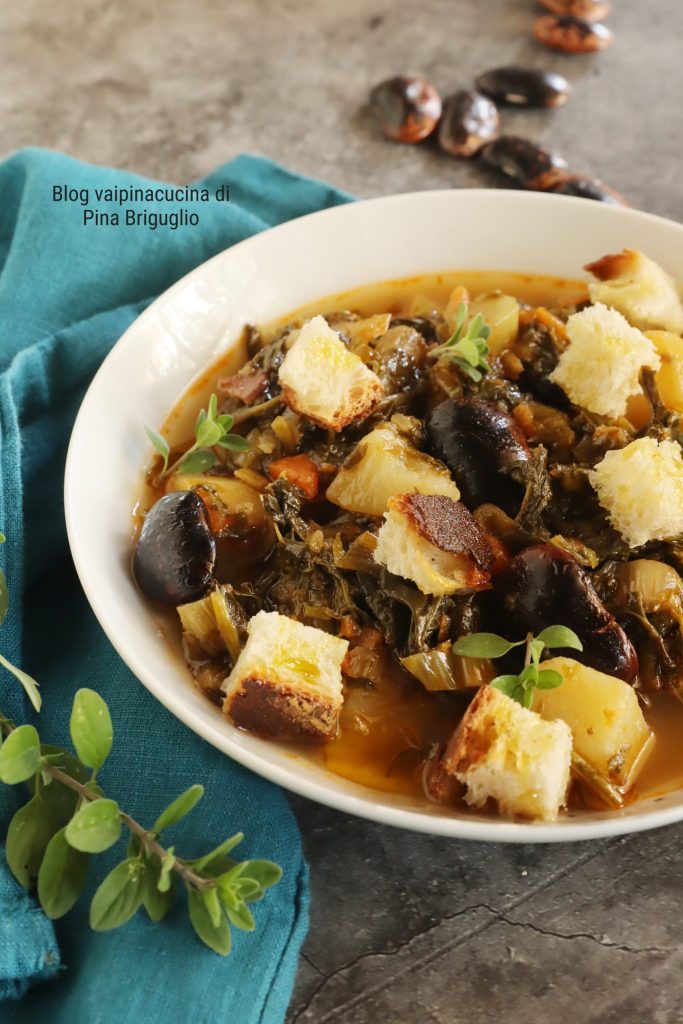
This soup, besides being consumed hot in winter, is also excellent warm in any other season.
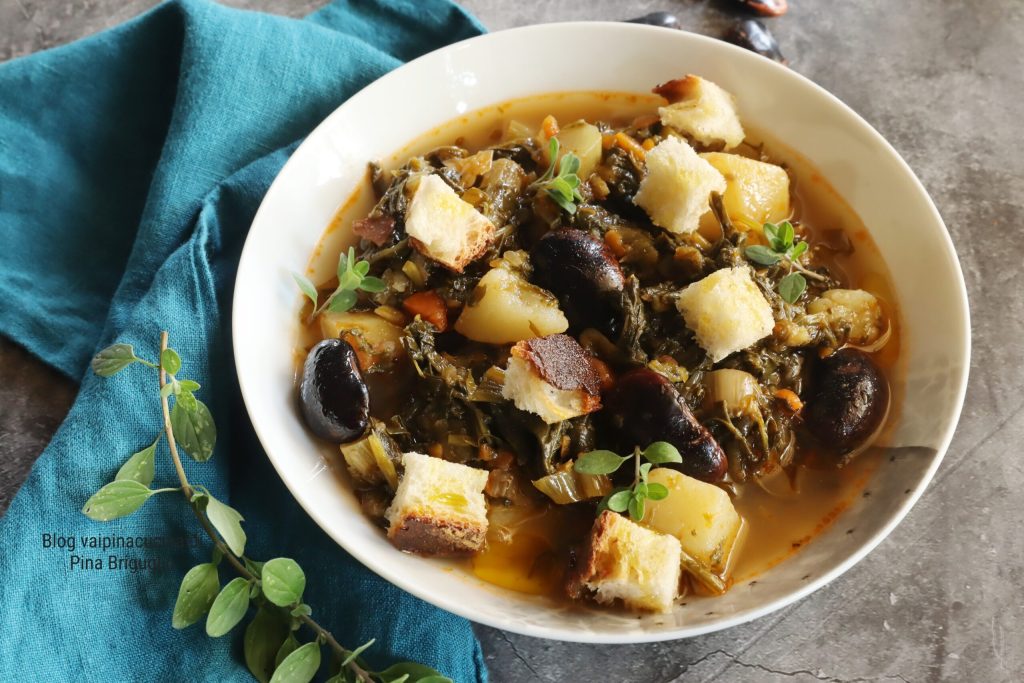
Notes
Due to its large size and thin skin, and its violet color, you have surely recognized the prized Italian Pavone Viola bean variety. It has an unmistakable chestnut-like aftertaste, and this is why it is usually used for soups, broths or stews, although it is also delicious with polenta. Typical of Piedmont, although it derives as a variety from the White Spanish bean.
FAQ (Questions and Answers)
Can they be eaten without the skin?
After boiling them, if you prefer, you can peel them to make them softer in the soup.