
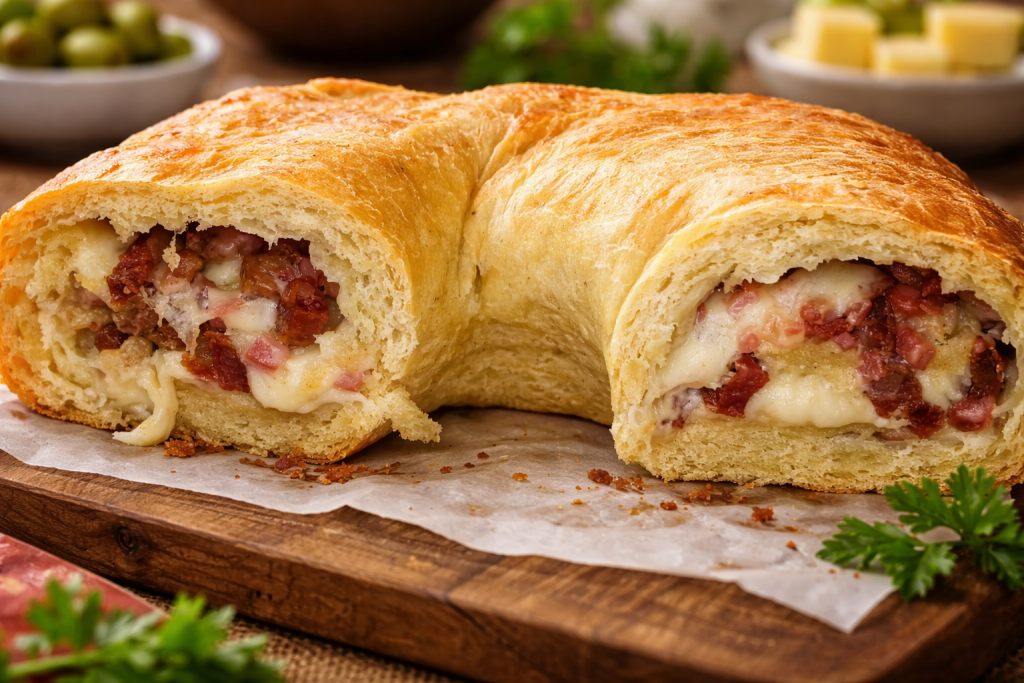
The tortano is a classic starter of the Easter table, particularly in Naples, although it alternates with the casatiello, which includes eggs placed on top of the dough and held in place by strips of dough.
In my home we always made tortano: it was the family favorite, part of my grandmother’s cooking and the recipe was passed down to my mother and from my mother to me. Since it keeps for several days, my mother usually baked it on Friday, much to our displeasure. In the tortano there is salami, and you know: on Fridays during Lent you don’t eat meat.
This was a real torment for all of us, because the kitchen, and then the rest of the house, would fill with a most tempting aroma — the tortano’s — and once it came out of the oven it would be left on the terrace table to cool.
And so, we had to wait until Easter to taste that goodness.
Here’s how we make the Neapolitan tortano at my home.
- Difficulty: Easy
- Cost: Medium
- Rest time: 6 Hours
- Preparation time: 45 Minutes
- Cooking time: 40 Minutes
- Portions: 10
- Cooking methods: Oven
- Cuisine: Italian regional
- Region: Campania
- Seasonality: Easter Monday, Easter
Ingredients
- 4 cups Manitoba flour
- 4 cups type 0 flour
- 6 oz lard (sugna) (or strutto)
- 1 tsp fresh baker's yeast
- 1 cup lukewarm water
- 14 oz mixed cheeses (sweet provolone, spicy provolone, fontina, pecorino)
- 14 oz mixed cold cuts (salami, cooked ham, mortadella)
- to taste salt
- to taste freshly ground black pepper
You will notice immediately that the individual quantities for the cold cuts and cheeses are not specified, only a guideline weight, meaning you shouldn’t go under it. In my house the rule is “the more you put in, the more you get out of it”. Keep in mind that while you’re chopping cheeses and cold cuts, someone might pass through the kitchen and eat half: better to be generous. Or does that happen only at my house?
Tools
This article contains affiliate links
- 1 Baking mold for tortano and casatiello
Steps
First dissolve the fresh yeast in a cup of lukewarm water (not hot). Then heap the flour into a well — that is, make a hole in the center — and pour in the yeast. Add the lard, a little salt and pepper. If necessary, add more water.
Don’t overdo the salt, because the cheeses and cold cuts you will add could make the dough too salty.
I’ll tell you a secret: unlike my mother, I only add a pinch of salt, but I also add a bit of grated pecorino. I tried it once and liked it a lot: it has become a habit.
Work the dough vigorously, occasionally slamming it on the work surface, until it looks smooth.
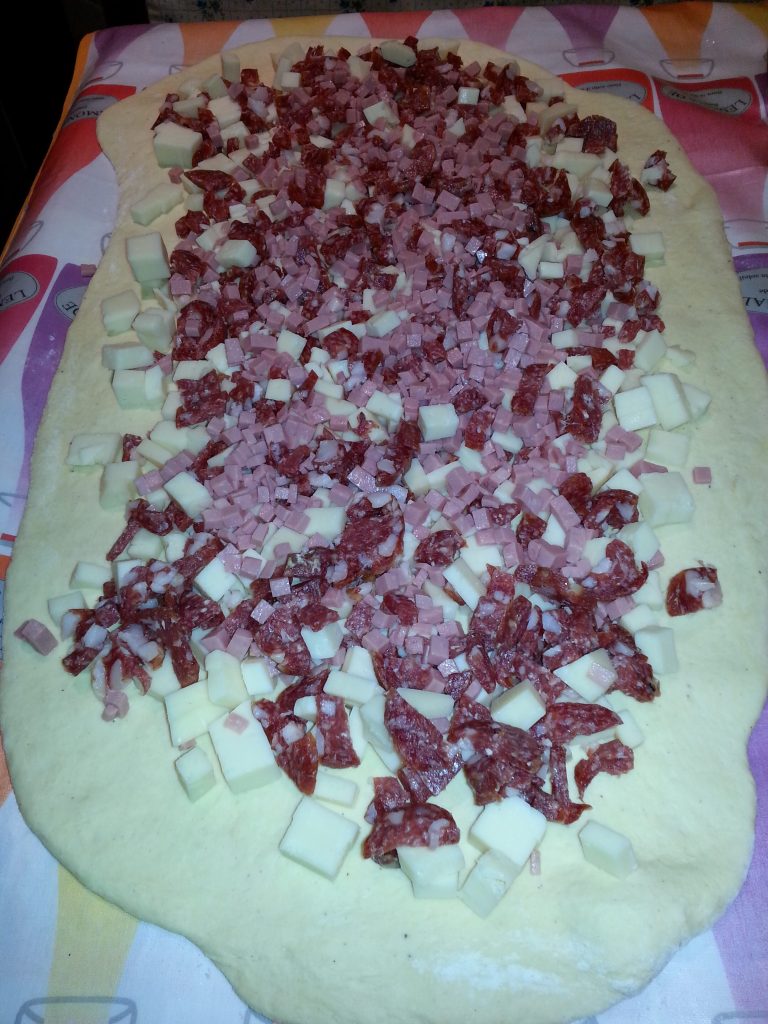
At this point put it in a covered bowl and let it rest for at least three hours, until it has doubled in volume.After this time (I’ve gone up to 5 hours and it was worth it), spread the dough out as if it were an oval pizza and cover it with diced cheeses and cold cuts. Be generous. Close the dough as if it were a large salami, sealing the edges with a little water.
Grease a ring pan (like a bundt pan but larger) with strutto and place the tortano inside, pressing the two ends together well. Cover with a cloth and let it rise for another three to five hours.
If you see the dough is slow to rise, don’t worry: with the presence of fats and cold cuts it is normal. In that case, extend the rising time.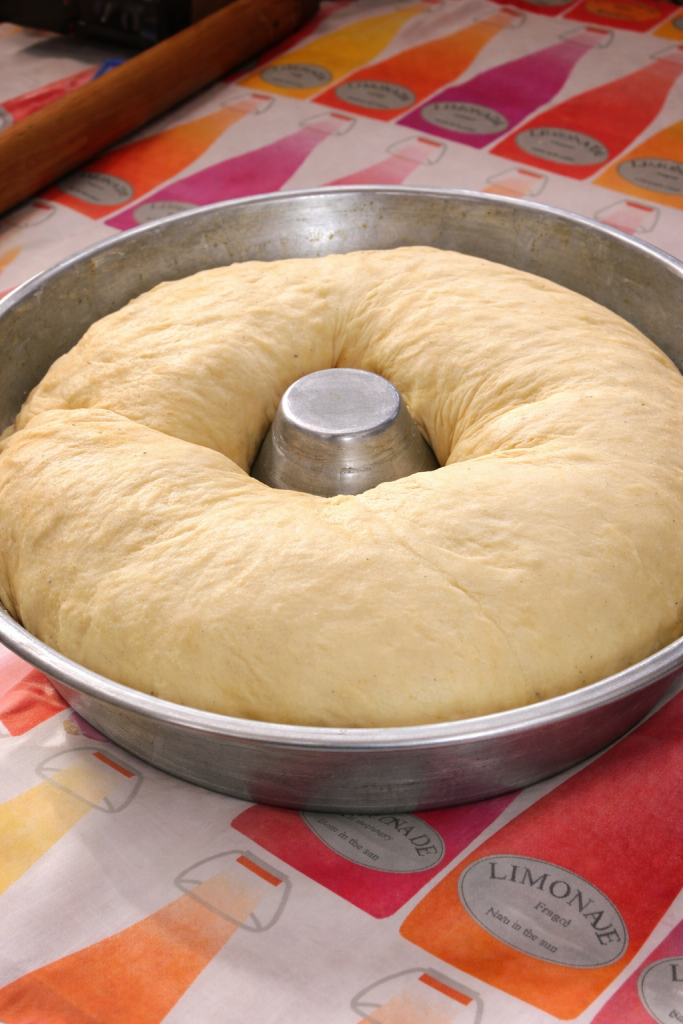
Preheat the oven to 356 °F and bake for the first 15 minutes, then increase to 392 °F and bake for another 15 minutes.
Let it cool and remove the tortano from the pan. If you remove it while it’s still hot you risk breaking it.
The tortano is good both reheated, if you made it a few days before, and cold. Perfect not only as an Easter starter, but also for the Easter Monday picnic.
The tortano opens the Easter lunch.
The pastiera closes it.
Storage and tips
The Neapolitan tortano keeps at room temperature for 2–3 days, covered with a cloth or stored in a container.
Over time it tends to dry out slightly, but just warm it for a few minutes to bring back its softness.
You can also freeze it already sliced, so you only thaw what you need.
Notes
The amount of filling is indicative: the tortano was born as a “leftovers” recipe, so you can adapt it based on what you have at home.
The important thing is to keep the balance between dough and filling, without making it too heavy.
Pepper is part of the tortano’s character: don’t remove it.
You can also skip rolling out the dough: in that case mix the cold cuts and cheeses directly into the dough and then place it in the pan.
However, in that case the time for the second rise tends to increase.
FAQ (Questions & Answers)
Can it be made without lard?
Yes, you can replace it with oil or butter, but the result will be different: lard gives structure and flavor.
How long should the Neapolitan tortano rise?
It depends on the yeast used. With fresh baker’s yeast it takes about 3 hours for each rising, until doubled in size.
What’s the difference between tortano and casatiello?
The casatiello features whole eggs on the surface, held in place by strips of dough.
Can it be prepared in advance?
Yes, it’s one of its strengths: it’s good even the next day, in fact it often improves. My advice is to warm it for a few minutes in the oven before serving.
Can it be frozen?
Yes. It’s best to freeze it already in portions, so you only thaw what you need.
You can let it thaw at room temperature and then warm it a few minutes to bring back its softness.Is it eaten at room temperature or warmed?
The tortano can be enjoyed at room temperature and is perfect for picnics and Easter Monday outings.
However, if you warm it slightly the aromas and flavors become even more intense.
