
How to prepare the real Sangria: ingredients, quantities and secrets for perfect maceration
Easy Spanish Sangria recipe: the guide for the red, white and non-alcoholic versions
The most common problem when making Sangria at home is rushing. Often fruit is cut, wine is poured and it is served immediately: the result is a wine flavored that tastes little of fruit and a lot of alcohol.
Or worse, people overdo the ice which, as it melts, turns this iconic cocktail into a watered-down drink without character.
To prepare a Spanish Sangria that tastes like a celebration and summer, you must respect the timing of nature. The secret is maceration: the fruit needs time to release its sugars and aromas into the wine, while spices like cinnamon and vanilla must meld with the alcoholic component.
In this guide I explain how to balance the body of the red wine with the freshness of the soda and how to choose the right fruit so it doesn’t fall apart.
Whether you want to impress friends with the classic version, the white one with Prosecco or a non-alcoholic variant for the little ones, with my tips you’ll bring the atmosphere of the Ramblas straight into your garden. ¡Salud!
Spanish Sangria ingredients recipe and tips
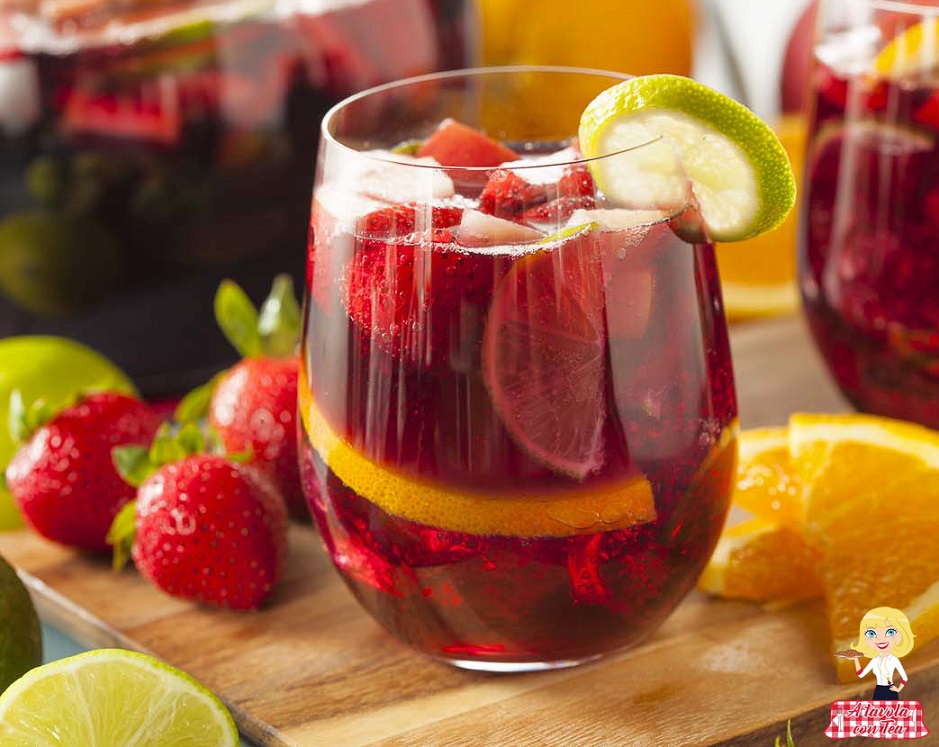
- Difficulty: Very easy
- Cost: Budget-friendly
- Preparation time: 15 Minutes
- Portions: 2 LITERS (about 8 1/2 cups)
- Cooking methods: No-cook
- Cuisine: Spanish
Ingredients for Homemade Spanish Sangria
- 6 1/3 cups red wine
- 2 cups soda (gassosa)
- 1 3/4 fl oz brandy
- 6 1/2 tbsp sugar
- 2 oranges
- 2 peaches
- 2 lemons
- 1 apple
- 4 whole cloves
- 3 cinnamon sticks
- 1 bean vanilla
- ice (as needed)
Preparation
Start by thoroughly washing all the fruit. Cut the apple and peaches into even cubes of about 5/8 inch. Slice the oranges and lemons thinly or into wedges (if they’re organic, absolutely leave the peel on to release essential oils). In a large pitcher or bowl, combine the fruit, sugar, cinnamon sticks, cloves and the vanilla pod split lengthwise.
Pour the brandy and all the red wine over the fruit. Stir gently with a long spoon to dissolve the sugar. Cover with plastic wrap and place in the refrigerator. Tea’s tip: let it macerate for at least 7-8 hours, but if you can prepare it the evening before for the next day, the flavor will be incredibly deeper and more harmonious.
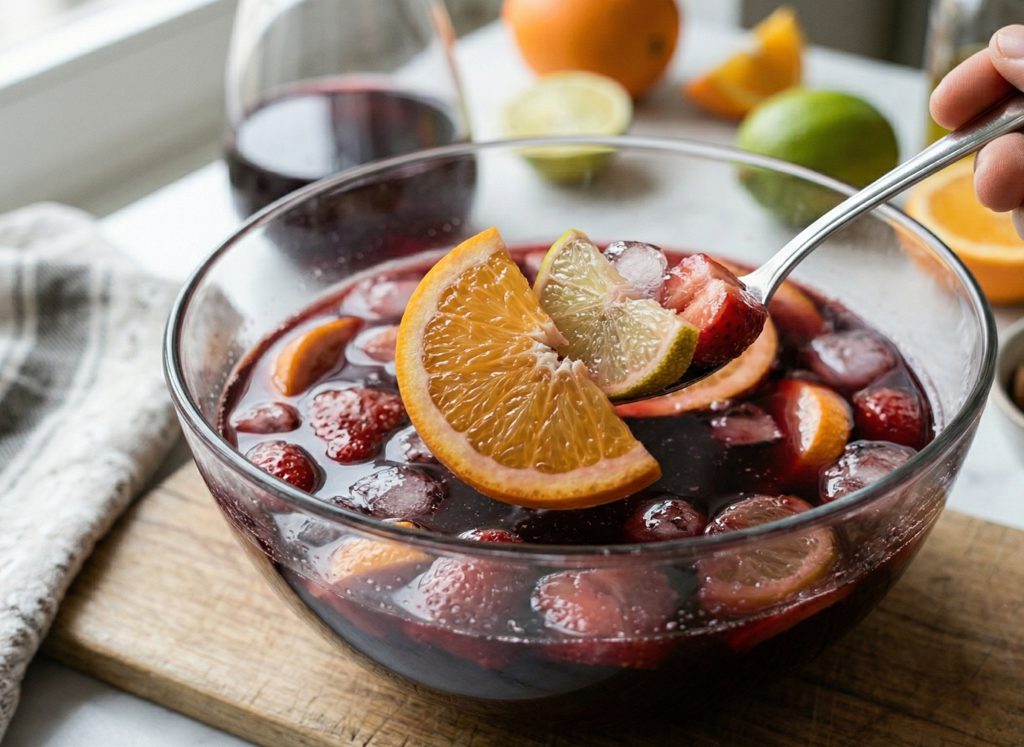
Only when ready to serve, remove the pitcher from the fridge. Add the very cold soda and stir one last time. Pour into glasses filled with ice, making sure each guest gets a generous portion of “drunk” fruit.
Notes on ingredients and Substitutions
The Wine: Don’t use a wine that is too “light.” You need a structure that can stand up to the addition of soda and the flavor of the fruit.
The Fruit: It is essential that it be firm. If it is too ripe, after 8 hours of maceration it will become mushy, making the Sangria cloudy.
The Spices: Use whole spices (sticks, cloves), never powdered, otherwise the drink will feel “sandy” on the palate.
TIPS
To get a less sweet sangria, you can add plain club soda instead of sweet soda right before serving.
The fruit can be swapped according to your tastes or seasonality; the important thing is to use fruit that is not overly ripe to avoid it falling apart once it macerates in the wine.
NON-ALCOHOLIC SANGRIA
Ideal for those who can’t handle alcohol or simply don’t appreciate it much. The alcoholic part is replaced with orange juice (or pineapple juice) flavored with the spices and, of course, without adding extra sugar.
Maceration with the fruit is also important in this case.
WHITE SANGRIA
It is made by mixing Prosecco (about 6 1/3 cups) with vodka (1 3/4 fl oz) and soda (about 2 cups), then peaches, oranges, cinnamon and sugar. All the ingredients should be mixed together like for red sangria and left to macerate for several hours before serving.
WINTER SANGRIA
When summer fruit isn’t available you can use apples, pears and citrus, or any fruit typical of the winter season. The result will still be excellent and distinctive.
OTHER RECIPES
If you like cocktails and aperitifs visit the dedicated section of the blog, where you can find SPRITZ, MOSCOW MULE, MOJITO, MARGARITA, DAIQUIRI, PATECA UBRIACA, BLOODY MARY and many snacks to pair for aperitif time
SPRITZ https://blog.giallozafferano.it/atavolacontea/aperitivo-aperol-spritz/
MOSCOW MULE https://blog.giallozafferano.it/atavolacontea/cocktail-moscow-mule-ricetta-originale/
MOJITO https://blog.giallozafferano.it/atavolacontea/ricetta-aperitivo-mojito/
MARGARITA https://blog.giallozafferano.it/atavolacontea/cocktail-margarita-ricetta-originale/
DAIQUIRI https://blog.giallozafferano.it/atavolacontea/cocktail-daiquiri-ricetta-originale/
Which red wine should I choose for Sangria?
Traditionally Tempranillo is used, but excellent alternatives exist: a good Sangiovese, a Primitivo or a Nero d’Avola are perfect because they are fruity and structured.
Can I make it without Brandy?
Yes, but brandy gives that alcoholic “push” that balances the addition of soda. If you don’t like it, you can replace it with Cointreau for a more citrusy touch.
Can I store it if there’s any left?
Sangria is great until the next day, but remember to remove lemon slices if you keep it for a long time, because the albedo (the white part of the peel) could release a bitter aftertaste.
