
A simple, no-bake strawberry cheesecake—the kind you make when you want a fresh dessert without too much fuss.
I really love strawberries and when they’re in season I always try to use them this way, not just as fruit. Here they become the star of the dessert.
It’s a cake I often make for occasions like Mother’s Day, because you can prepare it in advance and it will be ready when the time comes.
Here’s how to make the no-bake strawberry cheesecake, step by step.
If you like simple desserts—those you prepare without overthinking and that always turn out well—you can also try
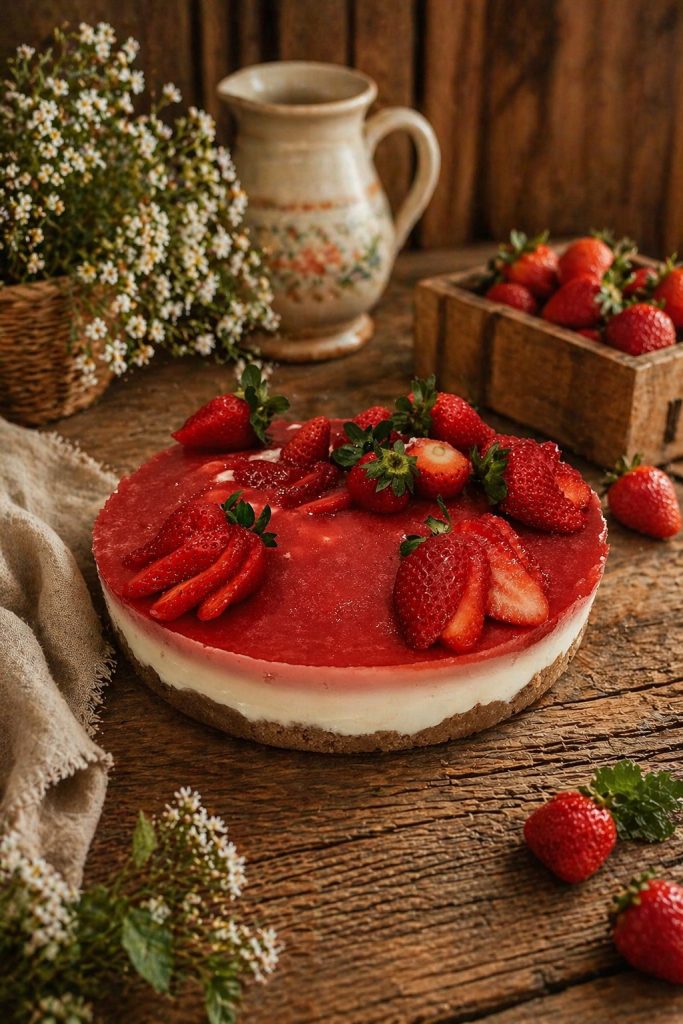
- Difficulty: Easy
- Cost: Medium
- Rest time: 4 Hours
- Preparation time: 30 Minutes
- Portions: 8 servings
- Cooking methods: No-bake
- Cuisine: Italian
- Seasonality: Spring
Ingredients
To make this no-bake strawberry cheesecake you need just a few simple ingredients: the base is the classic cookie-and-butter crust, the filling is delicate, and the strawberry gelée completes the dessert with a fresh note.
- 11 oz (about 3 cups crushed) digestive-type cookies
- 5.3 oz (about 10½ tbsp) unsalted butter
- 14 oz (about 1 3/4 of an 8-oz package) cream cheese (soft)
- 7 oz (about 3/4 cup) Greek yogurt
- 5 fl oz (about 2/3 cup) heavy cream for whipping
- 3.5 oz (about 3/4 cup) powdered sugar
- 7 sheets sheet gelatin (7 sheets)
- 11 oz (about 2 cups sliced) strawberries
- 1.8 oz (about 1/3 cup) powdered sugar
- 7 sheets sheet gelatin (7 sheets)
Tools
For this no-bake cheesecake you only need a few tools: a bowl, a blender for the cookies and a mold to shape the cake.
- Blender
- Mixing Bowls
- Hand Whisks
- Spatula
- Mold springform
- Parchment Paper
- Strainers
Procedure
The procedure is simple but requires organization: between steps the cheesecake needs resting time in the fridge. Allow at least 3 hours for final chilling.
Finely crush the cookies with a food processor or blender.
Transfer the crushed cookies to a bowl.
Melt the butter in the microwave and pour it over the cookies, mixing until you have a sandy, well-combined mixture.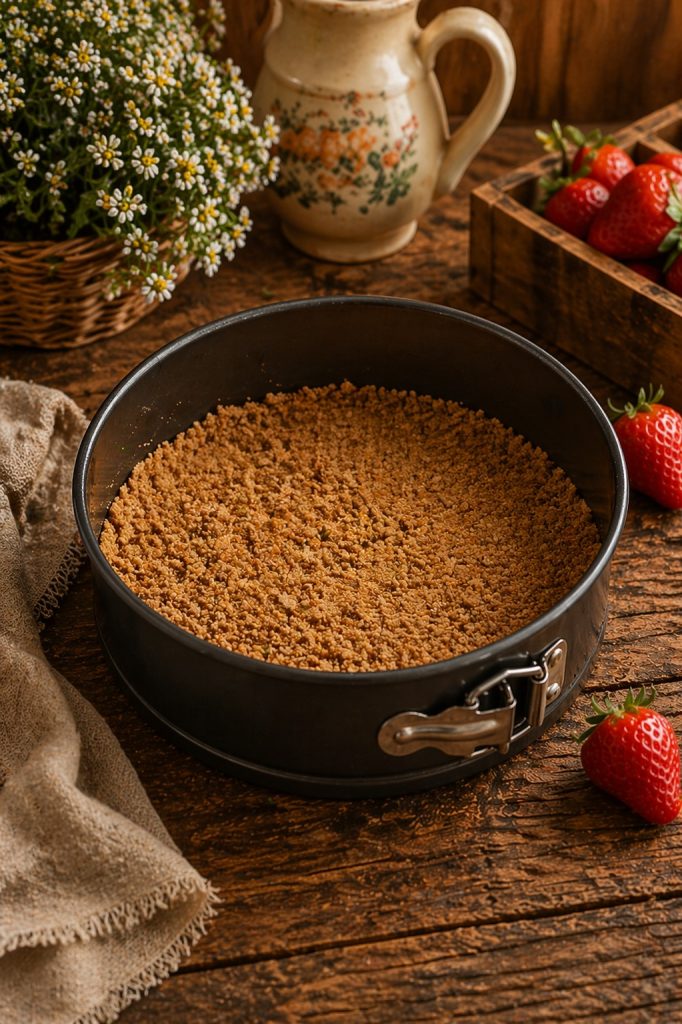
Open a 10.25 in (26 cm) springform pan, place a sheet of parchment on the bottom and close it so the paper is held firmly underneath.
For the sides, cut a strip of parchment paper and press it along the perimeter. To keep it in place, lightly grease the bottom and sides with a little butter: this will help the paper stay put.
Pour the mixture into the pan and press it firmly with the back of a spoon to create an even base. Press well along the edges too: this helps to get a more stable base when cutting slices.
Refrigerate to set for at least 30 minutes.Soak the gelatin sheets in a small bowl of cold water for about 10 minutes.
In another bowl combine the cream cheese, yogurt and powdered sugar, then whisk until smooth and free of lumps.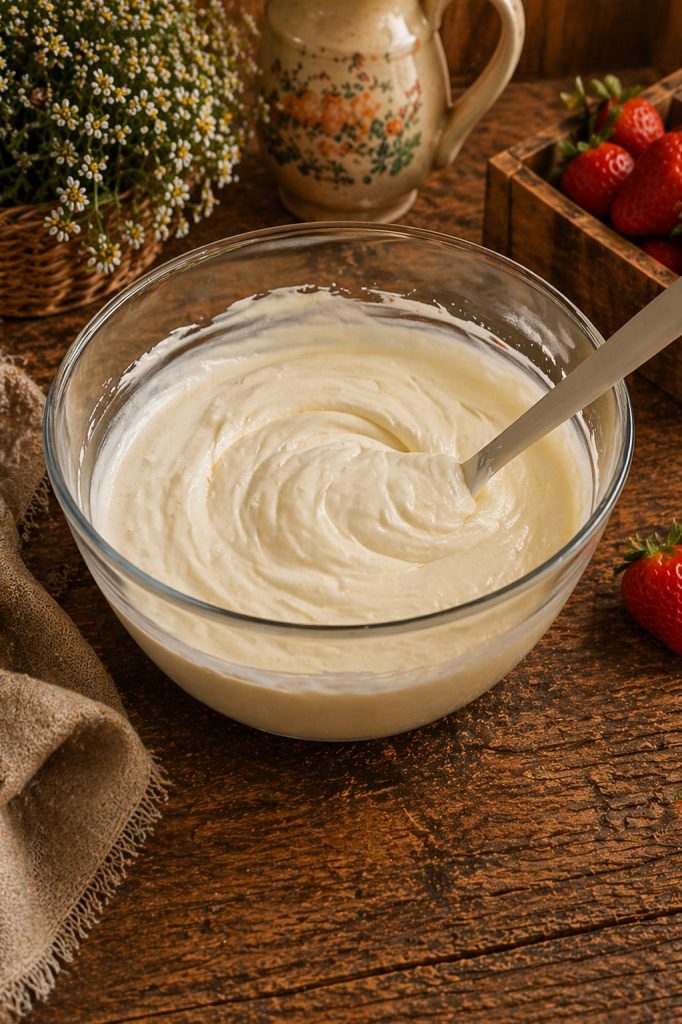
Reserve 2–3 tablespoons of the heavy cream from the total and set it aside.
Whip the remaining cream with a mixer until you get a soft, semi-whipped consistency—not too firm.
Warm the reserved cream slightly and dissolve the well‑squeezed gelatin sheets in it, whisking until completely dissolved.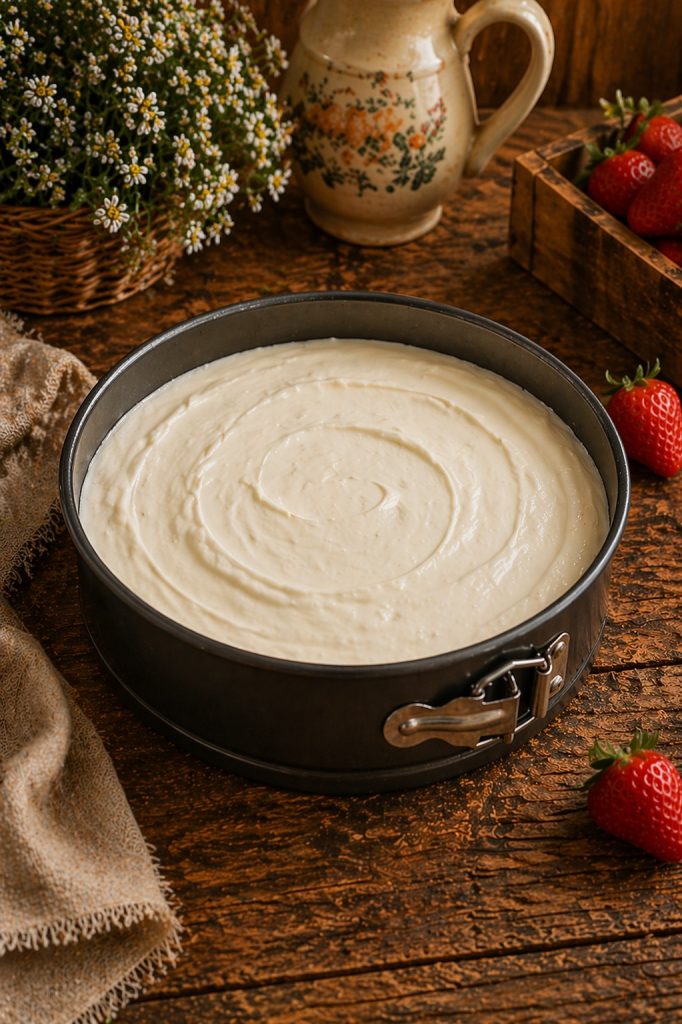
Pour the dissolved gelatin into the cream cheese mixture and mix quickly using a silicone spatula. Add it while still fluid but not boiling: if it’s too hot it may deflate the cream.
Add the semi-whipped cream and fold it in gently from the bottom up. The filling should be soft but supported; if it’s too runny, let it rest a few minutes before pouring.
Take the base out of the fridge, pour the filling and level it well with the back of a spoon.
Return to the refrigerator for at least 1 hour, until well set. Soak the remaining gelatin sheets in cold water for about 10 minutes.
Meanwhile wash the strawberries, remove the stems and keep 4–5 of the nicest ones aside for decoration. Chop the rest and put them in a small saucepan with the powdered sugar.Cook over low heat for a few minutes until the strawberries soften and release their juice. At this point strain them through a fine sieve to obtain a smooth purée, removing the seeds.
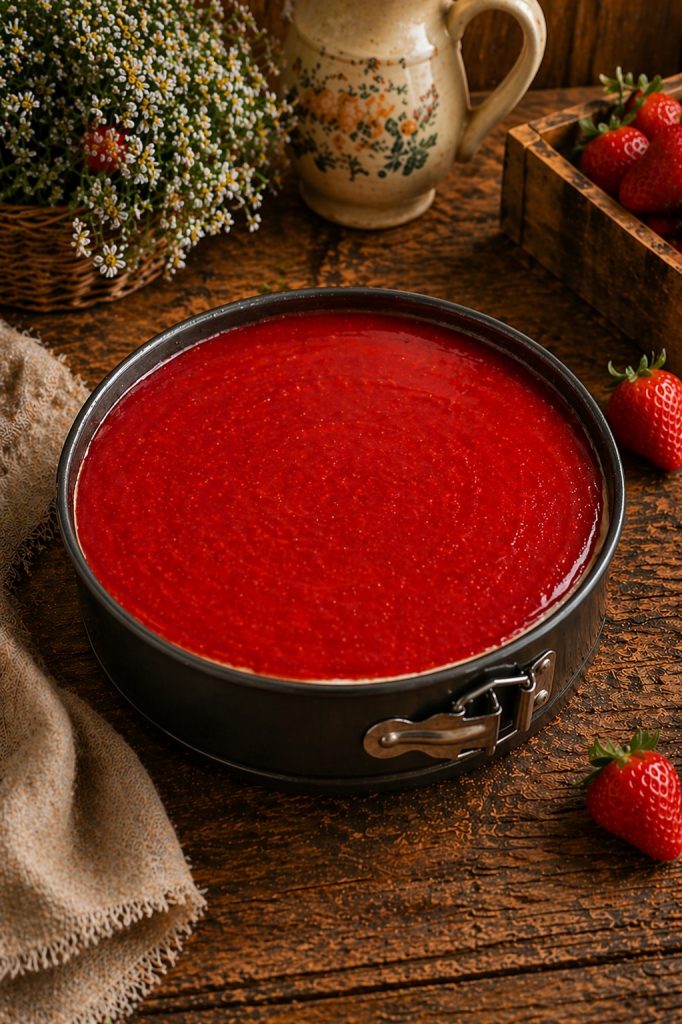
Squeeze the gelatin sheets well and stir them into the warm purée, whisking quickly until completely dissolved.Take the cheesecake from the fridge and immediately pour the gelée over the surface, spreading it evenly. Work quickly: the gelatin sets fast and once it starts to thicken it becomes difficult to level inside the pan.
Immediately take the reserved strawberries, slice them into a fan or thin slices and arrange them on top: in this way the gelée will set around them and hold them in place.
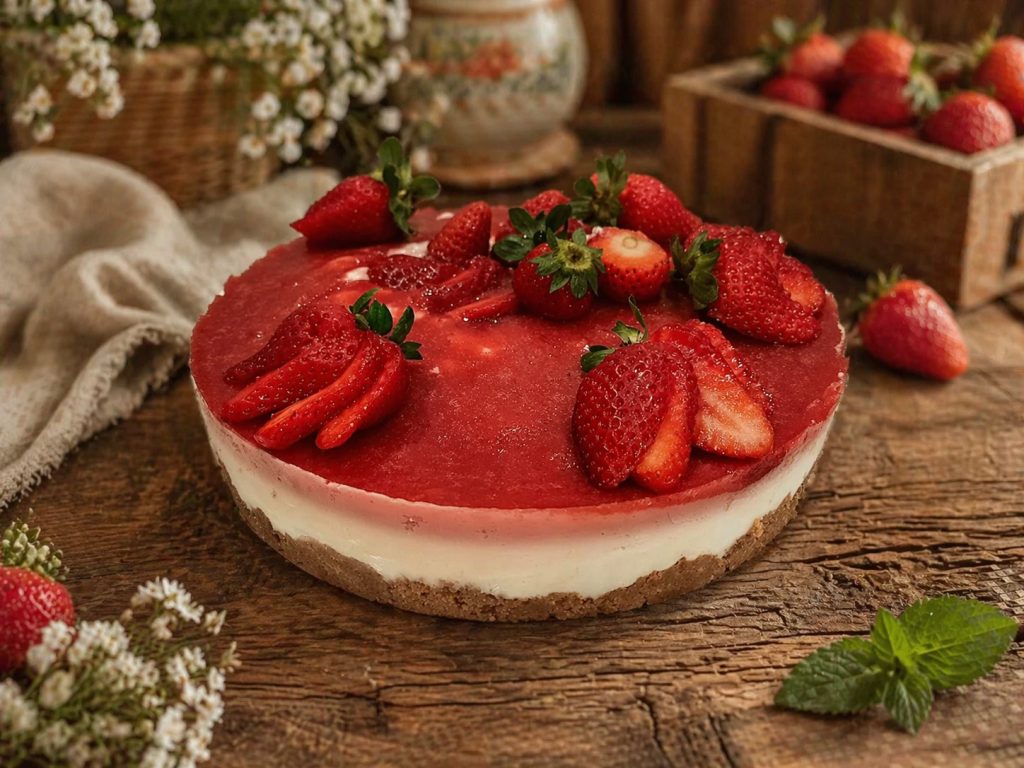
Refrigerate for at least 3 hours, preferably overnight, until the surface is firm.
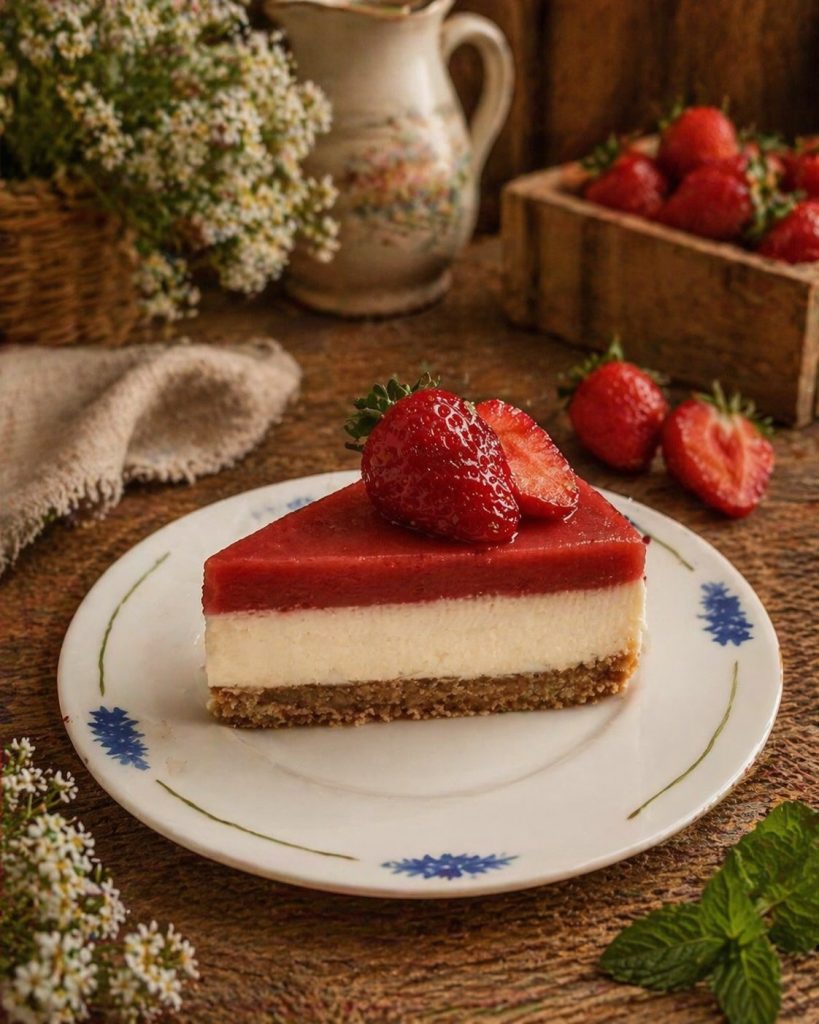
Before serving, leave it at room temperature for about 30 minutes.Carefully unclip the springform and remove the parchment from the sides. If necessary, run a knife along the edge to release the cheesecake without damaging it. For clean slices, use a smooth-bladed knife and wipe it between cuts.
Storage
The strawberry cheesecake keeps in the refrigerator for 2–3 days, well covered with plastic wrap or in an airtight container to prevent it from absorbing odors.
Tips
If you need to transport it, keep it very cold until the last moment: the gelée and the filling are delicate and can give way in warm conditions.
In this case it’s best to use a springform pan with a lid, which lets you store it in the fridge and transport it without moving it further.
When you’re ready to serve, simply remove the lid, open the pan and take off the parchment.
FAQ (Questions and Answers)
Can I prepare the cheesecake in advance?
It’s better not to prepare it too far in advance: the filling holds up well, but the crust tends to soften over time. Ideally prepare it the same day or at most the evening before.
Can I freeze it?
Not recommended: both the cream cheese filling and the gelée tend to lose texture and release water once thawed.
Can I skip the gelatin?
Not in this recipe, because it provides structure for both the filling and the gelée. Without gelatin the cheesecake won’t set properly.
How do I avoid lumps in the filling?
It’s important to dissolve the gelatin completely and mix it into the filling immediately. Also work quickly and fold in the whipped cream gently.
Can I use other types of cookies for the base?
Yes, you can replace digestives with other plain cookies. The important thing is to keep the proportion with the butter to get a compact crust.
What can I use instead of sheet gelatin?
You can use agar-agar, but it’s not a direct substitute: it works differently and requires cooking. It must be dissolved in a hot liquid and brought to a boil for a few minutes to activate. It also sets faster and yields a slightly firmer texture. For this reason, sheet gelatin is simpler and more reliable for this recipe.
Can I make it vegan?
Yes, but it’s not a simple swap: several ingredients must be revised. You can use dairy-free cookies, margarine or vegan butter for the base, a plant-based spreadable “cheese” and plant-based cream. Instead of sheet gelatin you can use agar-agar. Note that the texture will be different—generally firmer and less creamy than the classic version.

Some images are created or optimized with artificial intelligence tools for illustrative purposes.
