
Baked rice with ragù is a very rich first course, an alternative to the more classic lasagnas, equally tasty and easy to prepare. You can make Neapolitan ragù or Bolognese ragù; in this recipe, in particular, I didn’t make either one but a sauce with mixed ground beef and pork that is simpler to prepare, cooks in a much shorter time and is just as aromatic and delicious. Baked rice with ragù is the perfect recipe for a Sunday lunch and festive days like Christmas, Easter, etc…. Our guests will lick their lips and we will make a great impression with this important dish, which can also be prepared in advance, just like lasagna. The next day the rice is even better; just reheat it in the oven at 302°F for about 20 minutes.
This recipe is also ideal as a leftover idea to use any ragù you might have left over.
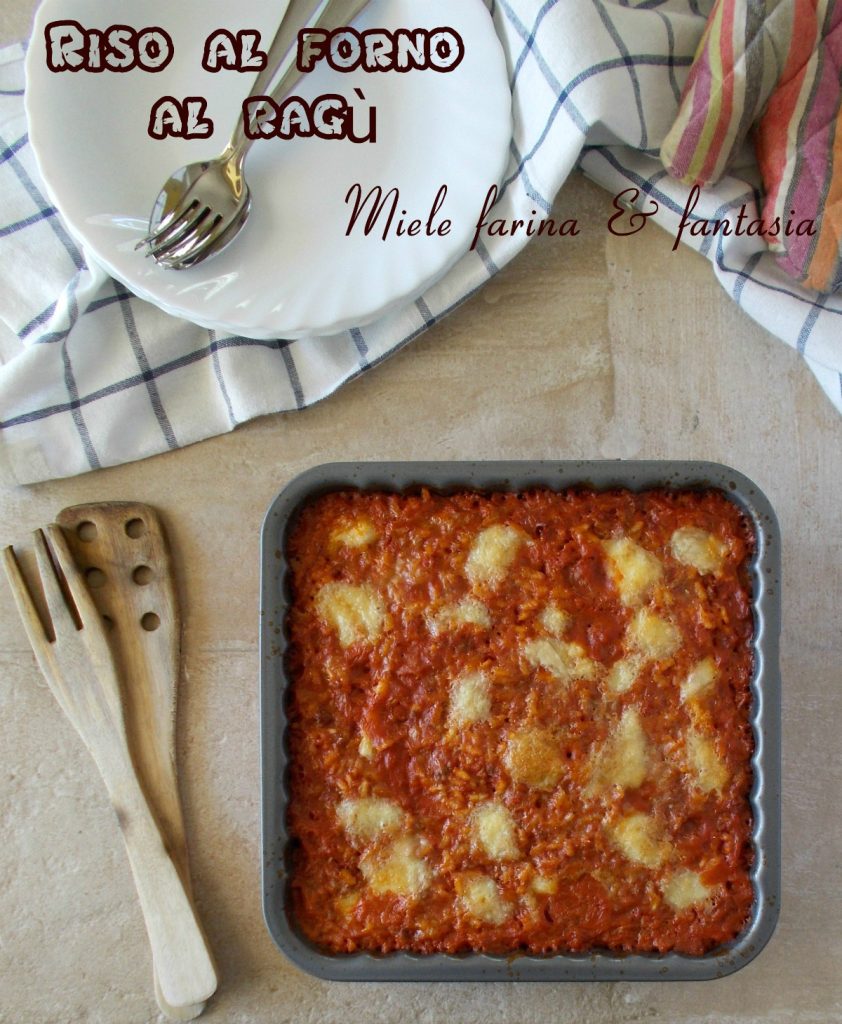
- Difficulty: Very easy
- Cost: Medium
- Preparation time: 30 Minutes
- Cooking time: 40 Minutes
- Portions: 6
- Cooking methods: Oven
- Cuisine: Italian
- Seasonality: Autumn, Winter and Spring
Ingredients
- 12 oz Mixed minced meat (beef and pork)
- 1 Celery stalk
- 1 Carrot
- 1 Yellow onion
- 1/2 clove Garlic
- 2 tbsp Extra-virgin olive oil
- 2 tbsp Dry white wine or red wine
- to taste Fine salt
- to taste Freshly ground black pepper
- 4.25 cups Tomato passata (tomato purée)
- 1.25 cups Rice for timbales (dry)
- 9 oz Smoked provola (also lactose-free)
- to taste Mix of grated Grana and Pecorino
- to taste Coarse salt
Preparation
Let’s start preparing our mixed meat ragù (beef and pork).
For this recipe it’s important that the sauce remains quite fluid for optimal and perfect cooking of the rice.
If the passata you use is very thick, add about 1 cup (8 fl oz) of water; otherwise, water won’t be necessary. Also, the ragù will cook for a shorter time than usual (otherwise it would reduce too much, leaving the rice undercooked) but despite this it will be delicious.
In a large saucepan, sweat a very finely chopped mixture of carrot, celery, onion and garlic over low heat in 2 generous tablespoons of extra-virgin olive oil.
As soon as the soffritto starts to sizzle, raise the heat and add the meat. Stirring often, make sure it browns evenly for 3–4 minutes, drying out completely.
Then deglaze with the wine (dry white; or red if you want a more intense, fuller-flavored ragù as I did), let the alcohol evaporate, season with fine salt and freshly ground pepper, mix and add the tomato passata (and the water if necessary).
Let the meat absorb the flavor for a couple of minutes, cover the pan leaving a small gap and cook the sauce over the smallest burner at medium heat for about 40 minutes. Now let’s prepare the baking dish and cheeses.
Lightly oil or butter the baking dish you’ll be using.
Grate the Grana and the Pecorino, in equal parts or according to your taste.
Dice the provola after removing the smoked rind from the outside. Set aside a little of the grated cheese and some provola which we’ll sprinkle on the surface of the rice before putting it in the oven.
Bring the water for the rice to a boil. As soon as it reaches a boil, season with coarse salt, wait a few seconds and pour in the rice, which you will cook for only 4 minutes.
If the rice is of the “parboiled” type, cook it for 7 minutes.
Preheat the oven to 356°F.
After 4 minutes, drain the rice immediately and very well and pour it directly into the pan with the ragù.
Turn off the ragù, move the pot away from the heat and mix for a few more seconds.
Add the grated cheese mix and the diced provola and mix everything thoroughly to combine.
Pour the dressed rice into the baking dish, sprinkle with the cheese you had set aside, level it and bake it on the middle rack for about 20–25 minutes.
The rice is ready when it has almost completely absorbed the sauce and the grains begin to be visible on the surface.
Every oven has different timings and heat distribution, so I recommend checking the rice often while it bakes.
In my case the dish was cooked in a conventional gas oven with heat only from the bottom. If your oven heats from both top and bottom, I suggest covering the surface of the dish with parchment paper for the last 10 minutes of cooking, because excessive top heat would dry out the rice and make it unpleasantly firm.
