
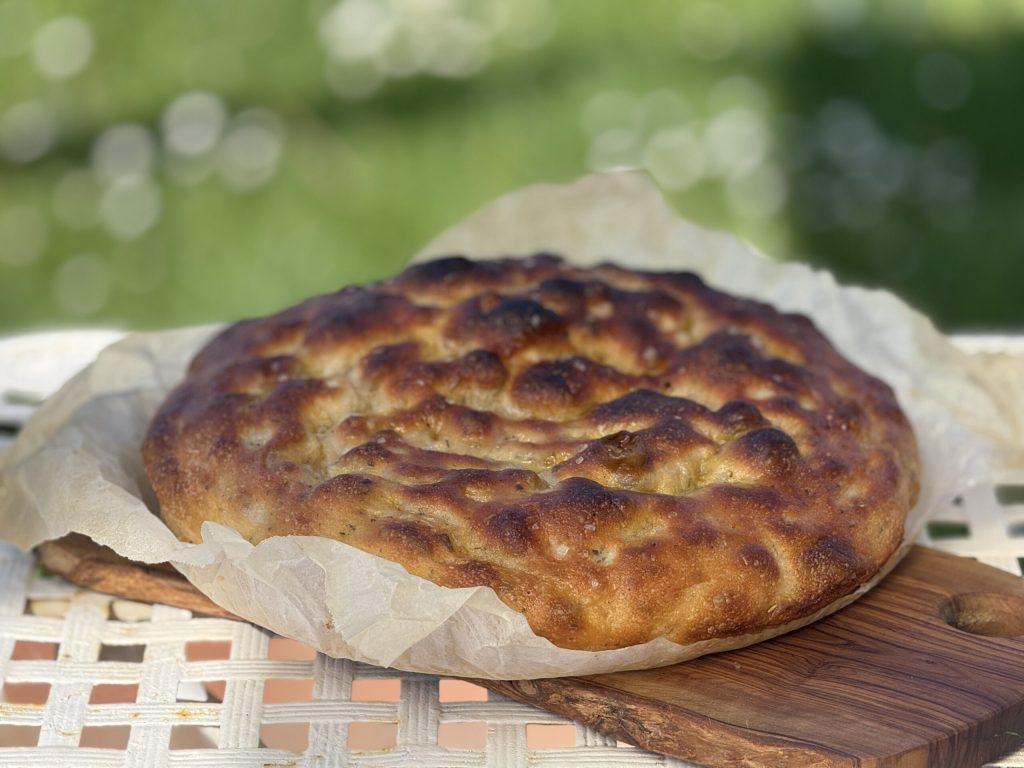
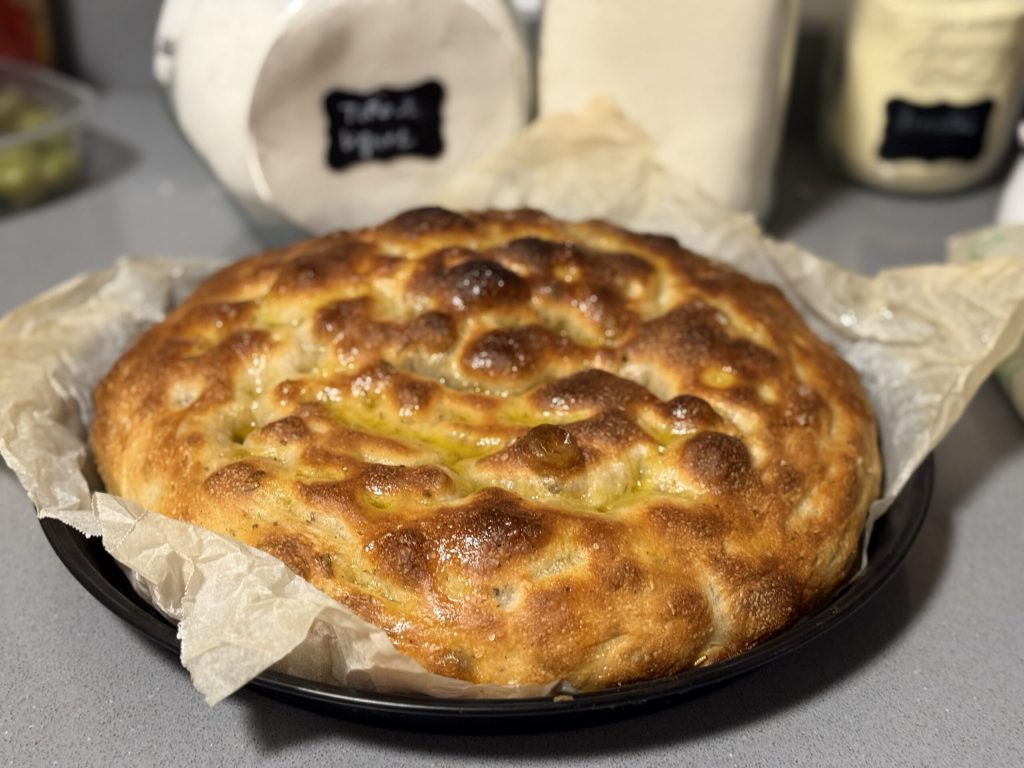
The einkorn farro focaccia with aromatic herbs in this recipe is prepared with dried sourdough starter, a choice that preserves all the aromas and properties of the starter while significantly reducing rising times. The aromatic herbs give a different scent nuance each time, making every focaccia unique and unrepeatable. The white einkorn (farro) flour instead makes the dough healthy and nutritious, lowering the glycemic index and providing more fiber and minerals.
This is my favorite version, but the recipe is really versatile: you’ll find some suggestions in the FAQ at the end.
This einkorn farro flatbread with herbs pairs well with many foods: it’s perfect served with cheeses, cured meats, sauces and pestos, and that’s how I love to serve it to guests for aperitivo. It also surprises when filled for a snack or brought to the table… once you try it, you’ll hardly stop making it.
If you’re curious, switch on the mixer and let’s get our hands in the dough together!
- Difficulty: Very easy
- Cost: Very inexpensive
- Rest time: 3 Hours
- Preparation time: 20 Minutes
- Cooking time: 25 Minutes
- Portions: 6People
- Cooking methods: Stovetop
- Cuisine: Italian
- Seasonality: All seasons
Ingredients
- 3 cups einkorn (farro monococcum) flour (white)
- 1 2/3 cups Type 0 flour
- 1 1/2 + 2 tsp cups water
- 1 tbsp + 2 tsp dried sourdough starter
- 1 tbsp + 1 tsp extra virgin olive oil
- 1 1/4 tsp salt
- to taste aromatic herbs (fresh)
- 1 tsp diastatic barley malt (diastatic)
- 1 tbsp water
- 1 tbsp extra virgin olive oil
- 1 tsp salt
Tools
- 1 Stand mixer
- 1 Bowl
- 1 Baking pan
- 1 Squeeze bottles
- Parchment paper
- Plastic wrap
Steps
In the bowl of the stand mixer pour the einkorn farro flour and the Type 0 flour together with the dried sourdough starter and the diastatic malt. With the paddle attachment gently mix all the dry ingredients until evenly distributed.
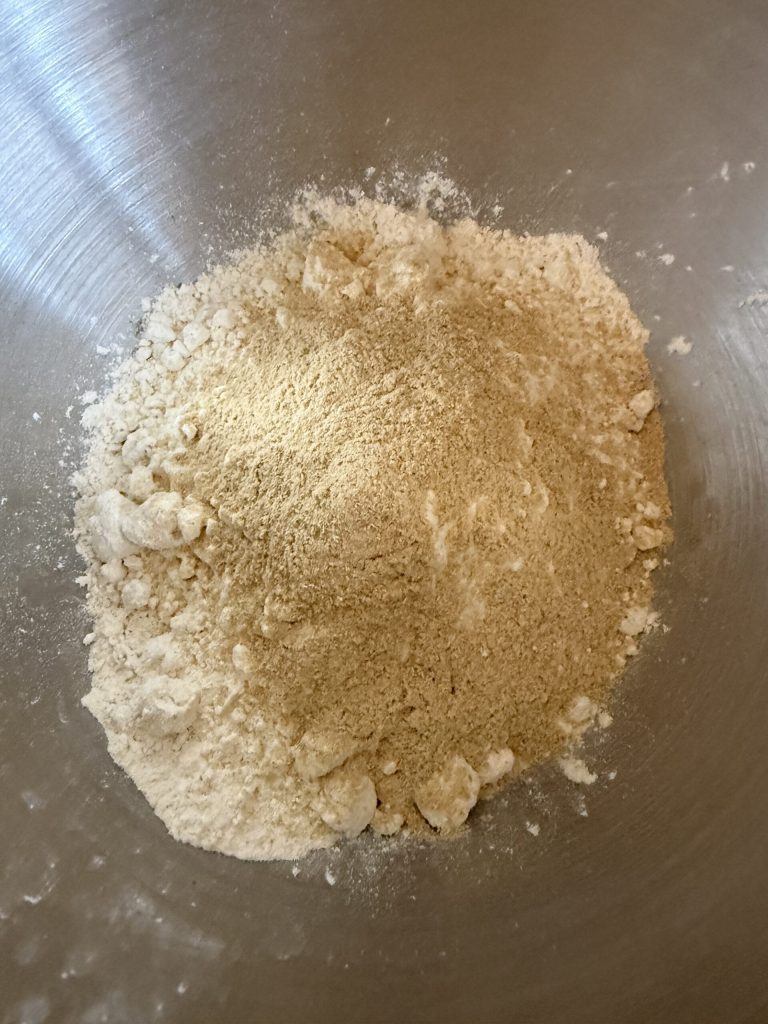
Still using the paddle, add the water little by little until you reach about 3/4 cup (200 ml): the dough will look rough, as you can see in the photo. At this point remove the paddle, fit the hook and continue adding the remaining water gradually, keeping about 1 tbsp aside for the next step.
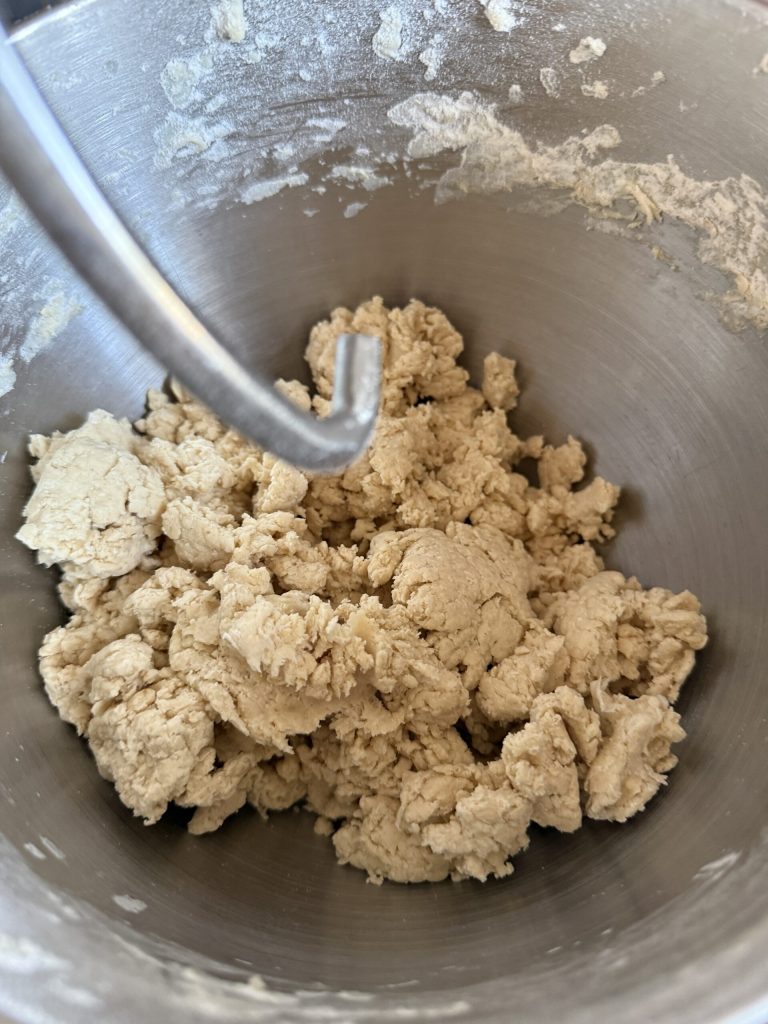
With the hook in place, gradually increase the speed of the stand mixer while adding the remaining water. The dough will start to become more smooth and glossy and will begin to cling to the hook: this is the sign a good gluten network is forming, essential for a soft, well-aerated einkorn focaccia.
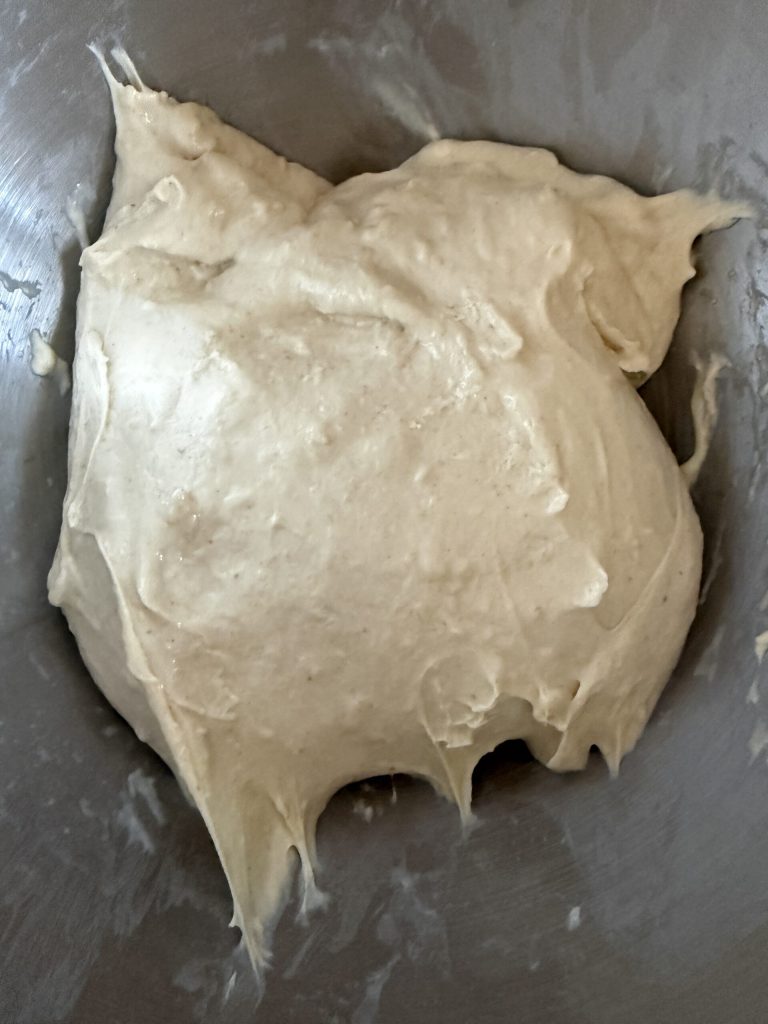
At this point add the extra virgin olive oil in two additions with the mixer running at a steady speed, waiting for the first addition to be completely absorbed before pouring the second.
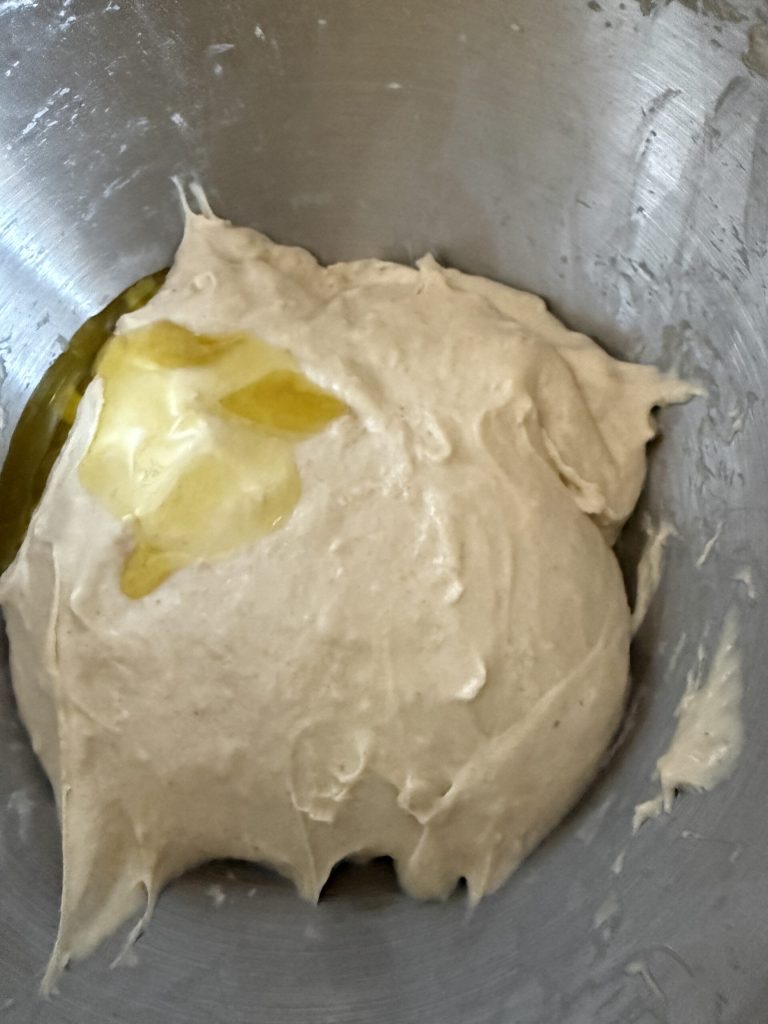
Dissolve the salt in the water you set aside and pour it into the dough, waiting for it to be completely absorbed. Then add the aromatic herbs: I used rosemary, sage and wild fennel from my garden, dried and roughly chopped.
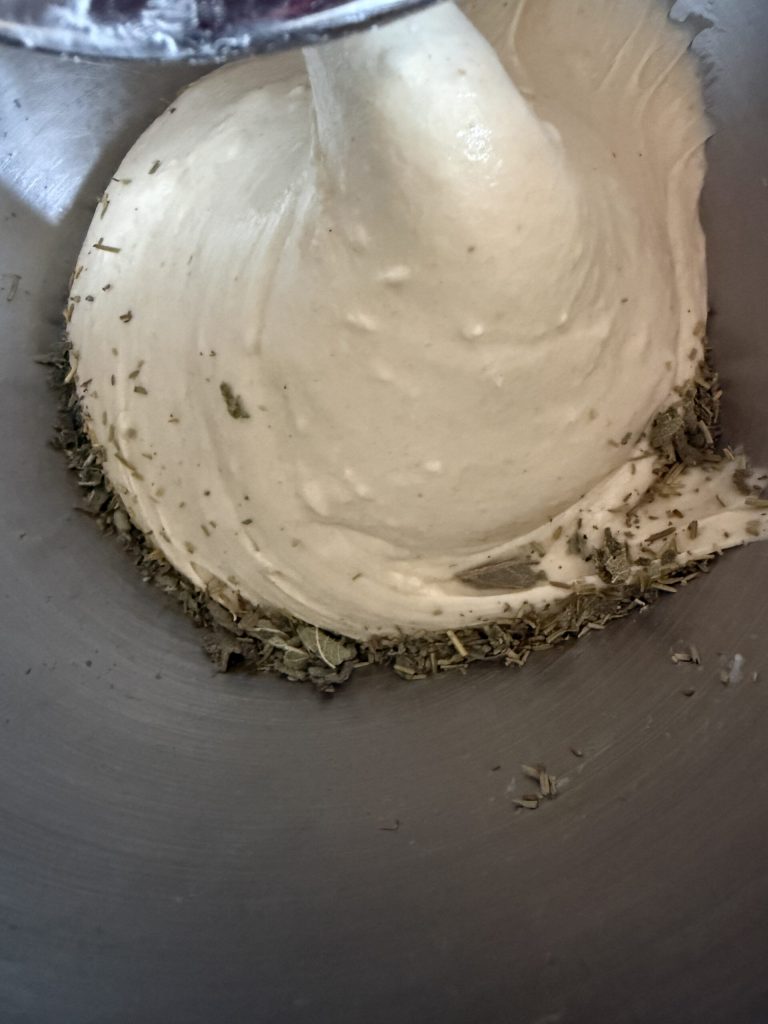
Once the dough has absorbed all the ingredients, transfer it to a bowl lightly oiled with extra virgin olive oil. Let it rest for half an hour, then perform folds — in the bowl or using the slap and fold technique on the work surface — twice, fifteen minutes apart. Cover the dough and let it rise until doubled.
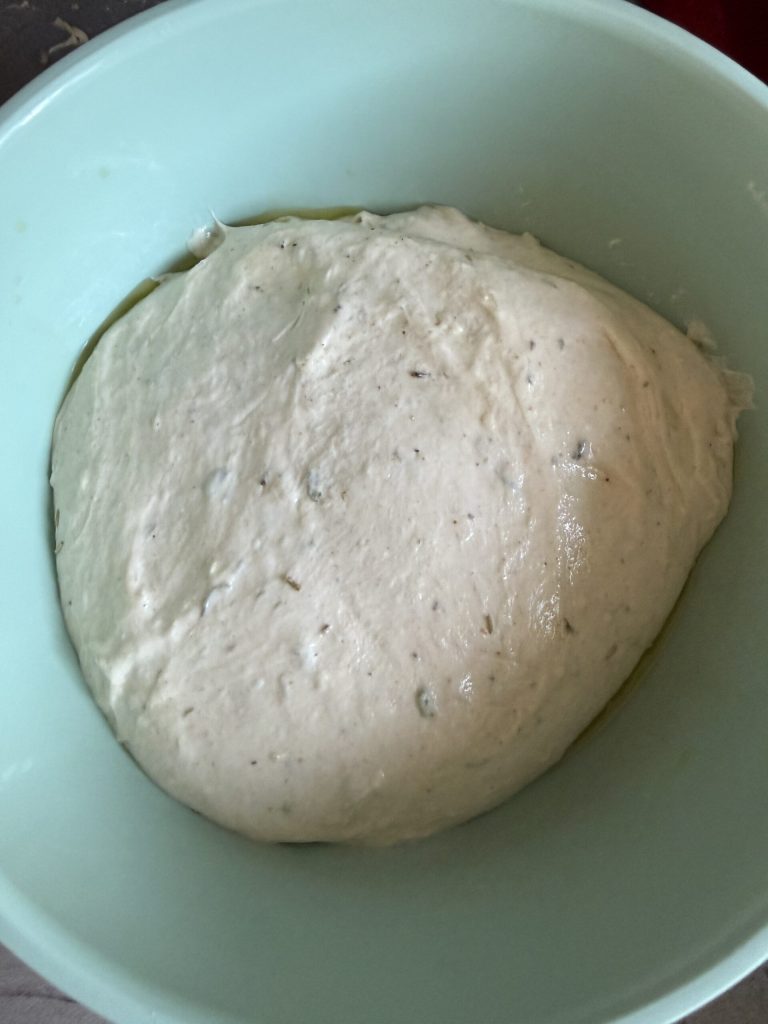
After about an hour and a half to two hours the dough will have risen and be ready to be shaped. Take a baking tray and line it with parchment paper lightly brushed with oil. Turn the dough onto the tray and begin to stretch it with oiled hands or slightly moistened hands. If you feel the dough keeps springing back, don’t force it: stop, let the gluten relax for a few minutes and then resume stretching. This small trick will help you obtain a uniform and well-stretched einkorn focaccia without stressing the dough.
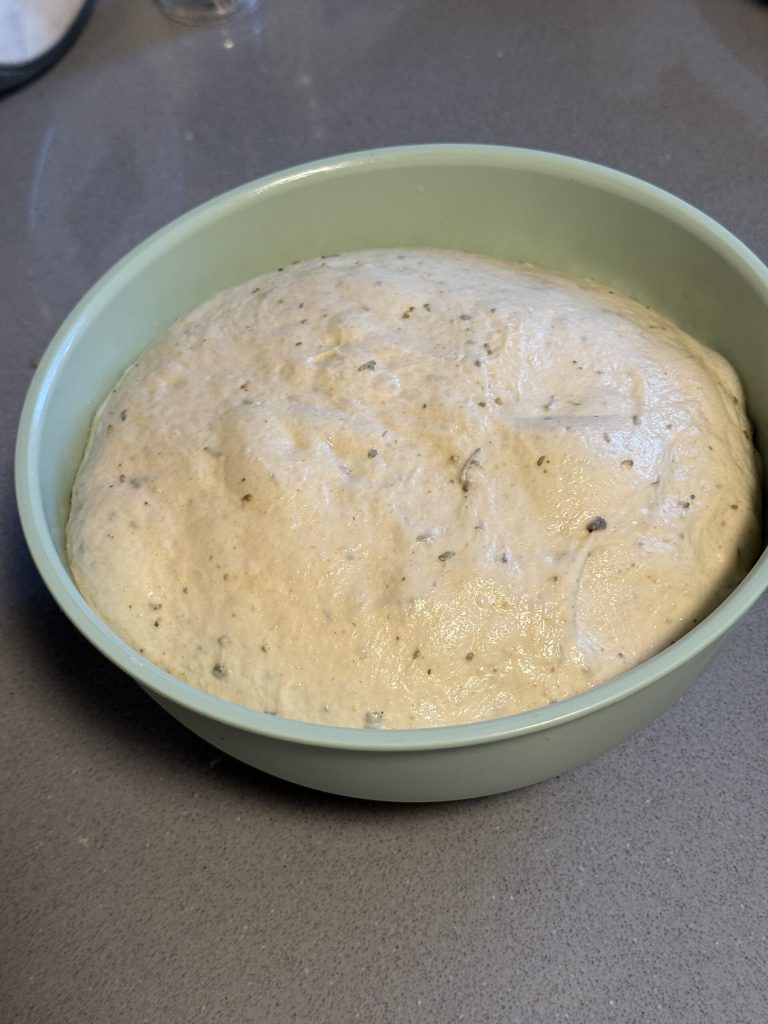
When the dough is well stretched across the tray, press your finger pads firmly to create the classic focaccia dimples. Cover with plastic wrap and allow a short second rise; meanwhile, preheat the oven to 410°F (static) so it’s properly heated before baking.
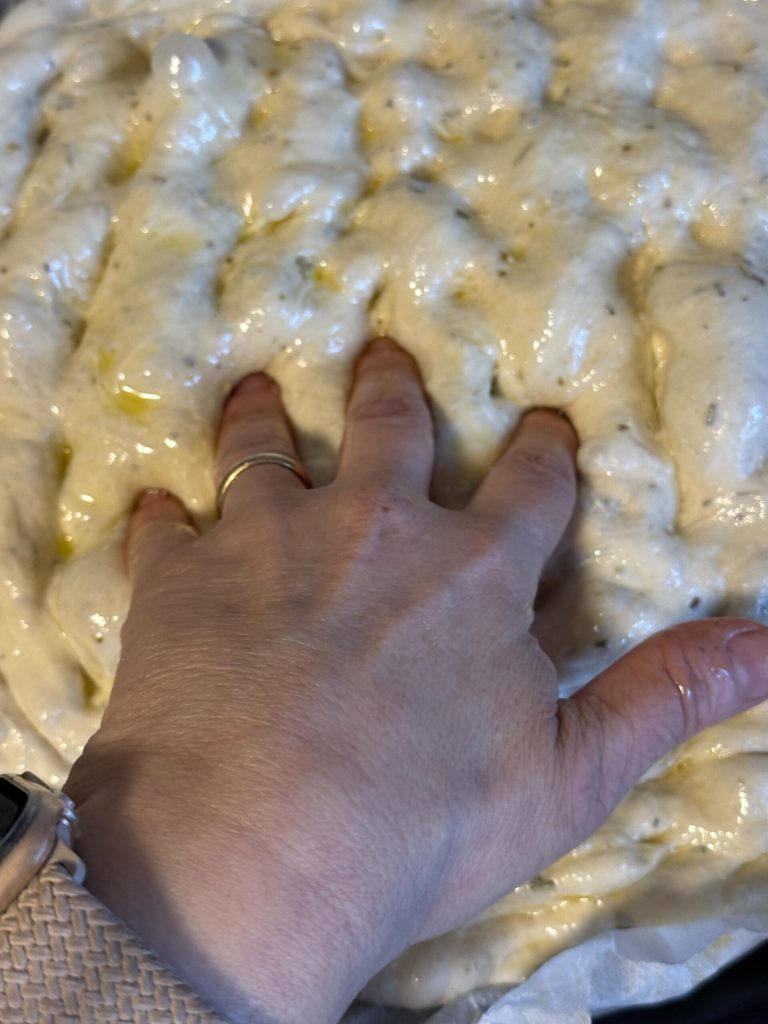
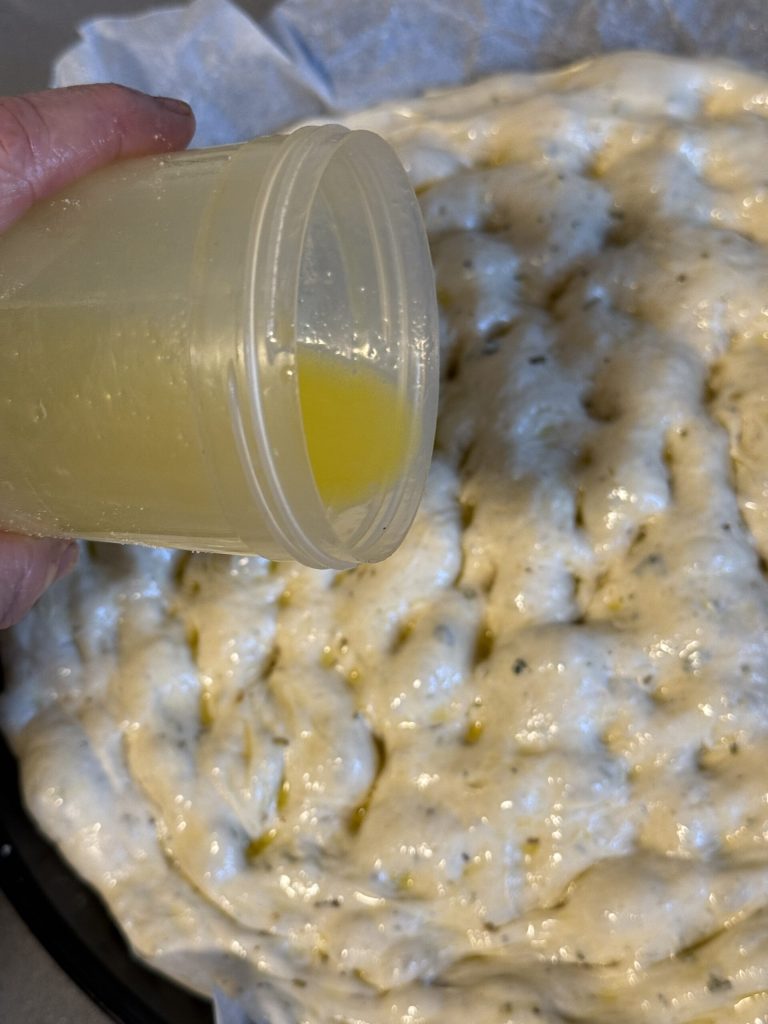
Prepare the brine/emulsion: in a kitchen squeeze bottle or a container with a lid pour water, extra virgin olive oil and salt and shake until you get a nice emulsion. Pour it generously over the entire surface of the focaccia.
Press your finger pads into the dough again so the brine penetrates deeply. Your einkorn farro focaccia with aromatic herbs is ready to go into the oven!
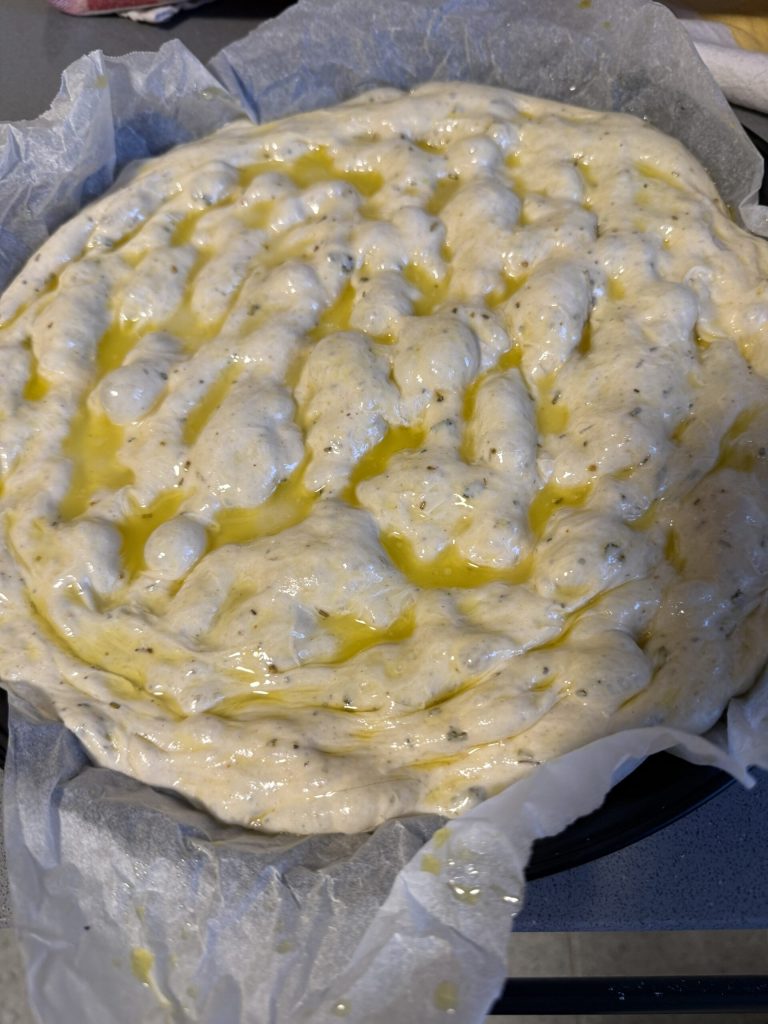
Bake the einkorn farro focaccia with aromatic herbs for 15 minutes at 410°F (approx.), then lower to 392°F and bake for another 10 minutes. Keep in mind oven temperatures are indicative: every oven is different and you know yours better than anyone. If necessary, continue baking for another 10 minutes or until the surface is nicely golden and crisp.
At this point your einkorn farro focaccia with aromatic herbs is ready! Let it cool slightly before cutting and enjoying — if you can wait! 😄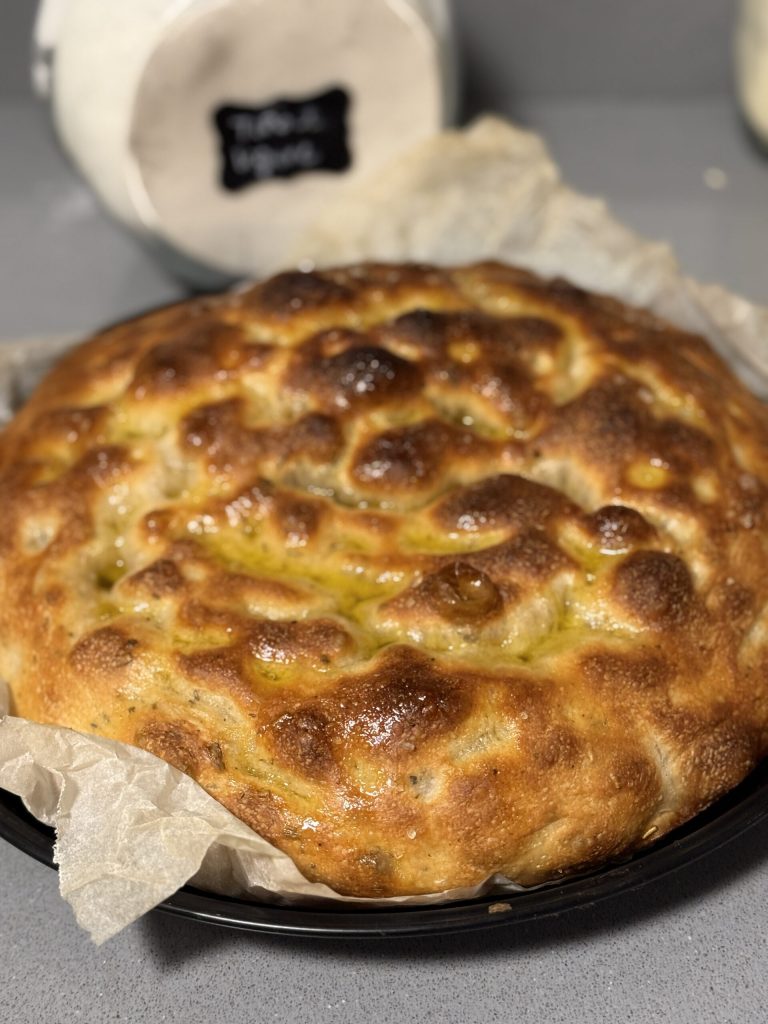
Storage for einkorn farro focaccia with aromatic herbs
The einkorn farro focaccia with aromatic herbs keeps at room temperature for 1-2 days in a paper bag. Before serving the next day, you can warm it in the oven for a few minutes to recover that just-baked fragrance.
If you want to store it longer, the einkorn focaccia freezes very well: cut it into pieces or slices, place them in freezer bags and store in the freezer for up to 2 months. When you want to enjoy it, remove the desired portion and let it thaw at room temperature or put it directly into the oven for a few minutes to recover its goodness.
FAQ (Questions and Answers)
Can I use a different yeast than the dried sourdough starter?
Yes, you can prepare the einkorn farro focaccia with other types of yeast. The dried sourdough starter used in this recipe is about 1 tbsp + 2 tsp (15 g) and yields a result ready in about 3 to 3 1/2 hours, with good aromatic complexity and digestibility. If you prefer to use fresh baker’s yeast, about 8–12 g (roughly a small cube) is enough for a similar yield, although the final flavor will be less characteristic. I haven’t personally tested active dry yeast in this recipe, so I prefer not to give guidance that might not be precise — it’s safer to follow the instructions on the package!
Can I substitute the einkorn farro flour with another flour?
Yes, it’s fun to experiment! You can use Type 1 or Type 2 flour or whole wheat flour for an even more rustic and flavorful focaccia. If you want to stay with farro, you can also try whole farro flour or even whole durum semolina. I don’t recommend replacing it entirely with refined 00 flour, which would give a less characteristic and interesting result. When changing flours you’ll need to adjust the water according to each flour’s absorption.
Can I make the dough by hand without a mixer?
The stand mixer simplifies and speeds up the work, but the einkorn farro focaccia with aromatic herbs can absolutely be made by hand. Pour the flours and the starter into a large bowl, add the water gradually and work the dough on the work surface vigorously for at least 10–15 minutes, until you get a smooth, elastic dough. The folds and shaping steps remain the same.
Can I use fresh herbs instead of dried ones?
Yes, fresh aromatic herbs work great and will give your einkorn farro focaccia an even more intense and lively aroma. Keep in mind fresh herbs release more moisture during baking, so add them in slightly larger quantities than dried ones. Rosemary, sage, thyme and fennel are all excellent: use what you have or prefer, even combining them.
Why does the dough spring back when I stretch it?
When the dough tends to shrink while stretching it means the gluten is still tight and needs to relax. The solution is simple: stop stretching, cover the dough with a cloth and let it rest for 5–10 minutes. Then resume stretching with oiled or moistened hands and you’ll see it spread much more easily. Forcing the dough at this stage is the only real mistake to avoid, because you risk tearing the gluten network you built so carefully during mixing.
