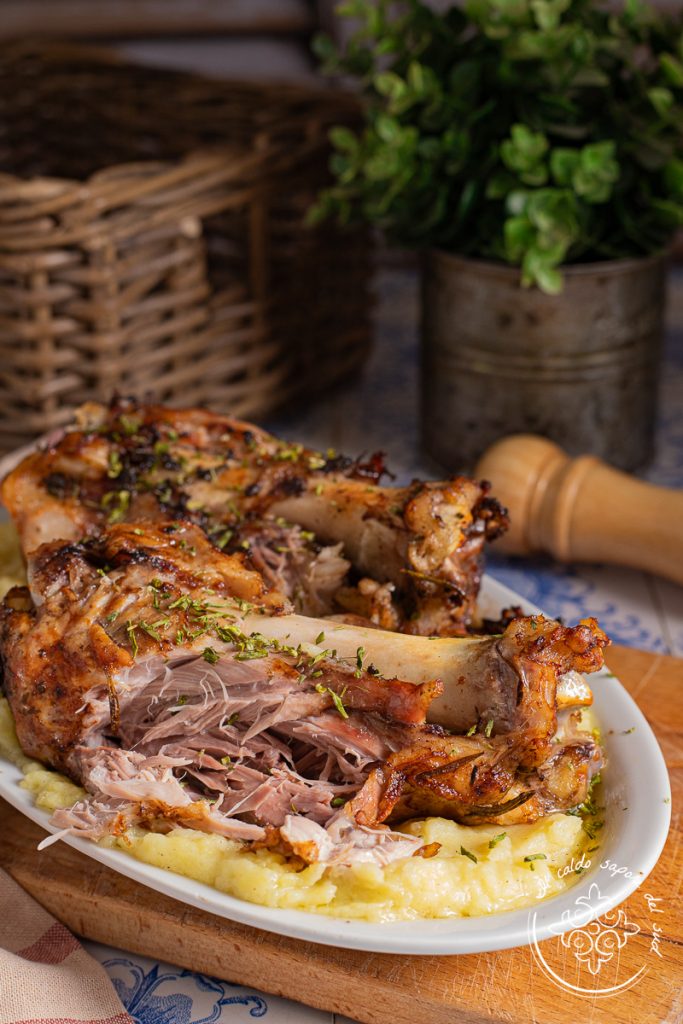
The low-temperature pork shank is one of those main course dishes that really change the way you cook meat: few steps, lots of time and a result that speaks for itself. With cooking at 151°F for 30 hours, the shank becomes very tender, juicy and full of flavor, almost melting when sliced.
Compared to a traditional roast, like my beer-braised pork shank, here the flavor is cleaner and more concentrated: vacuum sealing lets the aromatics work slowly without loss, while the cooking juices become a perfect base for a natural sauce.
If you like slow cooking on the blog, you can also try the low-temperature vacuum-sealed beef shoulder or the low-temperature beef shank, tender and juicy, where the technique is the same but applied to different cuts, with consistently replicable results.
This recipe fits perfectly among preparations to be made with patience, ideal when you want to put something special on the table without complicating your day. You can accompany the shank with buttered potatoes, a mashed potatoes or simple sautéed vegetables, depending on the season.
A long marination, vacuum low-temperature cooking and a final sear, in a pan or in the oven, complete the dish: a golden crust outside and soft meat inside. The cooking liquid, filtered and reduced, becomes an intense sauce that ties all the flavors together.
Let’s go to the kitchen now and prepare our vacuum-sealed low-temperature pork shank together, but first I remind you that if you want to stay updated on all my recipes, you can follow my Facebook page (here) and my Instagram profile (here).
Take a look:
- Difficulty: Very easy
- Cost: Very inexpensive
- Rest time: 1 Day
- Preparation time: 10 Minutes
- Cooking time: 1 Day 6 Hours
- Portions: 4
- Cooking methods: Slow cooking
- Cuisine: Italian
- Seasonality: All seasons
Ingredients to make the vacuum-sealed low-temperature pork shank
- 2 pork shanks
- 2 stalks celery
- 2 carrots (medium)
- 1 onion
- 1 sprig rosemary
- 4 leaves bay leaves
- 1.75 tsp salt (about 10 g (≈0.35 oz); use salt at 10% of the weight of the meat)
- 2 cloves garlic
- 1 lemon (organic, juice and zest)
- to taste chives
- 2 tbsp honey
- to taste black pepper
- to taste paprika
- 3 tbsp extra virgin olive oil
Tools
- Sous vide
- Roner
Steps to make vacuum-sealed low-temperature pork shank
Start by preparing the spice mix: in a bowl combine the salt (calculated based on the weight of the meat), black pepper, paprika and chives, together with a chopped rosemary mixture. Mix well until you obtain a fragrant, uniform blend. Rub the shanks with the aromatic mix, distributing it over the entire surface: this step flavors the meat from the start and will help achieve a well-balanced low-temperature pork shank.
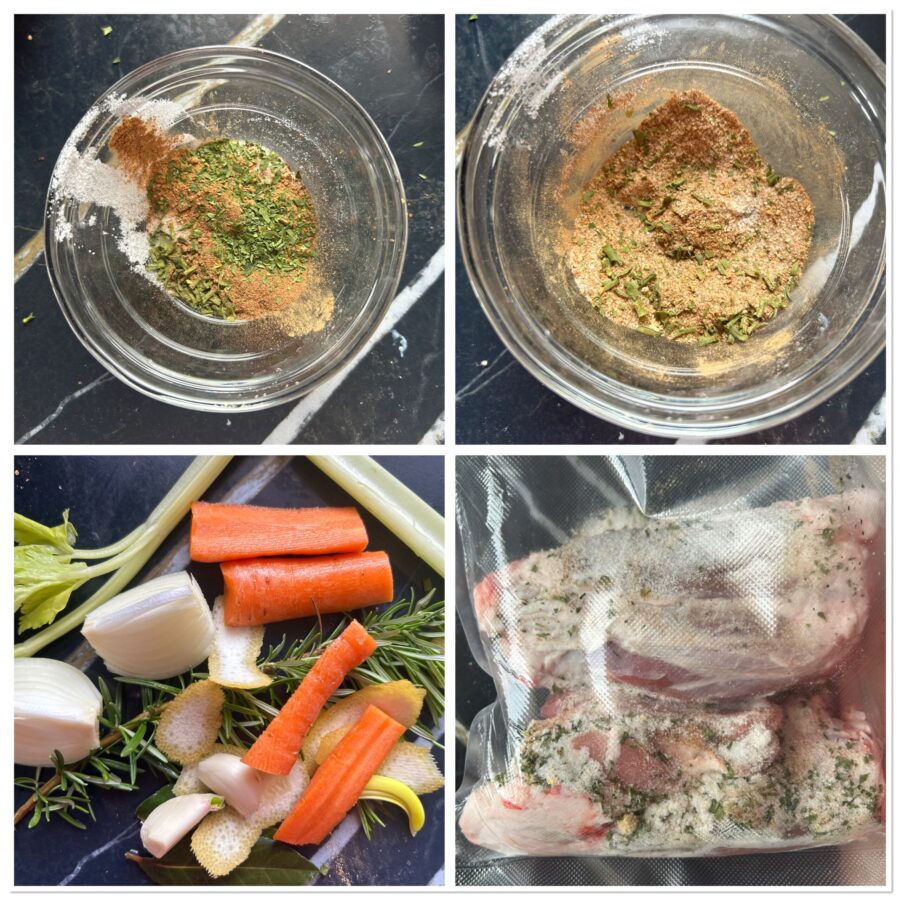
Then prepare the vegetables: roughly chop the celery, carrots and onion — no precision needed, they are only there to release aroma during cooking. Add the garlic cloves, bay leaves and a few strips of lemon zest. Place the shanks into vacuum bags together with the vegetables and aromatics. At this point add the extra virgin olive oil, the lemon juice and the honey, which will give a slightly sweet note and will help with the final browning.
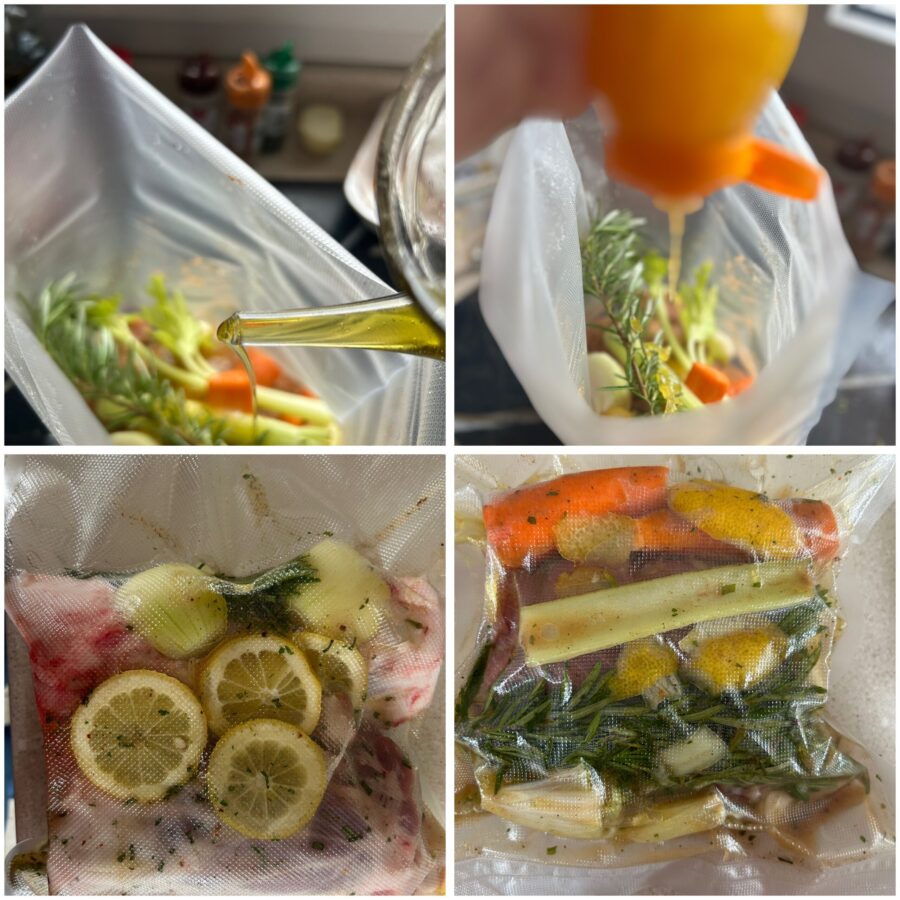
Seal the bags with the vacuum machine, distributing aromatics and seasonings evenly around the meat. Refrigerate and let rest for 24 hours: during this phase the salt penetrates the fibers and the aromatics diffuse uniformly, improving the structure and flavor of the low-temperature pork shank.
After the resting time, the shanks are ready for sous vide cooking: 151°F for 30 hours.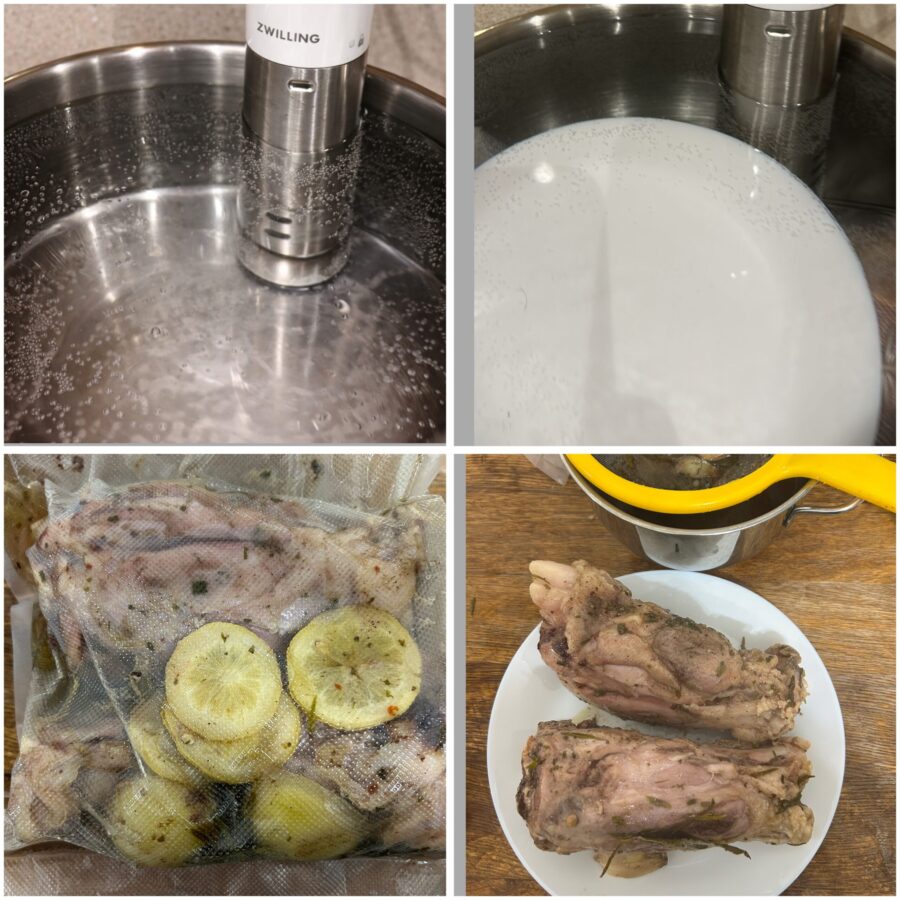
Once cooking is finished, remove the shanks from the bag and strain the cooking liquid, discarding aromatics and vegetables.
Transfer the liquid to a small saucepan and reduce over medium heat until you obtain a more concentrated, slightly glossy consistency: it will become a natural, intense and well-balanced sauce.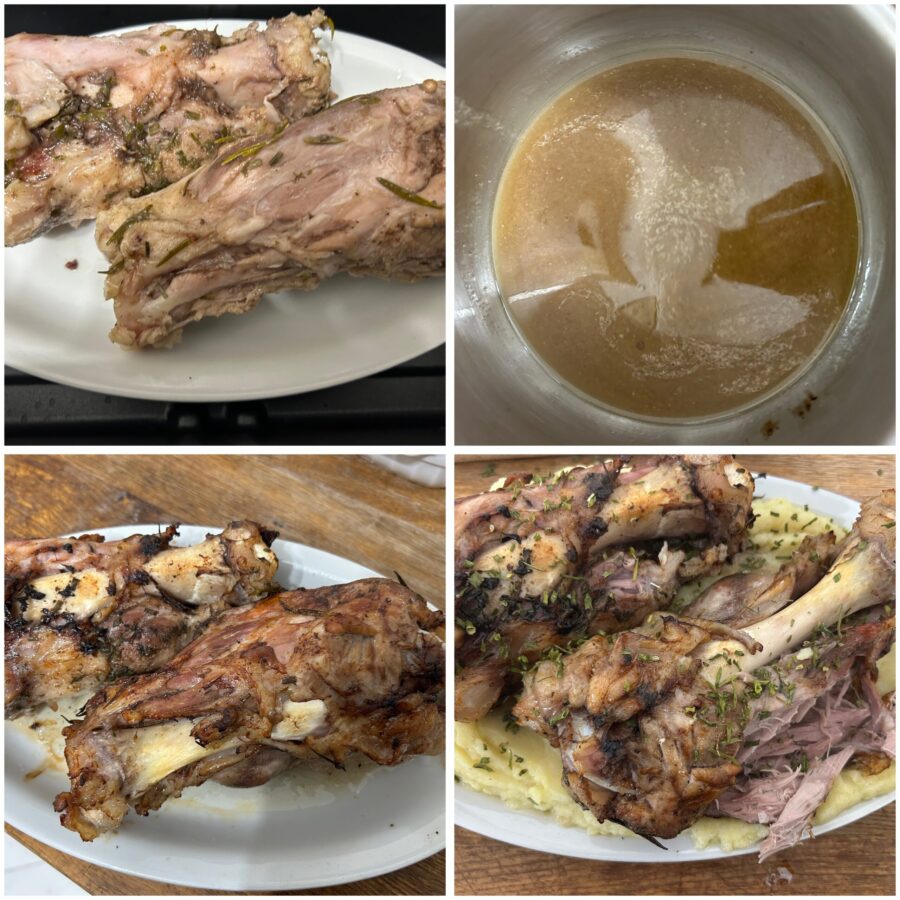
Meanwhile, finish the shanks in a convection oven at 392°F for 5–8 minutes or until browned, or sear them in a very hot pan with a drizzle of oil until you obtain a golden, slightly crispy surface.
Serve the shank hot on a bed of mashed potatoes, finishing with the reduced cooking liquid and a sprinkle of fresh herbs.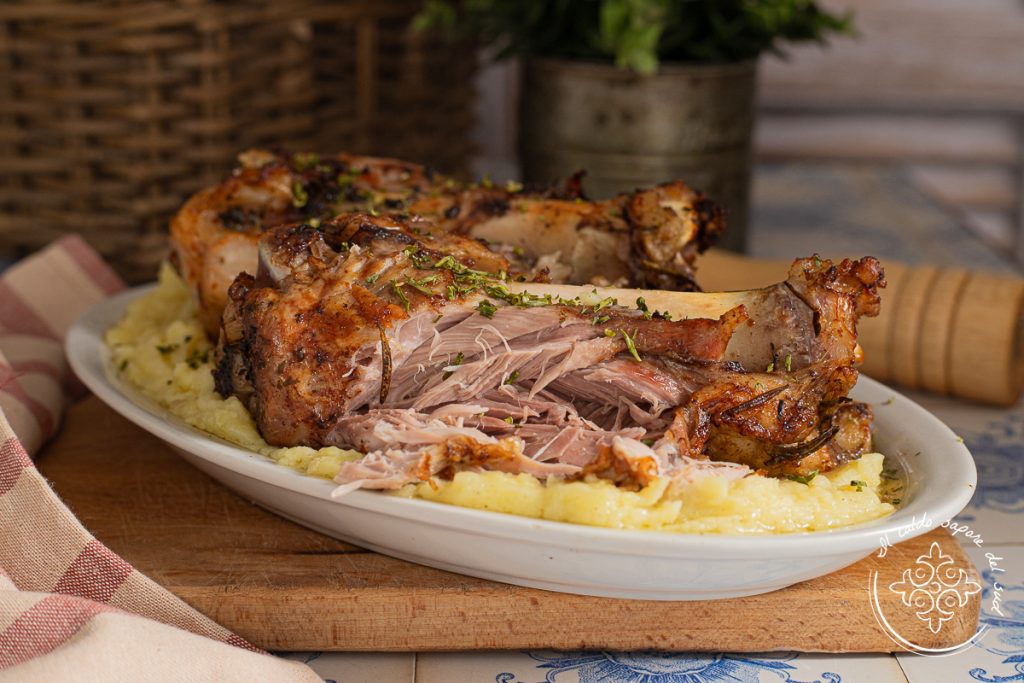
Storage notes and tips
Cooked shanks can be kept in the refrigerator for 2–3 days, well sealed in an airtight container or in their vacuum bag with the cooking liquid.
You can freeze the shanks raw directly in the bag with all the marinade (vegetables, aromatics and seasonings included). When ready to use, let them thaw completely in the refrigerator and then proceed with the low-temperature cooking.
For longer storage you can freeze them already cooked, preferably with their cooking liquid: this way they will retain moisture and flavor. When ready to use, let them thaw in the refrigerator and gently reheat. The rest in the refrigerator before cooking is not mandatory, but it significantly improves the final result.
The salt measured as a percentage of the meat guarantees a balanced and consistent seasoning.
During low-temperature cooking, make sure the water stays stable at 151°F.
The cooking liquid is an integral part of the recipe: always strain it and reduce it, as it concentrates all the shank’s flavor. The final sear must be quick and at high heat or high temperature: it only creates the crust without drying out the meat.
You can replace the mash with roasted potatoes or seasonal vegetables, but a soft base better highlights the shank’s texture.
If you want to stay updated on my recipes, follow me on:
facebook, pinterest, instagram, twitter.
From here, you can return to the HOME and discover new recipes!
Your questions
Can I cook the shank low-temperature without the fridge resting?
Yes, but the 24-hour rest improves the distribution of salt and aromatics, making the low-temperature pork shank more balanced and flavorful.
Is 151°F for 30 hours essential?
This is the ideal combination to obtain a very tender pork shank. Reducing the time or increasing the temperature will change the texture and make it less soft.
Is the texture similar to pulled pork?
Yes, it’s very close: the meat is soft and the fibers separate easily, although the shank remains a bit more compact compared to classic pulled pork.
Do I absolutely need a vacuum machine?
For this recipe yes, it’s fundamental for correct low-temperature cooking and to retain juices and aromatics.