
The Pizza nel Ruoto represents one of the most authentic expressions of home baking from southern Italy, particularly from Campania and Basilicata.
Unlike classic Neapolitan pizza, baked directly on the oven floor at extremely high temperatures, this variant owes its name and distinctive characteristics to the tool used for its preparation: the ruoto.
What is a “Ruoto”?
The term “ruoto” identifies a round baking pan, typically made of aluminum or blue steel, characterized by sloped or straight sides about 1.6 inches high.
This utensil is a pillar of traditional Southern Italian cuisine, used not only for bread and pizza but also for big classics of pastry, like the Pastiera and the Torta Caprese.
Its shape is designed to protect the dough during fermentation and oven rise, ensuring even baking.
Historically, the pizza nel ruoto originated as a home preparation tied to the ritual of weekly bread baking.
It was often made using leftover bread dough, stretched into generously greased pans.
The cooking technique relies on thermal conduction: the oven heat warms the metal pan which, in contact with the fat on the bottom, triggers a light frying of the dough base.
The result is a pizza characterized by a crunchy, toasted bottom that supports a tall, soft, and airy crumb.
The traditional topping uses peeled tomatoes crushed by hand (used raw), oregano, garlic and extra virgin olive oil. Any dairy products are added only at the end of baking.
In this recipe I developed a gluten-free version.
This cooking technique represents the link with:
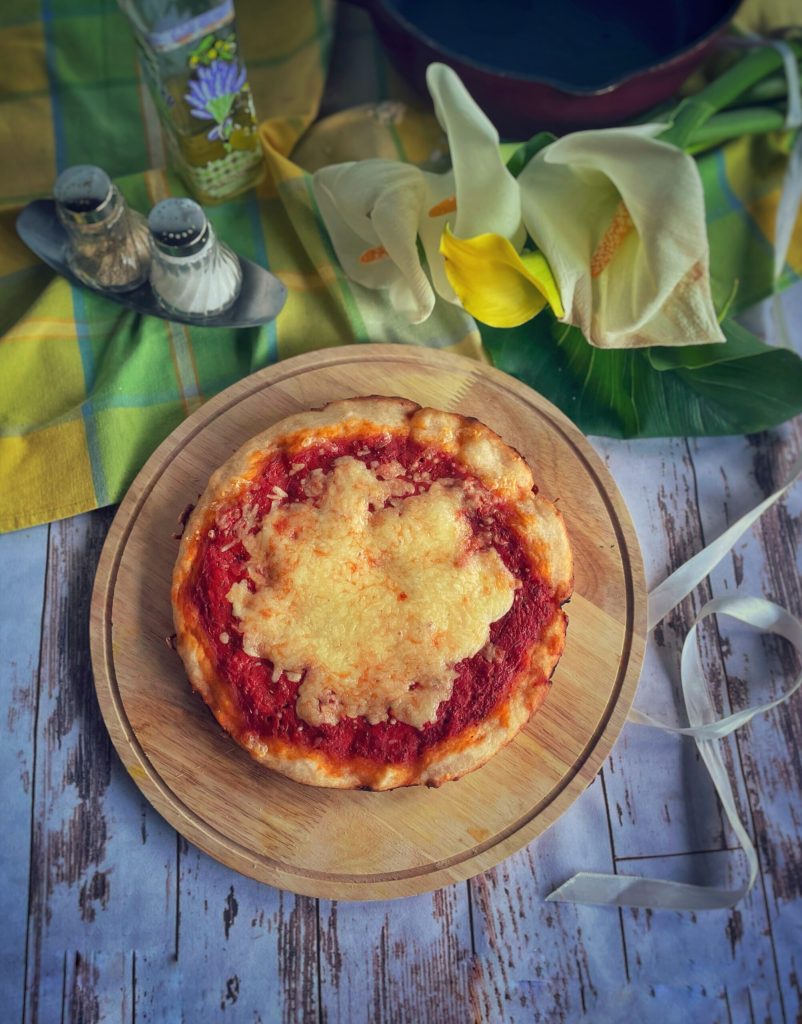
- Difficulty: Easy
- Cost: Economical
- Rest time: 3 Hours 30 Minutes
- Preparation time: 10 Minutes
- Cooking time: 13 Minutes
- Cooking methods: Oven, Electric oven
- Cuisine: Italian
- Seasonality: All seasons
Ingredients
- 3 cups gluten-free flour mix
- 1 1/3 cups water
- 0.35 oz fresh yeast
- 1 2/3 tsp salt (+ to season)
- 1 1/2 tbsp lard (sugna)
- 5 tbsp extra virgin olive oil (+ to season)
- 2 1/2 cups peeled tomatoes
- to taste oregano
- to taste mozzarella for pizza
Tools
- 1 Ruoto 12 in (approx. 30–32 cm)
Steps
Dough: Dissolve the yeast in lukewarm water. Add the gluten-free mix and work until you obtain a smooth, creamy batter. Add the salt and finally the lard.
Rest in bowl: Cover and let rest for about 30 minutes.
Place in the Ruoto: Generously oil the ruoto (bottom and sides). Transfer the dough and spread it with oiled hands.
Leavening: Let rise in the covered ruoto in a warm place (oven off with the light on) for about 2 1/2–3 hours, until the dough almost reaches the rim of the pan.Take high-quality peeled tomatoes.
Coarsely crush them with your hands in a bowl.
Season only with salt and a drizzle of oil. Do not cook them.
Spread the raw tomato over the risen dough, add plenty of oregano and, if you like, a few slices of garlic.Preheating: Turn the oven to its highest temperature (usually 482°F) at least 30 minutes before.
Position: Place the rack on the lowest level (directly on the oven floor or on the first rack).
Two-stage baking: Stage 1: Bake the ruoto on the bottom for 10–12 minutes. Add the mozzarella.
Stage 2: Move the ruoto to mid height for another 3 minutes to finish cooking the tomato and cheese.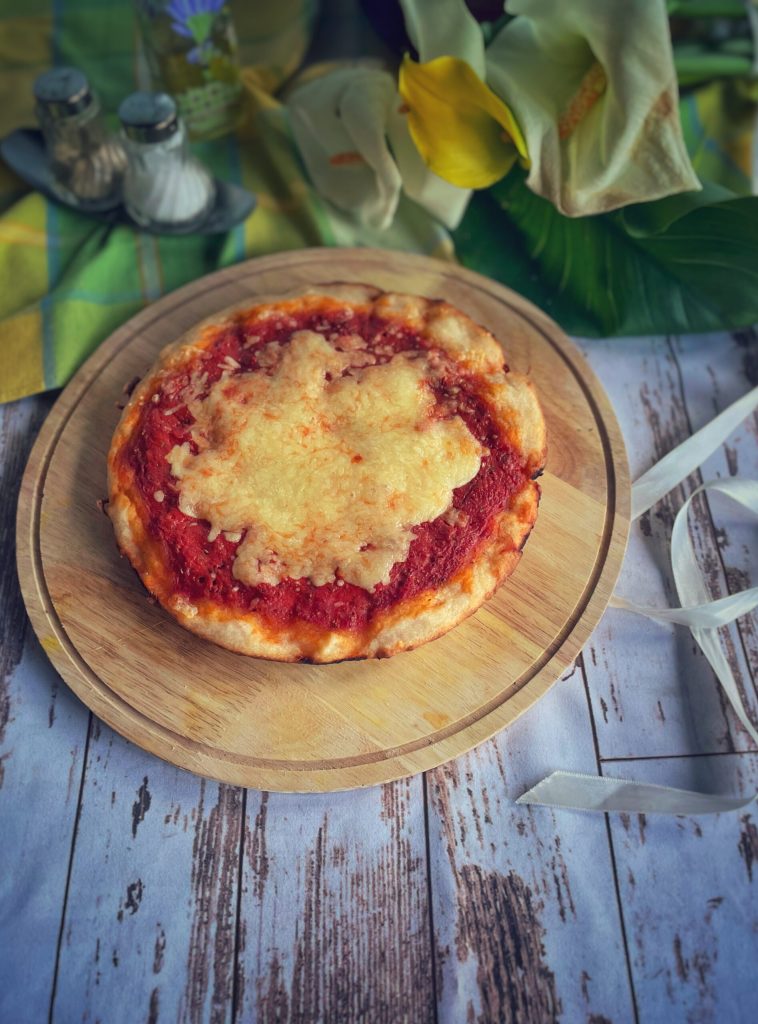
FAQ (Questions & Answers)
What is the difference between Neapolitan Ruoto pizza and Lucanian pizza?
The difference between the Neapolitan Pizza nel Ruoto and the one from the Lucanian tradition (such as the Pizza from Avigliano) is subtle but fundamental, and mainly concerns the texture and the spirit with which they are prepared:
1. Dough and Flour
Neapolitan: Almost exclusively uses soft wheat flour (type 0 or 00). The goal is to obtain a very soft, “cloud-like” pizza with a pronounced crust even when baked in a pan.
Lucanian: Traditionally uses a mix that includes durum wheat semolina or local ancient grains. This makes the crumb more yellow, firmer and with a markedly “toasty bread” flavor. It is less “gummy” and crunchier to the bite.
2. Topping
Neapolitan: Tends to replicate pizzeria-style pizza. Raw tomato is used (crushed peeled tomatoes) and dairy (mozzarella or provola) is almost always added toward the end of baking. It is a “moist” pizza.
Lucanian: It is much closer to the American Tomato Pie or the Sicilian Sfincione. The tomato sauce is often pre-cooked in a soffritto of garlic, oil and chili. Importantly, the original version is without mozzarella. The flavor is driven by tomato, oregano and lots of EVOO.
3. Structure (Height)
Neapolitan: Often a middle ground, not very tall, designed to be eaten hot and stringy.
Lucanian: Taller and more robust, almost a seasoned focaccia. It was baked in wood-fired ovens right after the bread, using the residual (milder) heat, so it needed a structure capable of withstanding a longer bake without drying out.
