
The Southern Tomato Pie is a classic preparation from the cuisine of the southern states of the United States. Although the name may evoke pizza, historically it was created as a kind of savory summer pie intended to showcase the harvest of ripe tomatoes.
Technically, this recipe falls into the category of Pan Pizza. This term describes pizzas (or leavened savory pies) baked inside a high-edged pan or skillet, usually metal or cast iron. The distinctive feature of Pan Pizza is the use of a generous layer of oil on the bottom of the pan: this allows the dough base to cook by direct conduction, achieving a crisp, almost fried texture that contrasts with the softness of the interior crumb.
The origins of this dish are linked to rural culture and the influence of European settlers who, during the 20th century, adapted the sheet-pan focaccia and pizza recipes of Southern Italy (such as the Sicilian sfincione or the Neapolitan “pizza nel ruoto”) to the ingredients and tools available in American bakeries.
Tomato Pie (specifically the Philadelphia Style or New Jersey Bakery Pizza) is a type of high, soft tray pizza, often served at room temperature and characterized by a thick, flavorful tomato sauce sealed with grated cheese.
In American bakeries the dough is prepared early in the morning, stretched into the pans and left to proof for hours on racks at room temperature before being baked mid-day, typically at temperatures between 446°F and 500°F for longer times (sometimes 20–30 minutes).
My variations
In today’s recipe for a cast-iron pan of 16 inches (about 15 3/4 in), I introduced some personal modifications that diverge from the traditional American preparation to suit specific dietary needs and tastes. In particular:
The use of a gluten-free dough.
The use of a sourdough starter for fermentation.
Custom control of baking temperatures.
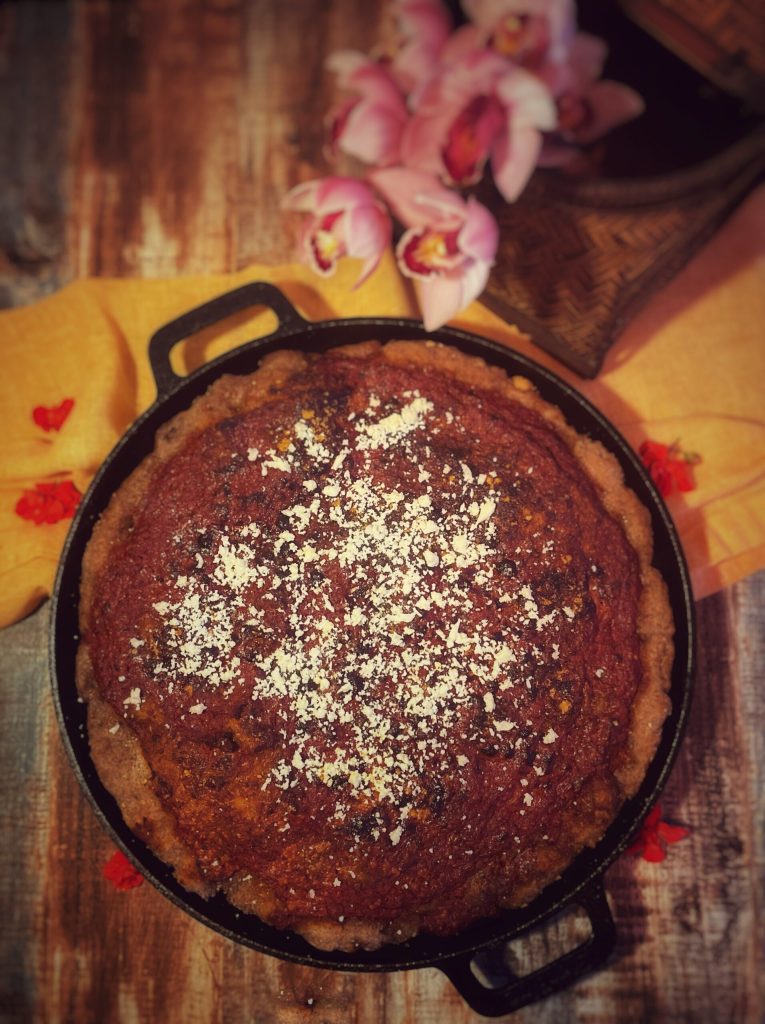
- Difficulty: Medium
- Cost: Economical
- Rest time: 7 Hours
- Preparation time: 15 Minutes
- Cooking time: 30 Minutes
- Portions: 8 Servings
- Cooking methods: Oven, Electric oven
- Cuisine: American
- Seasonality: All seasons
Ingredients
- 5 oz fresh gluten-free sourdough starter (refreshed)
- 2 1/3 cups water (warm)
- 5 1/3 cups gluten-free flour blend
- 2 2/3 tbsp olive oil (+ 4–5 tbsp for the pan)
- 2 2/3 tsp salt
- 3 1/8 cups tomato pulp
- 2 cloves garlic
- 3 tbsp oregano
- 2 tbsp olive oil
- 1 tsp sugar
- 2 oz Pecorino Romano (grated)
- to taste salt
Tools
- 1 Pan cast-iron 15 3/4 in
Steps
Initial dough (Morning): In a bowl, thoroughly dissolve the sourdough starter in the warm water. Add the Gluten-Free Mix and mix vigorously (better with a stand mixer) for 5 minutes. Finally add the oil and the salt.
Rest in bowl: Cover and let the dough rest in the bowl for about 1 hour. With gluten-free dough there is no need to “develop” the gluten network, but this rest allows the mix fibers to hydrate well.
Pan placement (Key step): Pour 4 or 5 tbsp of EVO oil onto your pan. Brush well. Turn the dough out into the center. With hands well oiled, gently stretch it to the edges.
Long proofing: Cover the pan with plastic wrap (without touching the dough) or another inverted pan. Let it proof in a sheltered place (e.g., an off oven) for 4–6 hours. The dough should visibly puff and feel almost sponge-like to the touch.While the pizza proofs, prepare the thick cooked sauce and let it cool completely: sauté garlic in the oil, add the tomato pulp, oregano and adjust salt. Cook for about 20 minutes.
Layering: Sprinkle the proofed dough with half of the grated Pecorino Romano, then spread the cooled sauce evenly over it and add the remaining Pecorino on top.
Note: Dusting the pecorino directly on the dough before the sauce creates a protective layer. This prevents the tomato water from penetrating the dough, avoiding a “gummy” effect and ensuring the crumb remains soft and dry even when covered by a lot of sauce.
Set the oven to the maximum: Usually 482°F (static mode is preferable so the gluten-free dough doesn’t dry out too much).
Preheating: Let the oven heat for at least 45–60 minutes. The cast iron needs to reach a very hot environment to immediately begin to “fry” the base.
Phase 1 (Bottom baking): Place the cast-iron pan directly on the bottom of the oven (in contact with the metal floor) for the first 10–12 minutes. This direct heat simulates a professional baking hearth and makes the base crispy.
Phase 2 (Drying and browning): Move the pan to the middle rack and continue for another 10–13 minutes. In this phase the sauce reduces and the circulating heat cooks the heart of the pizza.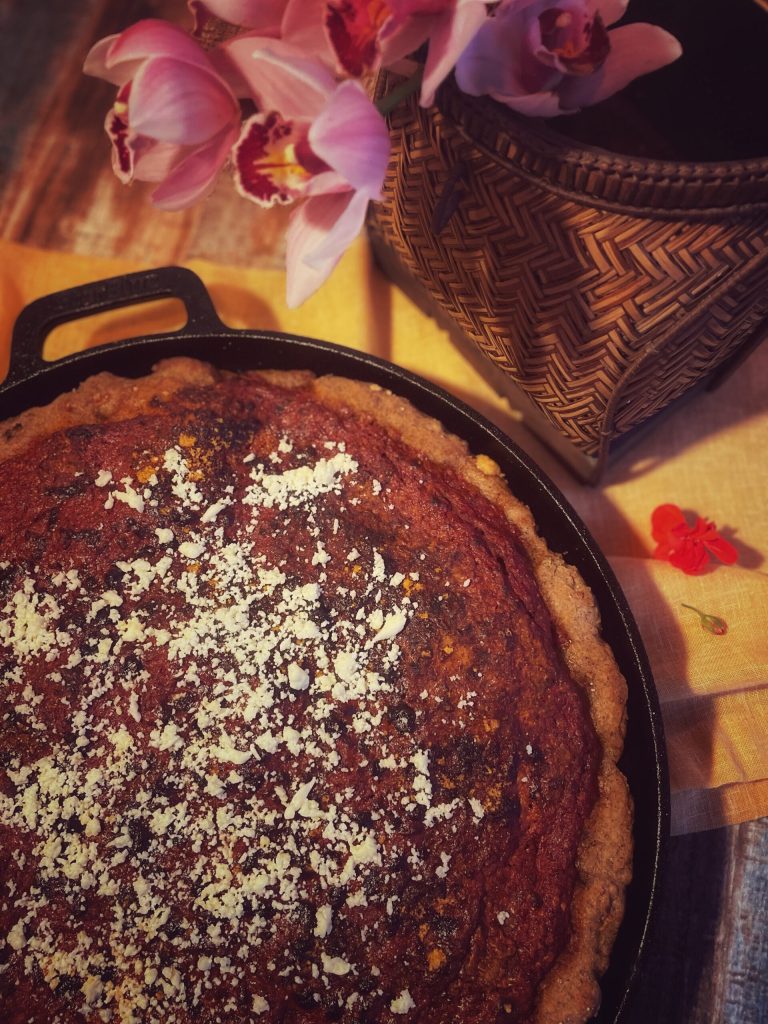
FAQ (Questions & Answers)
What are the main “Pan Style Pizza” types?
Not all American pizzas are Pan Pizza, but the Detroit-style is certainly one of the highest and most famous expressions of this category.
The Detroit-style: The quintessential “Pan Pizza”
The Detroit-style is considered a Pan Pizza because its defining characteristic is baking in a rectangular blue steel pan (originally trays used in the automotive industry to hold bolts).
Why it’s a Pan Pizza: It has a high dough, is baked with plenty of oil and features the famous “frico” (the caramelized cheese edge against the metal).
The difference: Compared to your Tomato Pie (which is round and more similar to sfincione), the Detroit places the sauce on top of the cheese and uses Brick Cheese from Wisconsin.
The Chicago Deep Dish is classified as a Pan Pizza for three objective technical reasons:
Baked in a container (Pan): It’s not baked directly on the oven floor but entirely inside a tall metal pan.
Thermal conduction: Heat is transmitted to the dough through the metal pan, which acts as a constant conductor.
“Frying” effect: The pan is heavily oiled or buttered on the bottom and sides; this causes the dough, in contact with the hot fat, to undergo a surface frying that creates the typical golden, crispy crust.
The Stuffed Pizza is an evolution of the Chicago Deep Dish and also belongs to the pan pizza family.
Pizzas that ARE NOT Pan Pizza
There are iconic styles that have nothing to do with the pan:
New York Style: The classic large, thin pizza baked directly on the oven stone (or on a metal screen). It’s made to be folded in half (“the fold”) and does not have a base fried in oil.
New Haven Style (Apizza): Baked in coal-fired ovens at very high temperatures, it has an extremely thin, almost charred crust and an irregular shape. It never touches a pan.
California Style: Similar to gourmet Italian pizza, with a thin crust and fresh/exotic toppings, typically wood-fired.
