
Fava and chicory purée: the secret to a creamy, velvety texture
In an era when we’re always chasing exotic superfoods, we often forget that our peasant traditions hold priceless nutritional treasures. I remember afternoons in my grandmother’s kitchen, when the scent of bay leaves announced the slow cooking of the fava beans.
What today we might call comfort food par excellence, for her was simply the “wellness dish”: Fava and Chicory.
This is a complete single-course dish, low in fat but extremely rich in protein (it contains an amount equal to or greater than meat!), ideal for those looking for a filling yet light plant-based alternative.
The pairing of the sweetness of the fava beans with the slightly bitter note of the chicory creates a embracing contrast that will leave you satisfied and not feeling “punished”, even if you’re dieting. Get ready to rediscover an ancient flavor, where a drizzle of high-quality extra virgin olive oil raw is the final touch that transforms humble ingredients into a gourmet masterpiece.
Fava and wild chicory: the dietary recipe rich in plant proteins
- Fresh fava bean soup with pancetta: the velvety, flavorful recipe
- Pasta with fava beans and sausage: the creamy recipe and the trick to keep it from tasting bitter
- Creamy pasta with peas: the easy, quick recipe without cream
- Trofie with fava pesto (marò)
- Pasta Primavera with asparagus, snap peas and baby peas: the perfect green mix
- Difficulty: Very easy
- Cost: Very inexpensive
- Preparation time: 30 Minutes
- Cooking time: 2 Hours 30 Minutes
- Portions: 2
- Cooking methods: Stovetop
- Cuisine: Italian
- Energy 545.84 (Kcal)
- Carbohydrates 74.75 (g) of which sugars 5.12 (g)
- Proteins 24.53 (g)
- Fat 16.57 (g) of which saturated 2.58 (g)of which unsaturated 1.81 (g)
- Fibers 21.96 (g)
- Sodium 589.75 (mg)
Indicative values for a portion of 300 g processed in an automated way starting from the nutritional information available on the CREA* and FoodData Central** databases. It is not food and / or nutritional advice.
* CREATES Food and Nutrition Research Center: https://www.crea.gov.it/alimenti-e-nutrizione https://www.alimentinutrizione.it ** U.S. Department of Agriculture, Agricultural Research Service. FoodData Central, 2019. https://fdc.nal.usda.gov
Ingredients for Fava and Chicory Purée
- 300 g cicoria (oppure spinaci o erbette)
- 200 g fave secche (decorticate)
- 2 patate (medie)
- 3 foglie alloro
- 2 cucchiai da tavola olio extravergine d'oliva
- 1 pizzico sale
- q.b. pepe nero (macinato)
Tools
- 1 Pentola
- 1 Frullatore a immersione
Fava and chicory purée: the secret to a creamy, velvety texture
Soak the hulled dried fava beans in cold water for at least 12 hours (or a minimum of 2 hours if you’re in a hurry). Rinse them well and place them in a large pot. Cover with cold water until it’s about two inches above the beans. Add the peeled potatoes cut into chunks and the bay leaves.
Cook over very low heat for at least 2 hours. Critical step: during cooking, remove the white foam that forms on the surface with a slotted spoon. If the water gets too low, add small ladles of hot water. The fava beans are ready when they start to fall apart on their own.
Remove the bay leaves. Mash the fava beans with a wooden spoon or, for a perfectly smooth “Platìno” texture, give a few bursts with an immersion blender. While the fava finish cooking, clean the chicory and blanch it in salted water until tender, then drain it well.
-
Notes on Ingredients and Substitutions
The Fava Beans: I recommend the hulled ones to save time. If you use those with the skin on, a 12-hour soak is mandatory.
The Chicory: The original recipe calls for wild chicory. If you can’t find it, cultivated chicory, Swiss chard or spinach are good, sweeter alternatives.
The Bay Leaves: Don’t omit them! They’re the key element that gives the fava that ancestral aroma and makes them more digestible.
Alternatives and Variations
Tastier variation: If you’re not dieting, sauté the chicory in a pan with olive oil, a clove of garlic and chili pepper before adding it to the purée.
Pasta version: Use the fava purée as a sauce for orecchiette, adding the shredded chicory.
Quick cooking: You can use a pressure cooker to halve the times, still keeping the heat very low at the end.
Storage
It keeps in the refrigerator in an airtight container for up to 3 days. When serving, reheat the purée adding a splash of water to bring back the creaminess.
Tea’s Tips
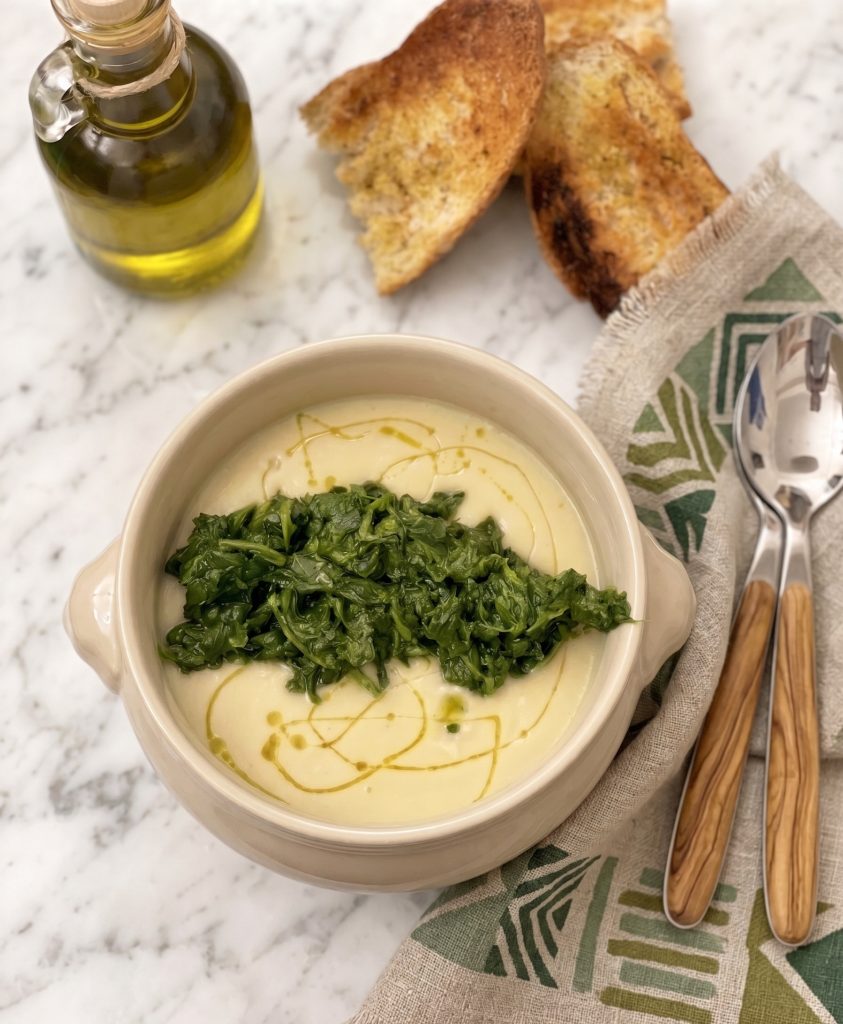
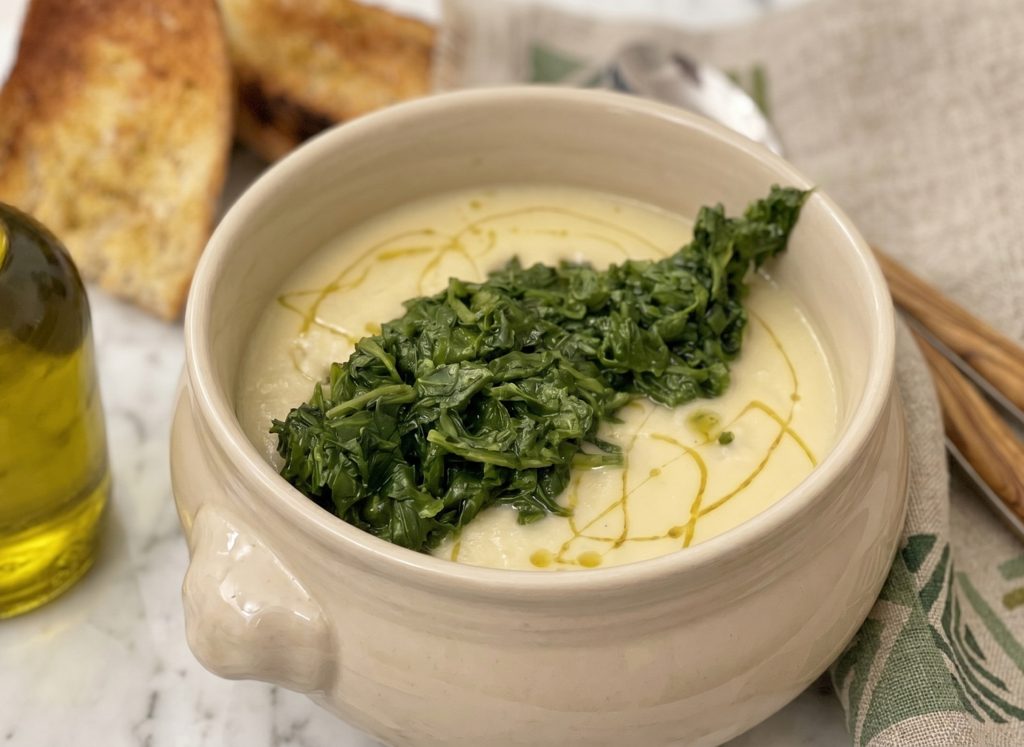
For an authentic experience, serve the dish with a slice of well-toasted whole-grain bread. The purée should act as a “bed” for the chicory, and everything should be generously drizzled with high-quality extra virgin olive oil.
FAQ (Questions and Answers)
How long should dried fava beans soak?
It is recommended to soak DRIED FAVA BEANS for at least 8 hours, preferably 12 hours. Then drain them and transfer to a pot with cold water. Bring the water to a boil and continue cooking over low heat for about 60 minutes or until they are soft.
How to reheat fava and chicory?
To reheat fava and chicory you can sauté them for a few minutes in a pan over low heat or heat them in the microwave.
How many calories do fava and chicory have?
Fava and chicory: this traditional Apulian recipe contains about 371 calories per serving but, considering that this dish is served as a single course, it is actually a very modest caloric amount.
Is it necessary to soak hulled fava beans?
Yes, it helps make them more tender and digestible, also reducing cooking time. If you skip this step, you will need much more water and patience.
My purée is too watery, what do I do?
Let it cook a few more minutes uncovered over higher heat to evaporate the water, or add another boiled and mashed potato.
Can I use fresh fava beans?
Yes, but the result will be a bright green purée with a more “herbaceous” flavor. The classic Apulian recipe strictly calls for dried ones.
