Step-by-step tutorial on how to clean large shrimp and king prawns.
Shrimp, from large shrimp to small shrimp
For convenience I more often use large shrimp: peeling and cleaning a few large shrimp per person is much easier than peeling and cleaning whole portions of small shrimp.
You might be interested in:
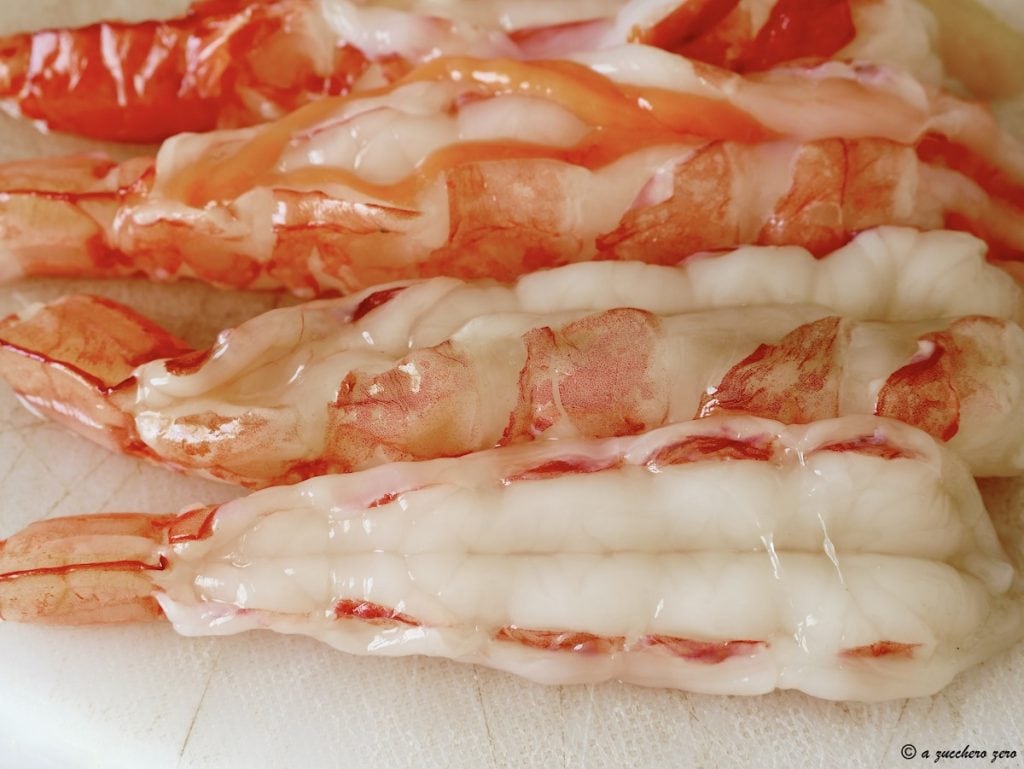
- Difficulty: Easy
- Cost: Medium
- Preparation time: 20 Minutes
- Cuisine: Italian
Ingredients
- large shrimp (weight according to dietary plan)
Suggested tools
- Knife
- Cutting board
Tutorial
The cleaning steps are the same for all shrimp, with small differences mainly related to size.
If you use frozen large shrimp, let them thaw completely until they are soft: it will be easier to clean them without breaking them.
This procedure also applies to king prawns.
I usually buy 4 large shrimp per person.
Cleaning them takes a few minutes and the result is always appreciated.
Gently detach the head from the body.
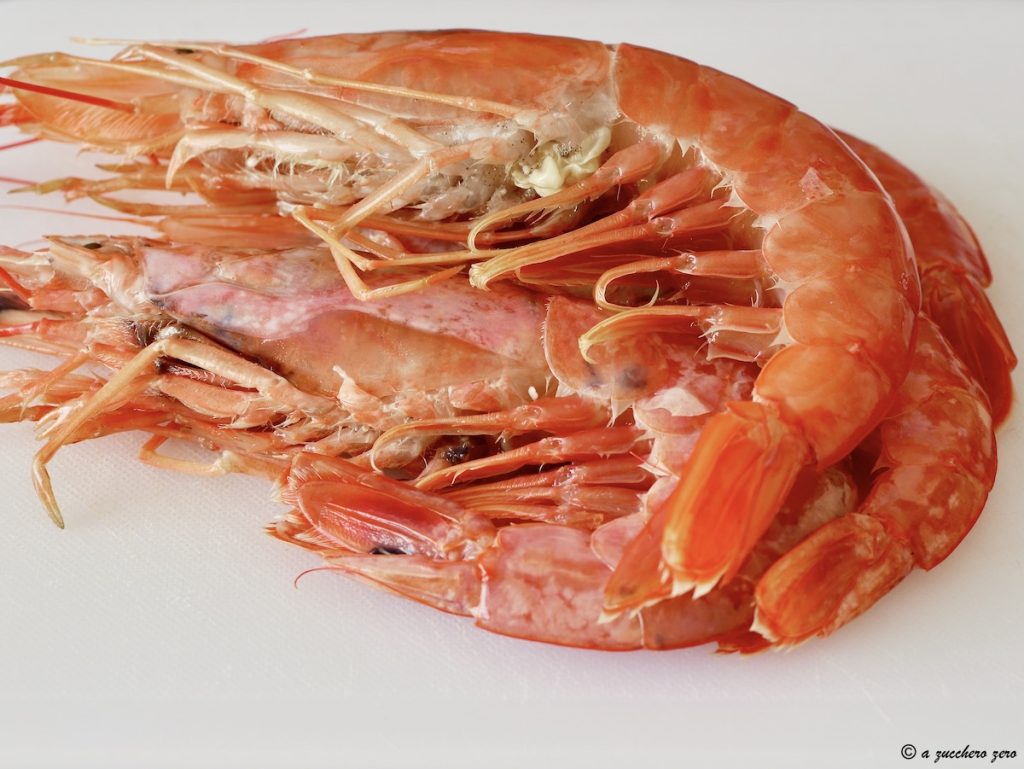
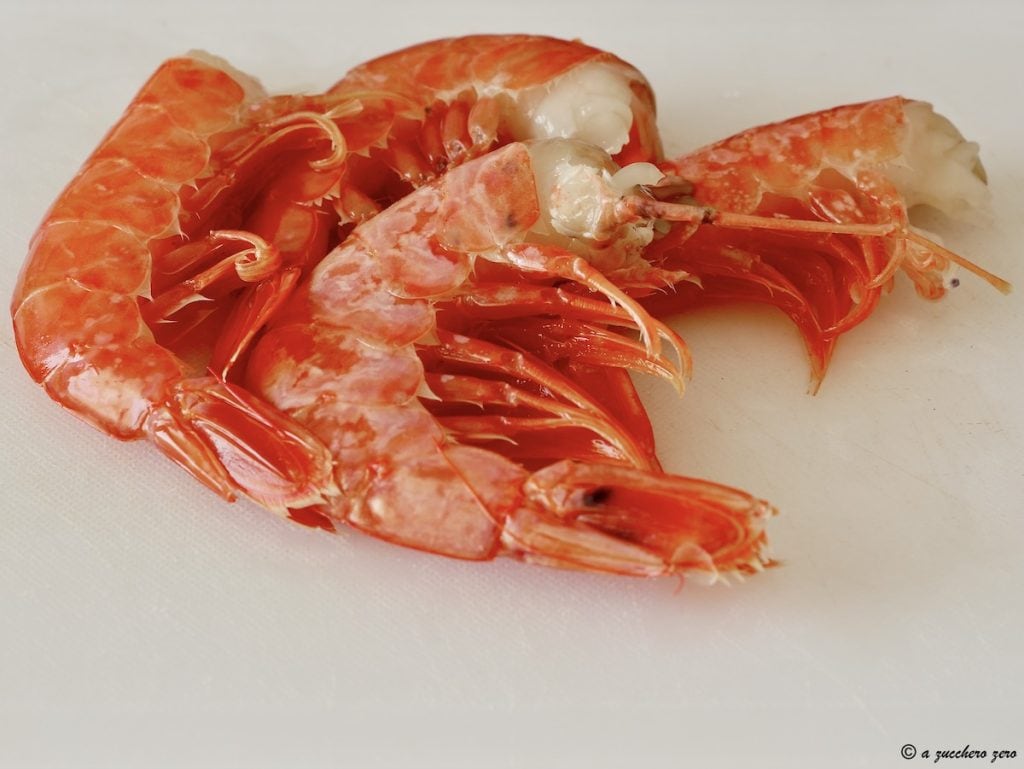
CLEANING THE SHRIMP HEADS
Rinse the heads under running water as if you were washing small containers until you remove organs and internal residues.
Let them drain in a colander.
You can use them to flavor a fish stock, prepare a broth with shrimp heads or a shrimp sauce.CLEANING THE SHRIMP
Peel the shrimp.
Then:
– using a sharp knife, make an incision along the back;
– using the tip of the knife or a toothpick, remove the black vein [intestine] by gently pulling it upward.
This applies to all shrimp, from large shrimp to small shrimp; only in small shrimp it can be more difficult and sometimes skipped if it is not very visible.Rinse the peeled shrimp thoroughly under running water.
Let them drain and pat them dry with kitchen paper.Your peeled shrimp are ready to be used.
Peeled shrimp, whole or cut into pieces, are perfect to use for:
– appetizers, first courses and main courses.
Browse the recipes on the blog.
Storage, tips and variations
Storage
Raw cleaned shrimp can be stored in the refrigerator for up to 24 hours in an airtight container.
You can freeze them already cleaned: they keep for up to 2-3 months in an airtight container or inside proper freezer bags.
Do not refreeze shrimp that have already been thawed.
Tips and variations
Always defrost slowly in the refrigerator to maintain texture and flavor.
You can leave the tail attached for a more elegant presentation.
FAQ – Questions and Answers
Crustaceans in the diet
Shrimp in the diet
Shrimp, from large shrimp to small shrimp, are crustaceans low in triglycerides but high in cholesterol; they also contain a small amount of available carbohydrates.
For these reasons they are not suitable for all diets.
In our dietary plan shrimp are listed among the foods to be consumed “occasionally”.What is the difference between large shrimp and king prawns?
Without going into anatomical details, the main differences that allow us to distinguish large shrimp from king prawns at the fish counter are:
– color: large shrimp tend toward orange-red, king prawns are gray with pink or brown hues.
– size: generally king prawns are larger than large shrimp.
– flavor: large shrimp have a stronger, more savory taste, king prawns are more delicate and sweet.
– nutritional values: both are low in calories, large shrimp contain more fat but less cholesterol compared to king prawns.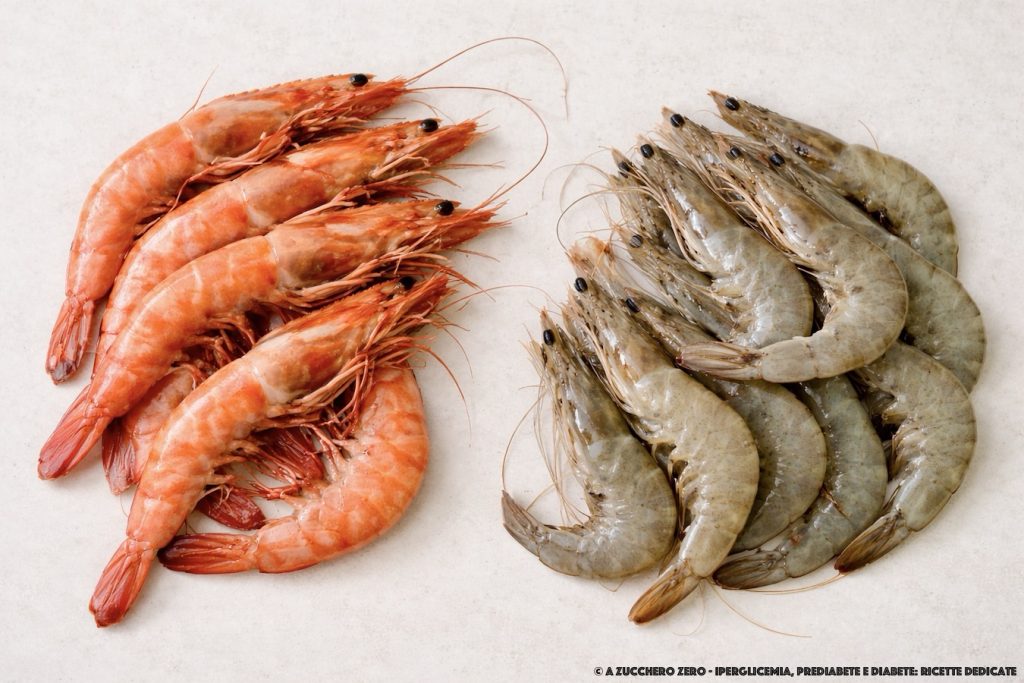
Better fresh or frozen?
Both are fine, as long as frozen ones are thawed correctly.
Should the black vein always be removed?
The black vein is the shrimp’s intestine.
Its contents are not toxic but can spoil the dish:
– it is unpleasant to look at and to taste;
– it can contain sand or residues.
Better to always remove it.Can I clean the shrimp in advance?
Yes, up to 24 hours in advance, storing them in the refrigerator.
Can I use shrimp with the shell on?
Yes.
The shell better retains juices during cooking and can add more flavor.
Wash the shrimp with the shell on thoroughly and remove the black vein before or after cooking, preferably before.