Boiled octopus is a versatile ingredient in the kitchen and a staple of many Mediterranean recipes.
In this guide we see how to cook octopus so it is soft and tender just right and with intact skin to prepare an octopus salad [but not only] like a pro.
Cooking in an IMCO pot or a regular pot.
Forget the cork stopper!
Here you will find practical tips for a restaurant-quality result.
You may be interested in:
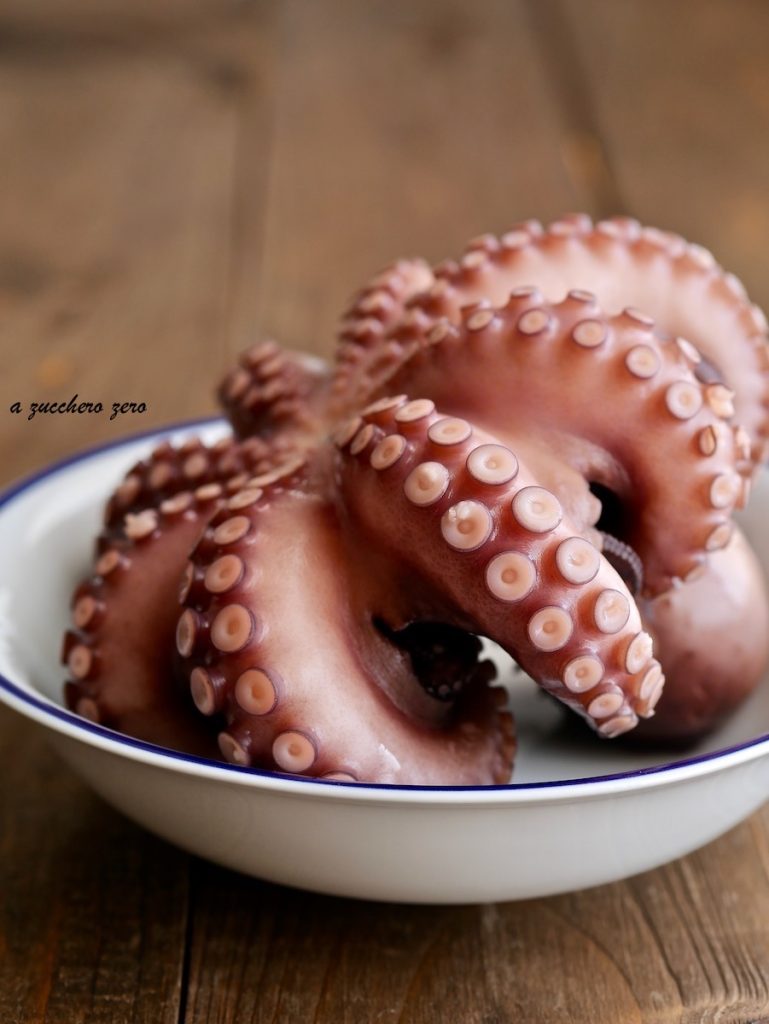
- Difficulty: Easy
- Cost: Medium
- Preparation time: 10 Minutes
- Cooking time: 40 Minutes
- Portions: 2 People
- Cooking methods: Boiling
- Cuisine: Italian
Ingredients
- octopus (approx. 2.2–2.6 lb)
- water (plenty (enough to fully cover the octopus))
- 1 small glass red wine
- leaves bay leaf (if available)
Suggested tools
- 1 Pot IMCO or regular
- Knife
- Cutting board
Tutorial
A couple of tips on cooking octopus that have nothing to do with the famous cork stopper:
– Freezing relaxes the muscle fibers and the octopus becomes more tender, so use a frozen or previously frozen octopus or, if you buy it fresh, freeze it (one night is enough) and then thaw it before cooking;
– once cooked, let the octopus cool down in the cooking water; this way the skin will remain intact.
Finally, one last “secret” from a chef revealed during a TV segment:
– add some red wine to the octopus cooking water for a perfect texture.
And, if you have any, add a few bay leaves.I usually buy frozen octopus – the ones sold in the supermarket frozen section – or previously thawed at the fish counter.
If you bought a frozen octopus or froze it after purchase, thaw the octopus by moving it to the fridge the evening before cooking.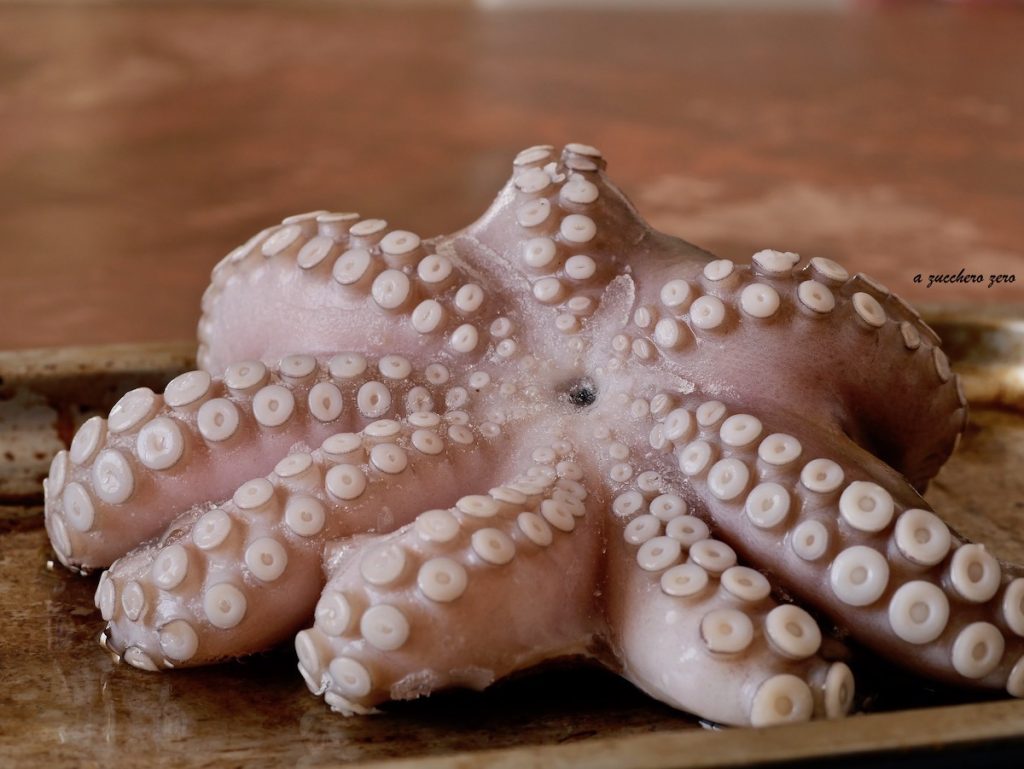
In frozen and thawed octopus the head is already gutted while with a fresh octopus you need to remove the innards.
Rinse the octopus under running water.I use an IMCO pot, a precious gift from my mother-in-law, which allows the cooking to continue with the heat turned off.
In the IMCO pot or in a regular pot, bring plenty of water to a boil: it must completely cover the octopus.
Dip the octopus into the boiling water 3–4 times (2–3 seconds each time): this step makes the tentacles curl.
Then fully immerse the octopus in the water.
Add about one small glass of red wine and – if you have it – a few bay leaves.
Do not add salt while cooking; it can make the fibers tougher.With an IMCO pot
Cover with the lid and bring to a boil.
When a stream of steam starts to escape, turn off the heat.
With a regular pot
Continue cooking over low heat.
Regardless of the pot
Let it cook for 40 minutes (octopus about 2.2–2.6 lb).
After 40 minutes check doneness by piercing a tentacle with a fork.Let the octopus cool down in the cooking water (slowly, at least 30 minutes); in this way the skin will remain intact.
Remove the octopus from the pot.Your octopus soft and tender just right and with intact skin is ready.
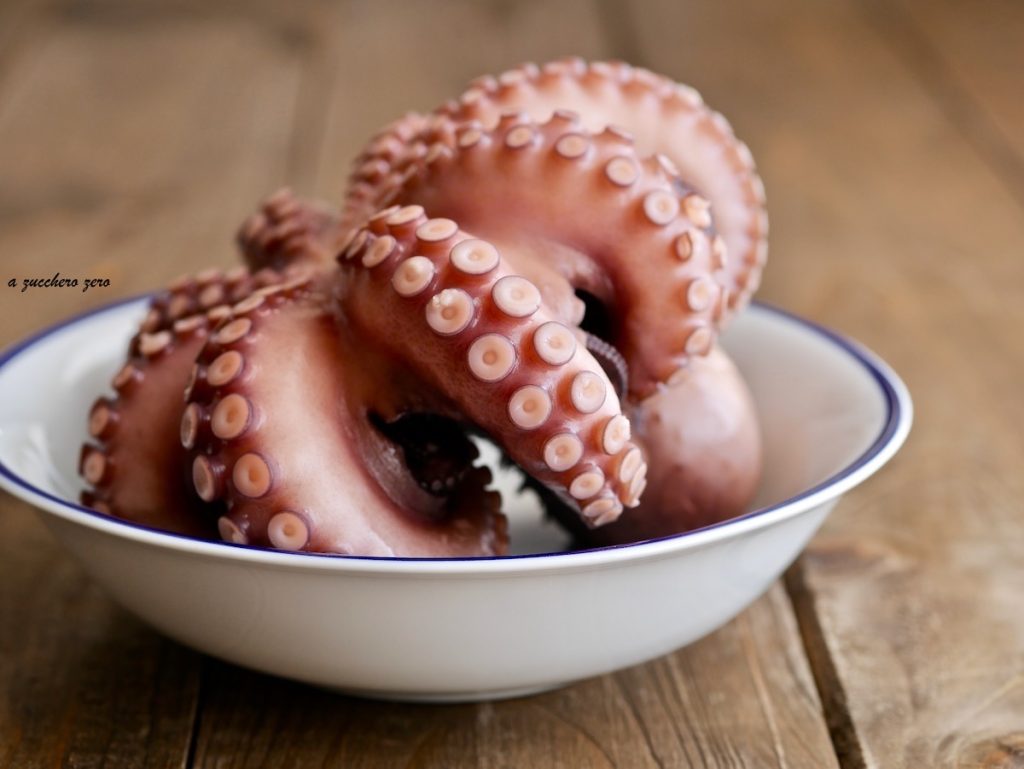
You can keep or remove the skin; I only remove the skin where the tentacles attach, where it’s thicker.
You can use the boiled octopus to prepare:
– appetizers, first courses and main courses.
Browse the recipes on the blog.Classic light dressing
– a pinch of salt;
– a pinch of pepper;
– chopped parsley;
– lemon juice;
– a drizzle of extra virgin olive oil.
Dressing with salmoriglio sauce
– salmoriglio sauce: Sicilian dressing served raw and aromatic, perfect for seasoning fish after cooking.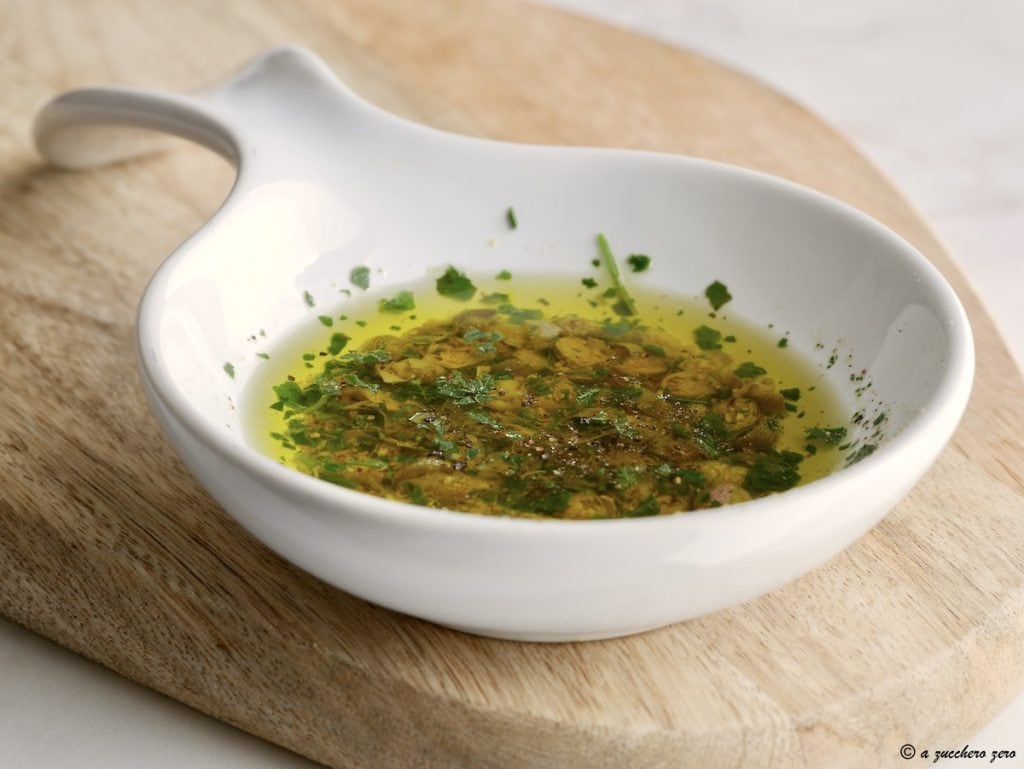
Plate and serve.
Enjoy your meal!
This is a main course that is easy to balance with a source of carbohydrates [bread, pasta or rice preferably whole grain] and vegetables so you can compose a balanced meal or one-dish plate that helps keep blood sugar stable.
Storage, tips and variations
Storage
At the time of purchase check whether the product is fresh or previously frozen.
If the purchased product is already thawed it should not be refrozen.
Boiled octopus can be kept in the refrigerator in an airtight container for 1–2 days.
Tips and variations
How to clean cuttlefish, calamari and squid | easy step-by-step guide.
FAQ – Questions and Answers
Should octopus be salted during cooking?
Salt can make the fibers tougher.
Add salt at the moment of seasoning.Molluscs and cholesterol
In our dietary guidelines, calamari and squid, octopus and cuttlefish are among the foods recommended to be eaten occasionally.
Although they are lean mollusks, they are a source of cholesterol and intake should be limited.
Nutritional guidelines recommend a dietary cholesterol intake below 300 mg per day, a limit that may be lowered to 200 mg per day in cases of hypercholesterolemia and high blood sugar.
Therefore, mollusks do not directly affect blood glucose but in cases of high blood sugar, prediabetes and diabetes they should be consumed in moderation.