
When I had my travel agency, my first educational trip was to Morocco, back in 2000, with Francorosso (which amazingly still exists!), precisely in Agadir, for three days.
Agadir didn’t particularly thrill me and neither did Casablanca when I visited years later during a cruise on Costa Serena; I wasn’t impressed by the city, in fact I found it rather anonymous and dirty.
But Morocco has always attracted me, especially for its delicious cuisine, which is why I am determined to return to finally discover its beauties.
Moroccan cuisine is very broad, due to its obvious influences from the Middle East, the Mediterranean and the Arab, Moorish and Berber peoples, and there is one dish that more than any other represents it around the world: couscous. Yes, couscous is not Egyptian, as many believe, but Moroccan.
For this reason, to clarify a bit, I chose this dish for the blog; not only that, in 2018 I was the featured person for the month of September in the calendar of the Gruppo Artistico Le cafe des artistes, dedicated to ethnic cuisines, precisely with couscous (see photo below).
The couscous (in French: couscous or cous cous, in Sicilian: cùscusu) is the traditional staple food of all North Africa, so much so that it could be defined as the “national dish” of the Berbers.
In much of Tunisia, Algeria, Morocco and Libya it is known simply by the Arabic name: طعام, taʿām, meaning “food”.
The couscous recipe varies considerably both within the same household and from one family to another, from city to town, area to area, depending on seasons, availability, traditions and ingredients. Therefore, there are truly many different types.
In Morocco, in the south it is more common with lamb and vegetables (the recipe that follows) while in coastal areas, obviously, it is made with fish; in the north, it is more often eaten with a sweeter profile, which includes the use of sugar, raisins, onions and almonds.
The classic “seven vegetables” version favors root or winter vegetables: carrots, turnips, pumpkin, cabbage, zucchini and potatoes, plus chickpeas.
Tradition dictates that this dish is eaten in the evening, as the nomadic peoples did, all seated around the dish, eating with their hands.
This dish has an important social value; it is served especially during special occasions, when the whole family gathers.
To cook couscous according to tradition, one should use the couscoussier (the kesskess) which allows the meat to cook in the bottom pot while the couscous steams in the upper part.
It is served always hot or warm. Heat keeps the grains soft and separate; cold tends to compact them and create lumps.
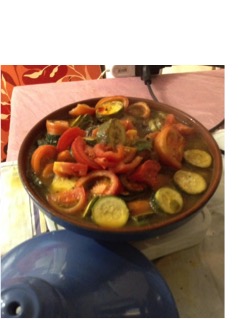
- Difficulty: Medium
- Cost: Inexpensive
- Preparation time: 10 Minutes
- Cooking time: 2 Hours
- Portions: 4 Servings
- Cooking methods: Stovetop
- Cuisine: Moroccan
- Seasonality: All seasons
Ingredients for Moroccan couscous:
- 1 3/4 lb lamb (neck, shoulder or shank)
- 2 onions
- 17.6 oz semolina durum wheat couscous (medium grain)
- 3/4 cup chickpeas (soaked if dry)
- 1 tablespoon smen (fermented butter, or ghee)
- 3 zucchini
- 2 potatoes
- 2 turnips
- 2 carrots
- 2 cups savoy cabbage
- 2 2/3 cups pumpkin
- 3 tomatoes
- 1 bunch coriander (cilantro) (and/or parsley)
- to taste olive oil
- to taste salt and pepper
- to taste ras el hanout (spice mixture: Turmeric, Coriander, Allspice, Cinnamon, Chili peppers, Pepper, Cardamom, Ginger, Cumin, Fennel, Nutmeg, Star Anise, Orange Peel, Fenugreek, Bay Leaf)
Tools for Moroccan couscous:
- 1 Pot couscoussier
Preparation
Start by browning the lamb cut into large pieces in the bottom part of the couscoussier with a drizzle of extra virgin olive oil, the sliced onions and a chopped mix of cilantro and parsley. Add the spices and let them release their aroma for a few minutes.
Cover the meat with plenty of hot water (about 1 1/4 cups). Add the chickpeas (previously soaked if dry) and the vegetables that require more cooking time, such as carrots and turnips. Halfway through cooking, add a teaspoon of smen (the Moroccan fermented butter) to give the broth its authentic aroma.
While the broth is cooking, pour the semolina onto a large shallow plate (the gsaa). Separate it with your hands using a little salted water and a drizzle of oil, working it in circular motions to avoid lumps.
Place the semolina in the upper basket of the couscoussier. When steam starts to come out of the grains, remove it, return it to the plate, separate it again with a little water and repeat the operation for a second (or third) time. This will make the couscous extremely light.
In the final stage of cooking, add the more tender vegetables (zucchini and pumpkin) to the broth. Once ready, pour the hot semolina onto the serving dish and incorporate one last knob of smen (or butter) to glaze the grains and perfume them.
Create a “mountain” with the semolina, dig a well in the center to place the meat and arrange the vegetables in a ring all around. Moisten the dish with a few ladles of the flavorful broth and serve the rest of the broth in a separate bowl.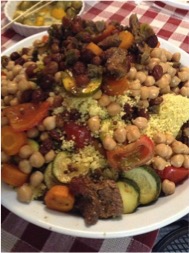
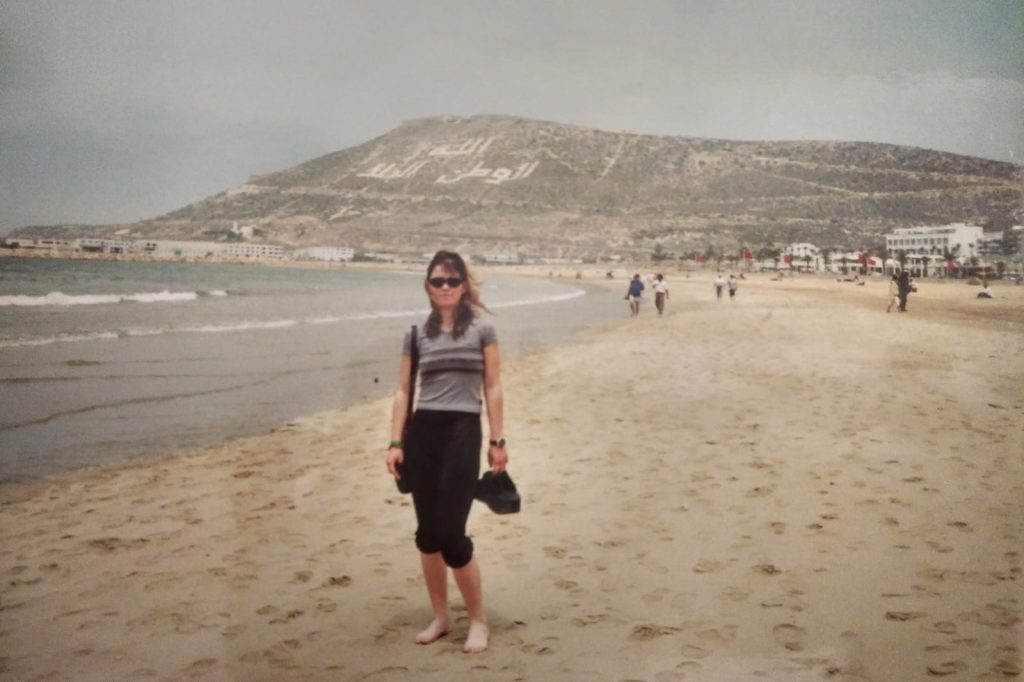
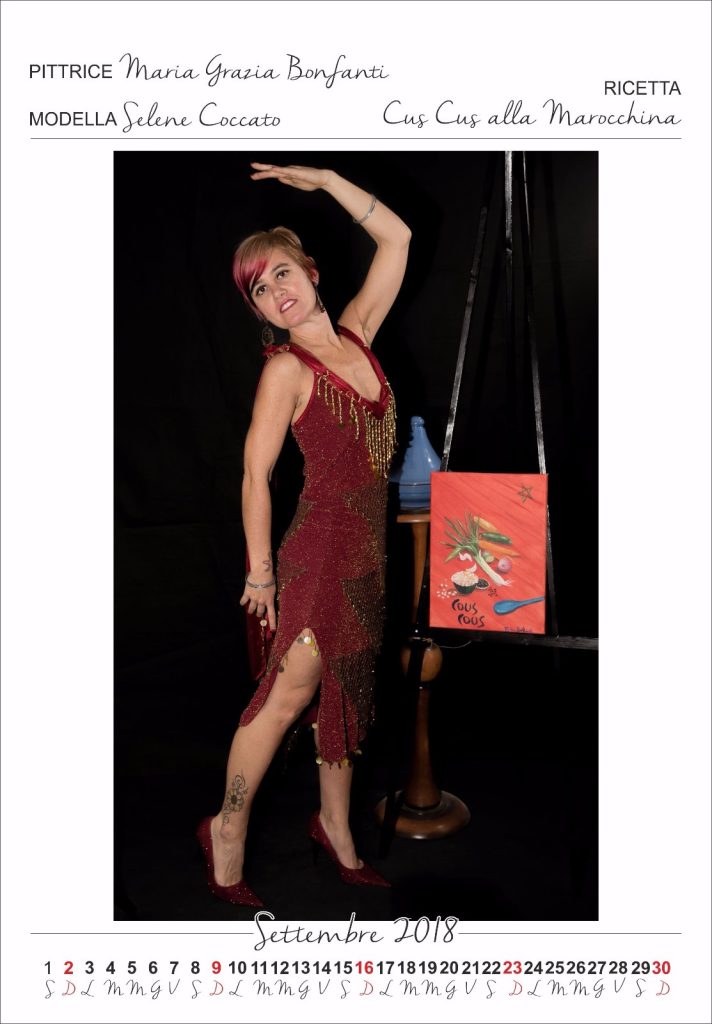
Photos from the educational trip to Agadir from May 16 to 19, 2000 and the photo from the 2018 Artistic Group Calendar.
NOTE ON SMEN
Smen (also known as amlo) is the soul of Moroccan cuisine, an ingredient that defines the authentic flavor of many traditional dishes, such as couscous and harira.
What exactly is it?
It is a clarified and fermented butter. It is made starting from regular butter that is boiled to eliminate the water and milk proteins (becoming clarified butter).
The Moroccan particularity happens afterwards: it is filtered, salted and aged in terracotta jars for months, or even years.
MARRAKECH GUIDE, LONELY PLANET, POCKET €12.82
Can I use instant (pre-cooked) couscous?
If you use instant couscous (the classic supermarket one that is ready in 5 minutes), the process changes drastically because it cannot withstand the three long steamings of the traditional method.
Here’s how to adapt it to still keep the Moroccan flavor:
Do not boil it: Pour the dry semolina into a bowl, add a pinch of salt, a tablespoon of oil and one of Ras el Hanout.
Use the stew broth: Instead of plain water, use the strained broth you prepared with the meat and the 7 vegetables. Pour it boiling over the semolina (same volume: 1 cup couscous = 1 cup broth).
Cover and wait: Let it rest covered for 5 minutes.
Fluff with Smen: Once expanded, add a small amount of smen (or butter) and fluff well with a fork to separate the grains.
