Cuttlefish, calamari and longfin squid are versatile ingredients in the kitchen and staples of many Mediterranean recipes.
Cleaning them may seem complicated, but it only takes a few simple steps.
In this guide we show how to clean cuttlefish, calamari and longfin squid step by step with clear and practical instructions.
You may be interested in:
- Difficulty: Easy
- Cost: Medium
- Preparation time: 30 Minutes
- Cuisine: Italian
Ingredients
- cuttlefish
- calamari
- longfin squid
Tools
- Knife
- Cutting Board
- Scissors kitchen
Tutorial
Before seeing how to clean them, let’s see how to recognize cuttlefish, calamari and longfin squid.
Cuttlefish, calamari or longfin squid?
It’s not always easy to tell them apart.
In reality, a few details are enough to recognize them immediately: body shape, type of fins and the presence of the cuttlebone.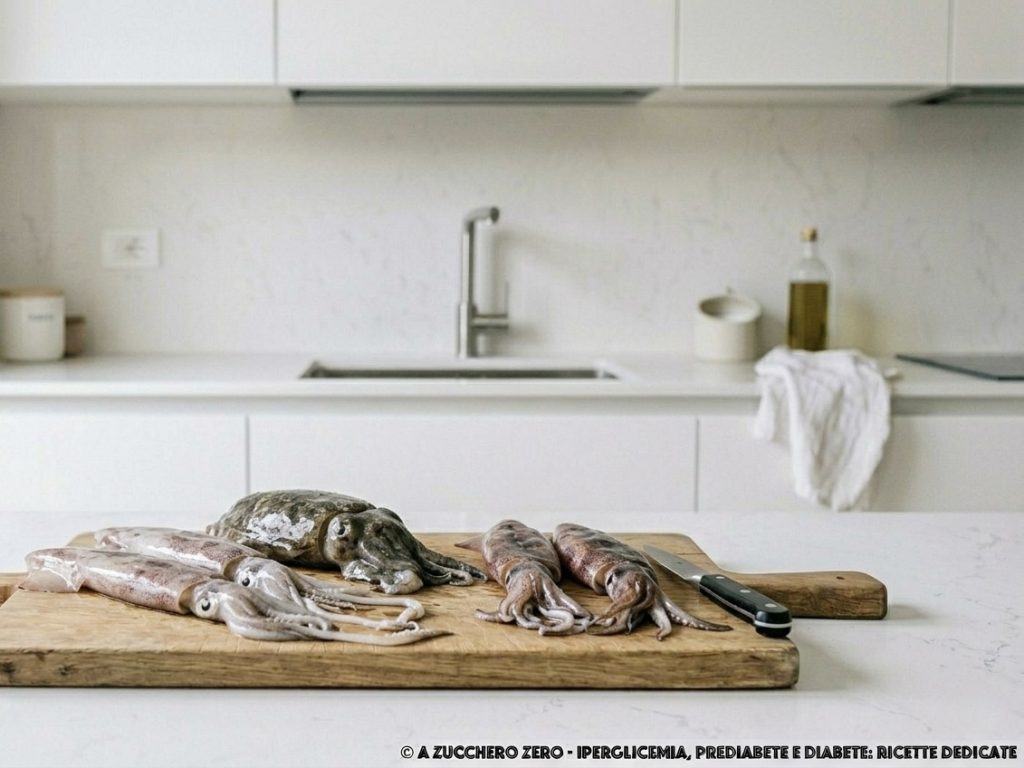
How to recognize cuttlefish, calamari and longfin squid:
The cuttlefish
– broad, oval body;
– gray-brown color;
– presence of the cuttlebone.
The calamari
– elongated body;
– light color;
– long diamond-shaped fins.
The longfin squid
– elongated body;
– pinkish-violet color;
– short triangular fins.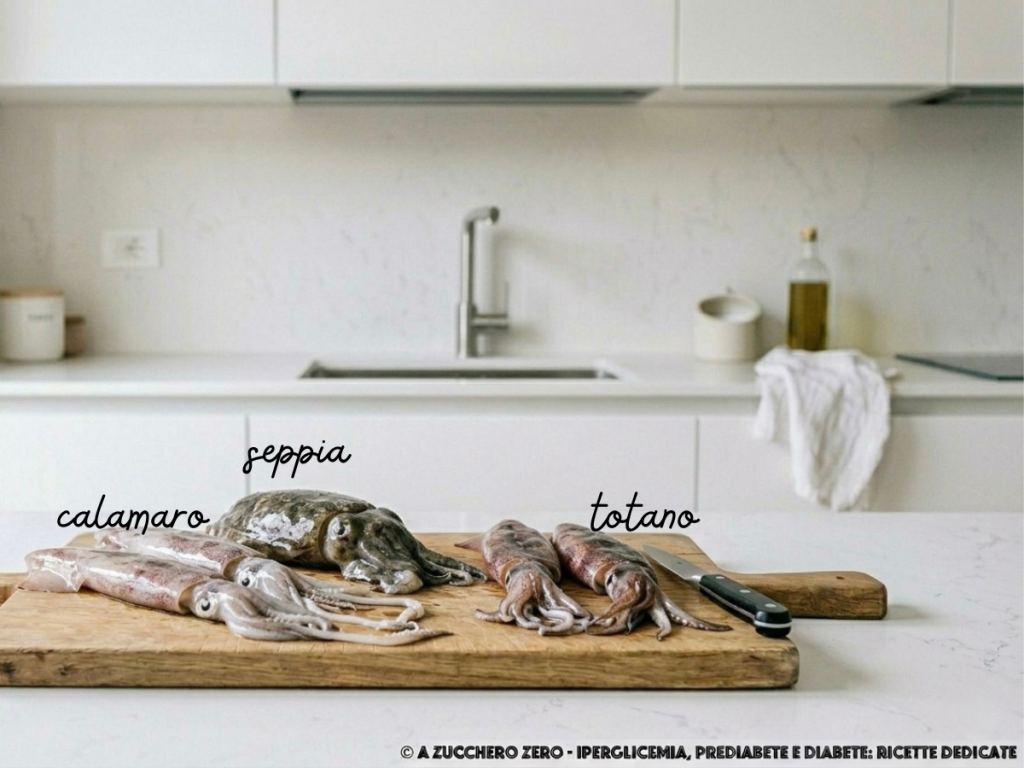
Cleaning cuttlefish and extracting the ink
On YouTube you can find a very clear video on cleaning cuttlefish that describes in detail how to recover the ink sac.Rinse the cuttlefish under running water and pat dry with kitchen paper towels.
Remove the eyes and the beak and extract the cuttlebone.
Rinse again.
Proceed to remove the viscera.
After removing the cuttlebone, part of the mantle (the cuttlefish sac) remains open:
– cut the skin that covered the cuttlebone to open the internal cavity that contains the viscera;
– gently extract the viscera, if necessary use a small knife: eggs, the milky sacs (“latti”) and the ink sac in one block, then separately livers and gills.
The eggs and the milky sacs of the cuttlefish are a real delicacy.
The livers are also edible.
The gills should be discarded.
Locate the ink sac and carefully separate it whole so as not to spill its contents.
The walls are very thin and break easily, so keep a small shot glass or a small bowl handy in case you urgently need to collect its content.
After removing the viscera, check that no residues remain inside the mantle.
Skin the cuttlefish: note that the skin is edible so this is not a necessary operation:
– peel the skin by pulling it along the mantle from one side and then the other.
Thoroughly wash the sac, externally and internally, and the tentacles under running water.
Pat dry with kitchen paper towels.
The cuttlefish is clean and ready for cooking, whole or portioned.Can cuttlefish ink be preserved?
For a detailed step-by-step procedure you can read the tutorial by clicking on the following link: freeze cuttlefish ink in tomato sauce | without crystals and grains.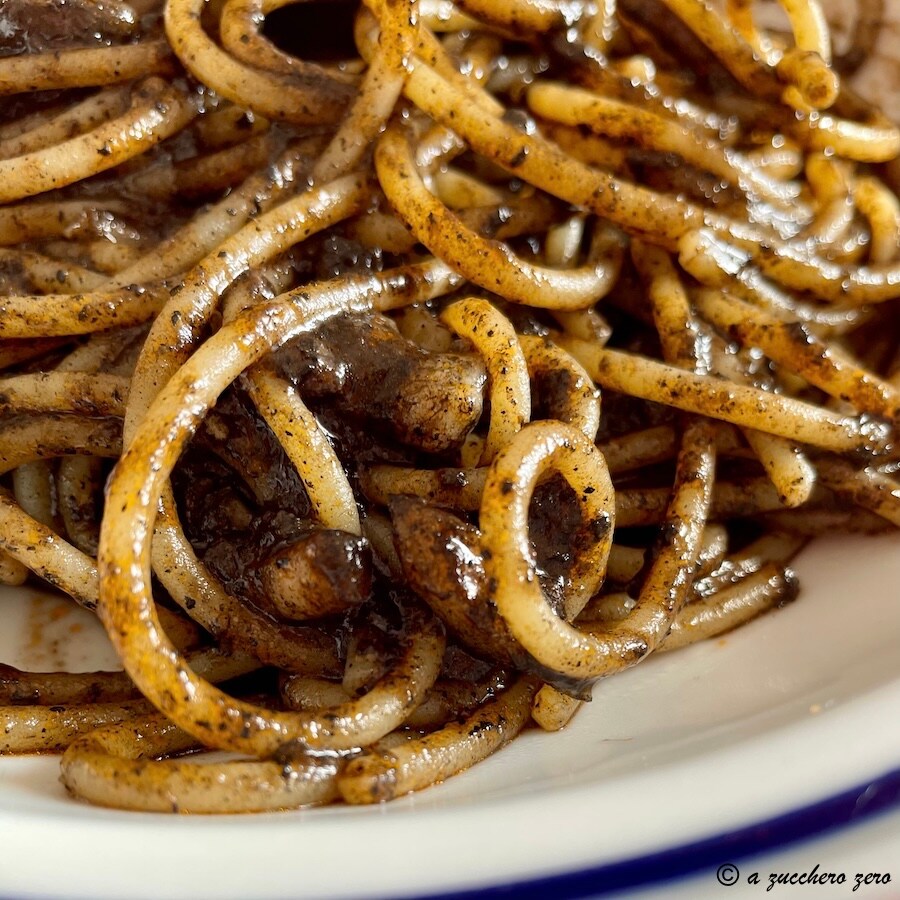
What are the “latti” of cuttlefish?
The “latti” of cuttlefish are so-called because of their milky color.
But what exactly are the “latti”?
I found conflicting opinions in my research:
– for some they are the female gonads or ovaries as well as unfertilized eggs of the female cuttlefish;
– for others they are the male spermatophore sac of the male cuttlefish.
I suspect they correspond to what in Sicily are called “minne” or “minni re sicci”, meaning breasts, which, being present in female cuttlefish, would support the gonad/ovary theory.
Supporting this theory, the female has two large nidamental glands plus accessory nidamental glands:
– the nidamental glands, whitish in color, produce the adhesive substance that coats the eggs;
– the nidament (nidament group) is the cluster of eggs held together by the adhesive substance secreted by the nidamental glands;
– the accessory nidamental glands, colorless in young animals, turn intense orange in mature females.
In any case, nidamental glands or “minne” aside, they are delicacies: white, soft and delicate.When buying cuttlefish, keep in mind that the female has less ink than the male but, in compensation, has eggs.
How to distinguish a male from a female cuttlefish?
In theory by the back:
– the male cuttlefish usually has a striped back;
– touching the back of the female cuttlefish small circles appear.
I thank Anna Martano and Rosario Giunta for the following tidbit:
The male cuttlefish has more ink.
The male cuttlefish has a larger, wider body than the female and more ink to defend its den.
The female cuttlefish has less ink but, in compensation, has eggs.Calamari and longfin squid are very similar and the cleaning operations are practically identical.
Cleaning calamari or longfin squid [closed sacs]
Rinse the calamari or longfin squid under running water and pat dry with kitchen paper towels.
Grab the tentacles and pull them gently: the head and entrails will come away as well.
Remove the cartilage (a transparent rigid blade, similar to plastic) present inside the sac.
Proceed to clean the tentacles:
– cut the head just above the eyes separating it from the tentacles, taking care not to squirt the black ink that surrounds them;
– open the tentacles, locate the hard beak in the center and remove it.
Peel the sac: note that the skin is edible so this is not a necessary operation.
Check that no residues remain inside the sac.
Thoroughly wash the sac, externally and internally, and the tentacles under running water.
Pat dry with kitchen paper towels.
The calamari or longfin squid are clean and ready for cooking: you can cook them whole, stuff them or cut them into rings.Cleaning calamari or longfin squid [open sacs]
Rinse the calamari or longfin squid under running water and pat dry with kitchen paper towels.
Lay the calamari or longfin squid on a cutting board.
With scissors, open the sac vertically.
Extract the head and entrails.
Remove the cartilage (a transparent rigid blade, similar to plastic) present inside the sac.
Proceed to clean the tentacles:
– cut the head just above the eyes separating it from the tentacles, taking care not to squirt the black ink that surrounds them;
– open the tentacles, locate the hard beak in the center and remove it.
Peel the sac: note that the skin is edible so this is not a necessary operation.
Thoroughly wash the opened sac and the tentacles under running water.
Pat dry with kitchen paper towels.
The calamari or longfin squid are clean and ready for cooking: you can cook them whole or cut them into pieces.Are longfin squid less tasty than calamari?
Many think that longfin squid are less tasty than calamari.
Contrary to what is believed, longfin squid do not have less tender flesh than calamari but rather firmer and slightly crunchier meat; this mistaken belief makes them much cheaper.When purchasing, ask your trusted fishmonger to clean the mollusks for you.
After cleaning you can:
– leave them whole (closed sac) for example for stuffed recipes;
– cut them into rings;
– leave them whole (open sac);
– cut them into chunks.The meats of cuttlefish, calamari and longfin squid are rich in collagen and muscle fibers.
There is a simple rule: very short cooking times (2-3 minutes) or very long cooking times (even 40-60 minutes).
With intermediate cooking the fibers contract and the meat becomes tough and rubbery.
If they become hard and rubbery during cooking, often just extend the cooking time to make them soft and tender again.You should know that:
– calamari are suitable for very short cooking times;
– longfin squid are suitable for long cooking times.You can use cuttlefish, calamari and longfin squid for preparing:
– appetizers, first courses and main courses.
Browse the recipes on the blog.
Storage, tips and variations
Storage
Cleaned cuttlefish, calamari and longfin squid can be stored:
– in the refrigerator for about 24 hours, in a closed container;
– in the freezer up to 2-3 months.
It is preferable to freeze them already portioned and ready to be used in subsequent preparations.
When purchasing, check whether the product is fresh or previously frozen.
If the purchased product is already thawed it should not be refrozen.
Tips and variations
After cleaning, pat the mollusks dry with paper towels before cooking: this helps achieve better browning.
FAQ – Questions and Answers
Cephalopods
Cuttlefish, calamari and longfin squid belong to the cephalopod family, marine mollusks characterized by a soft body, tentacles and a great capacity for camouflage.
They are widespread in our seas.
They are highly appreciated in the kitchen for their tender and flavorful meat and are protagonists of many Mediterranean recipes.Shellfish and cholesterol
In our dietary framework, calamari and longfin squid, octopus and cuttlefish are among the foods indicated as “to be consumed occasionally”.
In fact, although they are lean mollusks, they are a source of cholesterol whose intake should be limited.
Nutritional guidelines recommend a dietary cholesterol intake of less than 300 mg per day, a limit that can drop to 200 mg per day in the presence of hypercholesterolemia and hyperglycemia.
Therefore, mollusks do not directly affect blood glucose, but in cases of hyperglycemia, prediabetes and diabetes they should be consumed in moderation.