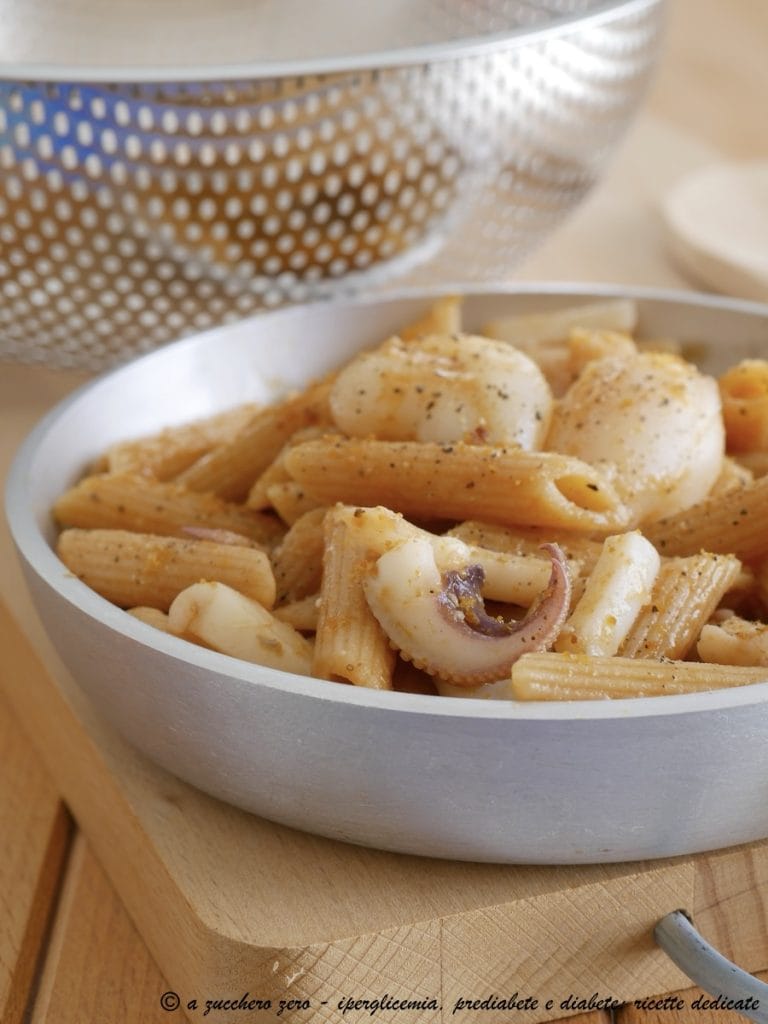
The light cuttlefish pasta is a light and tasty seafood dish, easy to prepare.
A tasty alternative when the cuttlefish do not have the ink sac or when you prefer not to use it.
Ideal for those who want a milder sauce.
You may be interested in:
- Difficulty: Easy
- Cost: Medium
- Preparation time: 30 Minutes
- Cooking time: 15 Minutes
- Portions: 2People
- Cooking methods: Stovetop
- Cuisine: Italian
Ingredients
- 6.35 oz whole-wheat penne rigate
- 2 cuttlefish (with or without ink sacs)
- 1 pinch garlic powder
- 2 dried red chili peppers (whole)
- 4 stalks parsley
- 1/4 cup white wine
- 2 tablespoons tomato sauce (homemade)
- 1 pinch salt
- 1 pinch mixed peppercorns (for grinder)
- to taste bottarga (in slab or powdered)
- 1 drizzle extra virgin olive oil (for finishing (uncooked))
Suggested tools
- Knife
- Cutting board
- 1 Pan
Preparation
In this preparation, cuttlefish ink is not used.
You can recover it and store it for another recipe.
For a detailed step-by-step procedure you can read the tutorial by clicking the following link: freezing cuttlefish ink in tomato sauce | without crystals and grains.
Cleaning cuttlefish and extracting the ink
On YouTube you can find a very clear video on cleaning cuttlefish which describes in detail how to recover the ink sac.Rinse the cuttlefish under running water and pat dry with kitchen paper.
Remove the eyes and the beak and extract the pen (internal shell).
Rinse again.
Proceed to remove the viscera.
After removing the pen, part of the mantle [cuttlefish sac] will be open:
– cut the skin that covered the pen to open the internal cavity that contains the viscera;
– gently remove the viscera, if necessary help yourself with a small knife: eggs, milt and the ink sac come out as a single block then separately the livers and the gills.
The eggs and the milt are a real delicacy.
The livers are also edible.
The gills should be discarded.
Locate the ink sac and separate it gently in one piece so as not to spill its contents.
The walls are very thin and break easily so keep a small glass or a bowl at hand in case you must quickly recover the contents.
After removing the viscera, check that there are no residues inside the mantle.
Skin the cuttlefish: keep in mind that the skin is edible so this is not a necessary operation:
– peel the skin off by pulling it along the mantle from one side and the other.
Wash the sac, outside and inside, and the tentacles under running water.
Pat dry with kitchen paper.
The cuttlefish is cleaned and ready for cooking.If you find the cleaning operations too complicated, ask your trusted fishmonger to clean the mollusks at the time of purchase.
Can cuttlefish ink be preserved?
For the detailed step-by-step procedure you can read the tutorial by clicking the following link: freezing cuttlefish ink in tomato sauce | without crystals and grains.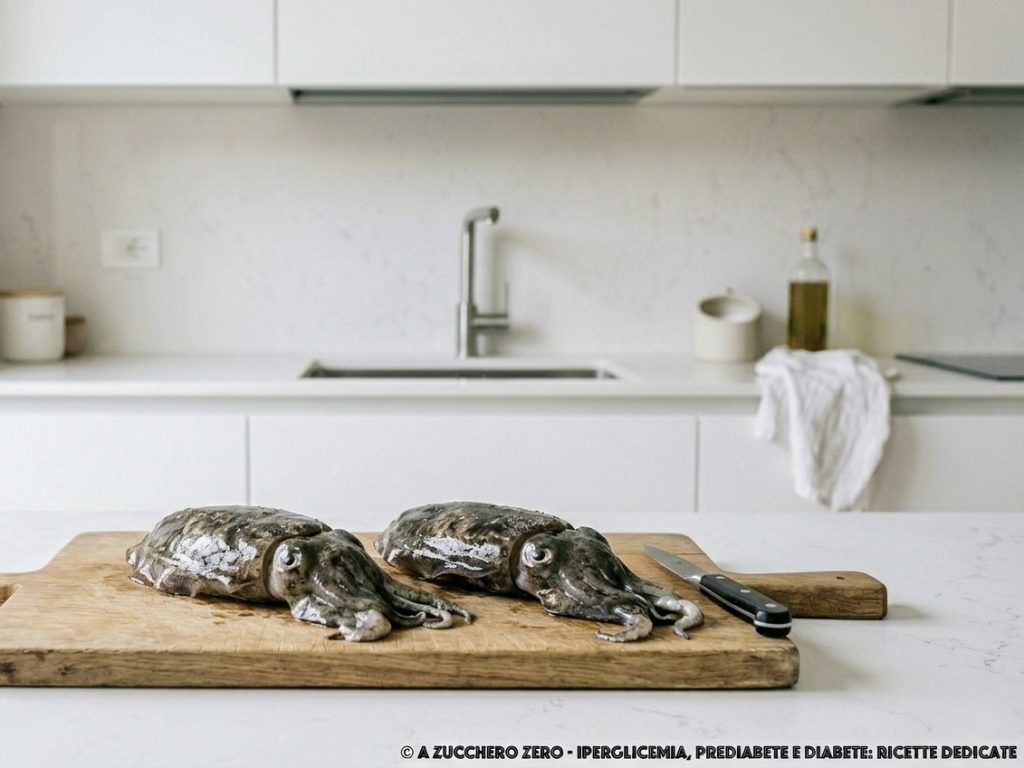
Rinse the cuttlefish under running water.
Pat dry with kitchen paper.
Cut the bodies and tentacles into pieces.In a pan briefly heat:
– garlic powder;
– a couple of whole dried red chilies [they flavor without releasing too much heat];
– a few parsley stalks;
and deglaze with a small glass of white wine.
Add the cuttlefish, including eggs and milt, to the pan and sauté for 2–3 minutes, stirring occasionally.
Add a couple of tablespoons of tomato sauce to color and lightly season.
Add a pinch of salt and a pinch of pepper.
Stir well to combine.Cook the pasta al dente, rinse it quickly under running water to reduce surface starch and drain.
Meanwhile, warm the sauce.
Remove the red chilies and the parsley stalks.
Pour the pasta into the pan with the sauce and stir well to coat.Plate.
Grind a little more pepper.The finishing touch: a dusting of bottarga and a drizzle of extra virgin olive oil!
Your light cuttlefish pasta is ready.
Enjoy your meal!
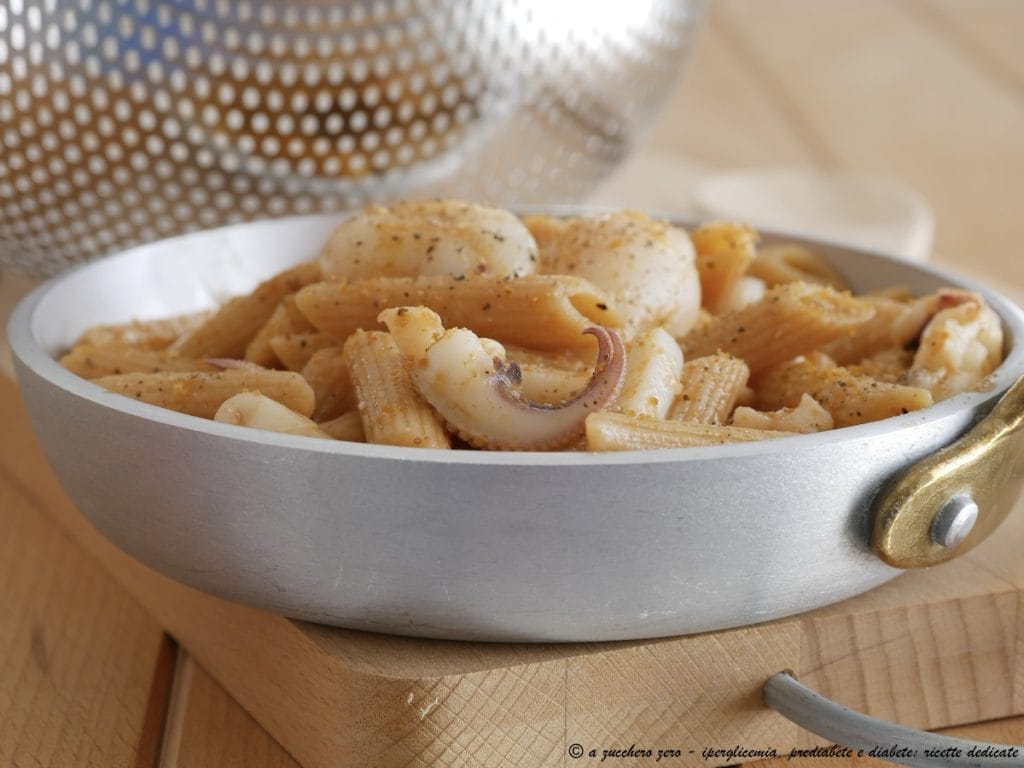
It’s a complete dish; add your portion of vegetables to compose a balanced meal or single-plate meal that helps keep blood sugar stable.
Storage, tips and variations
Storage
Store cooked pasta in the refrigerator in a closed container for up to 24 hours.
Reheat in a pan adding a drizzle of oil.
Tips and variations
Use whole-wheat pasta to increase fiber content.
As an alternative to cuttlefish you can use squid or calamari.
For a redder sauce add a larger amount of tomato sauce.
For a more Mediterranean and flavorful variation add a handful of capers.
Add chopped fresh parsley at the end of cooking.
FAQ – Questions and Answers
Mollusks and cholesterol
In our dietary scheme, squid and calamari, octopus and cuttlefish are listed among foods to be consumed occasionally.
Indeed, although they are lean mollusks, they are a source of cholesterol and intake should be limited.
Nutritional guidelines recommend a dietary cholesterol intake of less than 300 mg per day, a limit that may drop to 200 mg per day in cases of hypercholesterolemia and high blood sugar.
Therefore, mollusks do not directly affect blood sugar but in cases of high blood sugar, prediabetes and diabetes they should be consumed in moderation.
What is bottarga?
Tuna bottarga consists of salted and dried tuna roe.
Grey mullet bottarga consists of salted and dried mullet roe.
It is caloric but used in small amounts, grated or powdered, to flavor dishes.
The calories mainly come from high biological value proteins and fats while carbohydrates are absent.
It’s a bit like adding grated cheese.
It is also a good source of omega-3.
In Sicily bottarga is widely used; I take advantage of being in the Marzamemi area – a small seafaring village home to historic fish product factories – Noto or Syracuse to buy it.